
Senior U.S. and Iranian officials signalled a near-term memorandum to end hostilities, with both sides reportedly agreeing on a draft text that could be signed within days. Key elements include reopening the Strait of Hormuz, lifting the U.S. naval blockade, and a performance-based release of frozen Iranian assets in exchange for a 60-day negotiation on Iran's nuclear program. U.S. forces shot down several Iranian attack drones near the strait; markets rallied and Brent crude fell more than 3% on the news.
Tentative U.S.-Iran Peace Deal Nears as Drones and Clashes Flare Near Strait of Hormuz
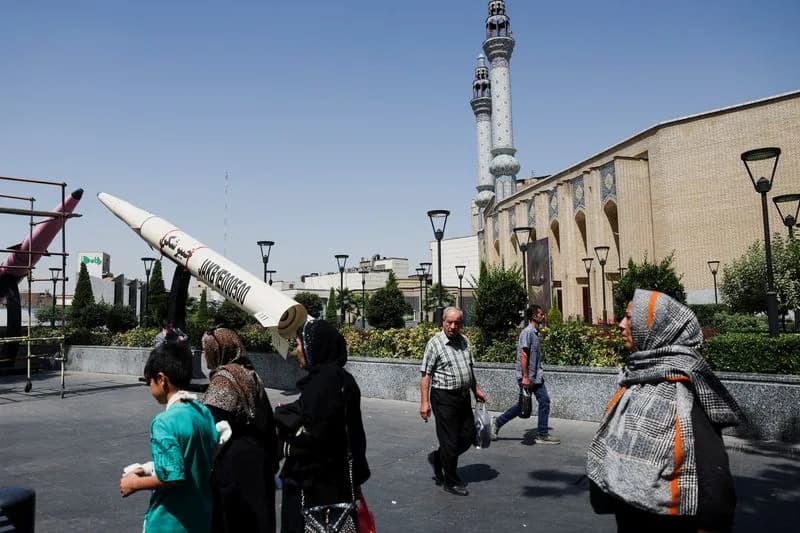
People walk next to a symbolic mock-up of an Iranian missile, on a street in Tehran, Iran, June 11, 2026. Majid Asgaripour/WANA (West Asia News Agency) via REUTERS
DUBAI/WASHINGTON, June 13 — Senior U.S. and Iranian officials signaled on Friday that a tentative agreement to end their conflict was close, with a U.S. administration source saying both sides had agreed on a draft text and that Washington expects to sign an initial memorandum in the coming days.
Iranian Foreign Minister Abbas Araqchi told state television the draft demonstrated Tehran had emerged stronger from the fighting. "Iran is the winner of the war with the U.S.," he said, while also acknowledging changes to the text remained possible.
Hours after Araqchi's remarks, U.S. forces shot down several one-way Iranian attack drones that U.S. officials said were heading toward the Strait of Hormuz and posed a threat to commercial shipping. U.S. Central Command later confirmed the strikes and said the waterway remained open for transit. Iranian state media reported explosions near Sirik port and Qeshm island, which local officials and residents attributed to warning fire by Iranian forces directed at vessels crossing without permission from the Islamic Revolutionary Guard Corps' navy.
What The Draft Would Do
Multiple sources familiar with the draft memorandum of understanding say it would reopen the Strait of Hormuz, lift the U.S. naval blockade on Iranian ports and begin a phased rollback of punitive U.S. measures. In return, Iran would agree to reopen the waterway and enter a 60-day window of negotiations on its nuclear program.
The U.S. official described the proposal as "performance-based," saying billions in frozen Iranian assets would be released and oil sanctions waived only after Tehran met specific, verifiable conditions. The draft reportedly envisions the eventual dismantling of Iran's most sensitive nuclear capabilities, removal of its stockpile of highly enriched uranium and a long-term inspection regime; Iranian officials, however, have publicly resisted full dismantling and prefer down-blending (dilution) of enriched uranium so material could be retained in a non-weapons form.
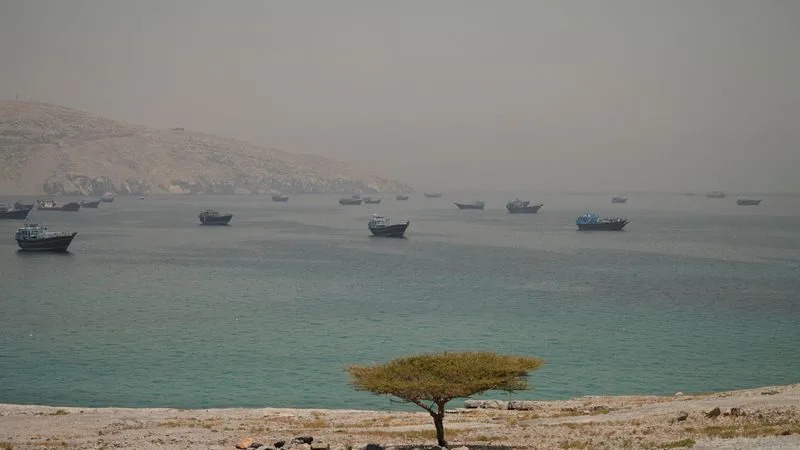
Vessels are anchored in the Strait of Hormuz, as seen from Musandam, Oman, June 11, 2026. REUTERS/Stringer
"For Tehran, the only preferred solution for its highly enriched uranium stockpile is down-blending the material," Araqchi said on state television.
Some accounts of the proposal referenced possible war reparations to Tehran and relaxed U.S. demands on Iran's missile program; U.S. officials disputed those reports and reiterated that funds would not be released until Iran performed against agreed benchmarks and that the agreement would bar financing of terrorist groups.
Regional Responses
Israel has not been part of the negotiations. Prime Minister Benjamin Netanyahu said Israel would not be a party to the agreement; Israeli officials have rejected implications that their forces would withdraw from areas where they operate and said Israel would retain the freedom to act against perceived threats. Araqchi suggested the pact would end the war in Lebanon and implied Israeli withdrawal from occupied areas, which Israeli defense officials denied.
Markets And Next Steps
News of progress toward a deal followed a week of sharp escalations across the Gulf, including Israeli-Iranian exchanges of fire, U.S. strikes on Iranian targets and Iranian reprisals against U.S. bases. Global markets reacted positively: stock indexes rose and Brent crude fell more than 3% at one point.
A Western source said the memorandum could be signed as soon as Sunday by U.S. Vice President J.D. Vance and Iran's parliament speaker Mohammad Baqer Qalibaf, possibly in Geneva; U.S. officials said European venues were being discussed but no final decision had been made. Araqchi said the deal would be signed remotely before public announcement.
Diplomats caution the arrangement remains fragile. Military incidents near the Strait of Hormuz, competing domestic politics in Washington and Tehran, and the exclusion of key regional players like Israel underline the uncertainty ahead even as negotiators move toward an initial accord.
Reporting by Reuters bureaus; writing and editing credits as reported. Sources spoke on condition of anonymity where noted.
Help us improve.





















