Ukraine has mounted a sustained drone campaign against the R-280, Russia’s last reliable overland link to Crimea, after degrading short-range air-defence systems. Formalised as a $113m "logistics lockdown," the operation uses massed middle-strike drones to hit fuel tankers and supply convoys. The strikes have caused fuel shortages and rationing in parts of Crimea and are straining Russia’s ability to sustain troops and civilian services. Analysts warn the campaign exploits gaps in air defence designed for high-end missiles, demonstrating how low-cost drones can disrupt logistics and create strategic leverage.
Ukraine Turns Russia’s Last Land Link to Crimea Into a ‘Highway of Death’
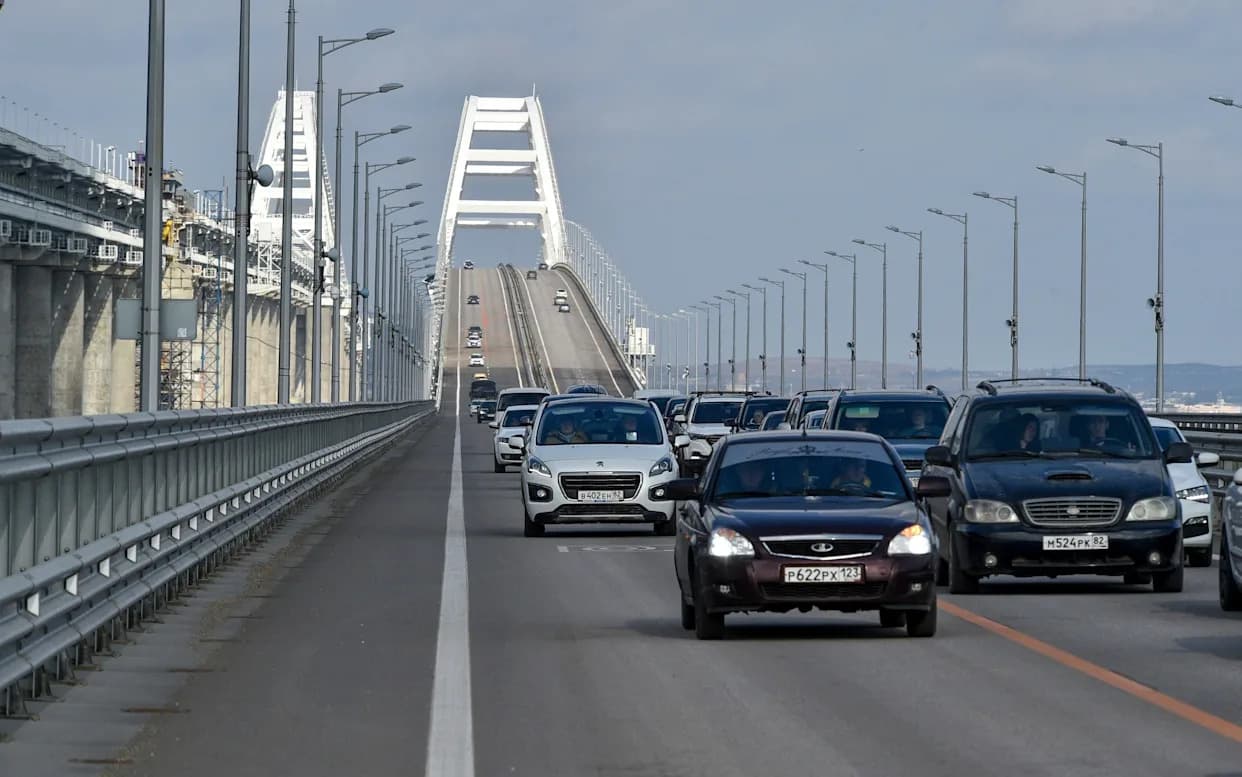
The Kerch Bridge, Russia’s alternative route to Crimea, is so heavily damaged that Moscow has long avoided sending cargo across it - AP Photo
For decades, the US bombing campaign against the Ho Chi Minh Trail was cited as the archetypal failure to sever an enemy’s logistics. In southern Ukraine, however, Kyiv appears to have found a modern solution: sustained drone strikes and coordinated attacks that have transformed the R-280 — Russia’s last dependable overland route into Crimea — into what Russian personnel now call a “highway of death.”
The R-280 runs more than 300 miles from Rostov-on-Don through occupied Mariupol and Melitopol to Crimea along the Sea of Azov coast. With the Kerch Bridge heavily damaged and risky to use for fuel and heavy cargo, the R-280 has become Moscow’s primary supply artery to forces on the southern front.
How the Campaign Works
Ukraine’s operation began not with strikes on convoys but with a focused campaign to neutralize short-range air-defence systems — notably Pantsir batteries — that shield moving logistics. By degrading or forcing the redeployment of these systems across occupied Zaporizhzhia, Donetsk and Crimea, Ukrainian forces created gaps in Russia’s coverage that drone units now exploit.
"Amateurs talk tactics and professionals talk logistics," said Robert Tollast, a land-warfare researcher at the Royal United Services Institute (RUSI). The R-280 is now the strategic target that illustrates that point.
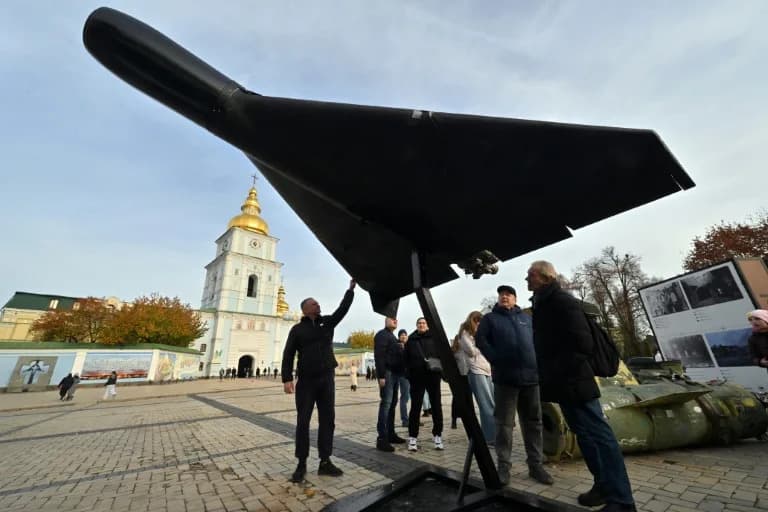
Using so-called "middle-strike" drones — including systems reported as Hornet, Darts, FP-2 and the long-range Behemoth — Ukraine has struck fuel tankers, supply trucks and convoy formations at depths of roughly 60–150 miles. The operation was formalised on May 27 as a $113 million logistics lockdown by Defence Minister Mykhailo Fedorov, though strikes had been intensifying beforehand.
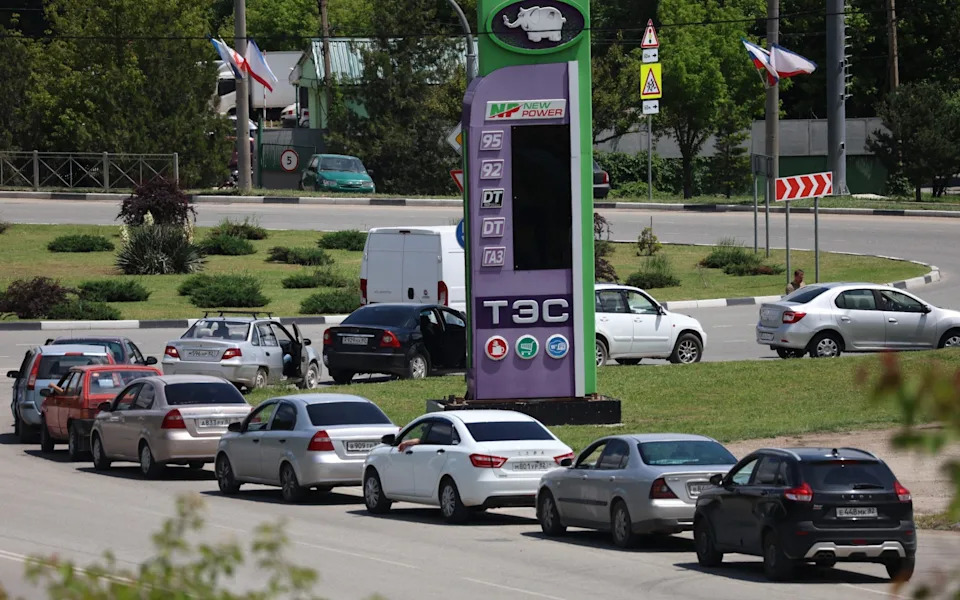
Cars line up at a petrol station in Simferopol, Crimea, amid the fuel crisis - AP Photo
Operational and Civilian Impact
Video shared by Ukrainian drone units shows tankers and logistics vehicles burning on the R-280 and footage from first-person-view (FPV) drones guiding strikes. Analysts say the approach relies on mass and tempo: many lower-cost drones overwhelm air-defence networks designed for smaller numbers of high-end missiles.
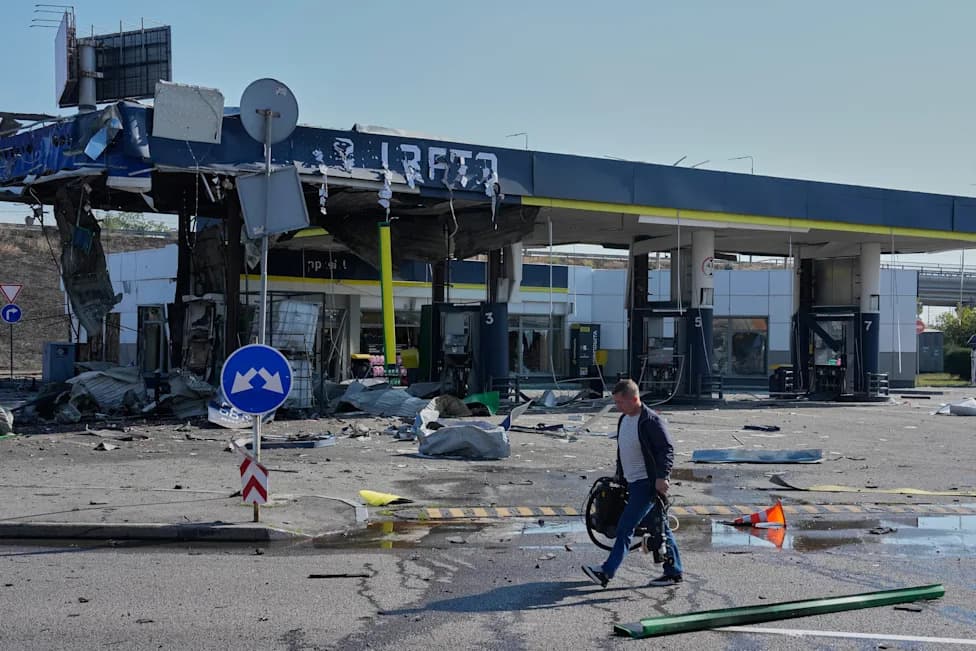
Destroying hundreds of trucks — each carrying three to five tonnes of supplies — creates acute shortages for frontline units, affecting fuel, ammunition, food and drone resupply. Observers report fuel scarcities and rationing in towns such as Sevastopol and Yevpatoriya, and civilian disruption has followed alongside operational strain. The Kremlin has dismissed some public concerns as "unfounded panic."
Moscow has attempted countermeasures — redeploying air-defence assets, adding gun trucks to convoys, experimenting with camouflage and trialling FPV interceptors — but alternatives for resupply (road, rail, sea or air) are degraded or prohibitively risky. Analysts caution that even without ground advances into Crimea, weakening its logistics creates leverage in future negotiations.
Why It Matters
The campaign highlights a key theme of modern warfare: inexpensive, mass-produced drones and careful targeting of air-defence networks can impose outsized effects on an adversary’s logistics and sustainment. If sustained, the interdiction of the R-280 threatens to degrade Russia’s ability to support forces and civilians in Crimea and shift the strategic balance in the south.
Help us improve.