
ESA says it expects a German astronaut to be chosen for either NASA's Artemis 4 or Artemis 5 mission in 2028, though the final selection between Matthias Maurer and Alexander Gerst is still pending. ESA Director General Josef Aschbacher will make the decision, while ESA continues productive talks with NASA about mission roles. NASA named Luca Parmitano as the European crew member for Artemis 3 (2027), which will remain in Earth orbit to test docking with lunar landers. ESA will provide hardware components while NASA retains mission responsibility.
German Astronaut Poised For NASA's 2028 Artemis Missions, ESA Says
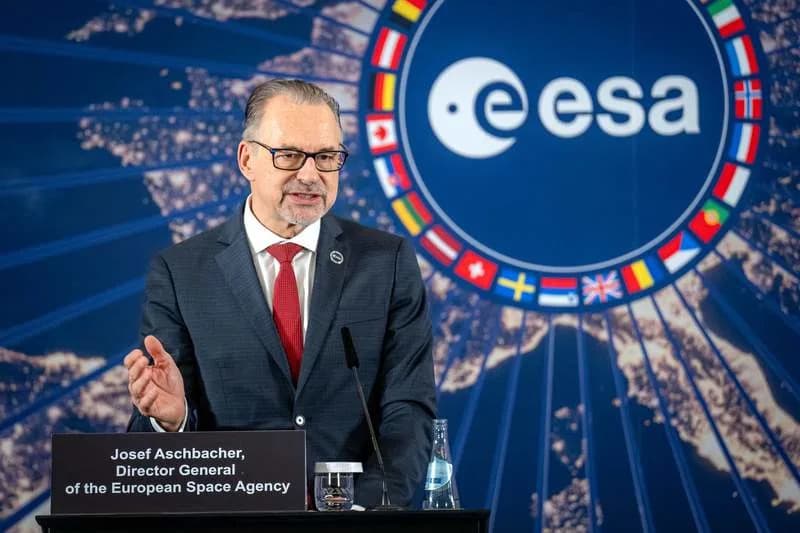
FILE PHOTO - Josef Aschbacher, ESA Director General, speaks during a press conference at the end of the ESA Ministerial Council meeting. (is associated with: «German astronaut set for 2028 moon mission, European space agency says») Sina Schuldt/dpa
The European Space Agency (ESA) says it is confident a German astronaut will be selected to fly to the moon on one of NASA's two planned 2028 Artemis missions.
Decision Still Pending
ESA confirmed on Friday that a German crew member is earmarked for either Artemis 4 or Artemis 5, but the agency emphasised that no final decision has been made. ESA Director General Josef Aschbacher told attendees at the International Aerospace Exhibition (ILA) in Berlin that he will decide which ESA astronaut will participate in the lunar flights.
Candidates And Context
The two leading German candidates are Matthias Maurer and Alexander Gerst. It has not yet been determined which of the pair will lift off from Kennedy Space Center in Florida. Both men are seasoned astronauts: Gerst visited the International Space Station (ISS) in 2014 and 2018, and Maurer flew to the ISS in 2021.
"We are convinced that a German astronaut will soon make it to the moon," Maurer told dpa.
Gerst added that lunar exploration is still in its infancy and that plans for long-term research on the moon will create further opportunities for international crew members in the coming years.
How This Fits Into Artemis
On Tuesday, NASA named Italian astronaut Luca Parmitano as the European crew member for Artemis 3, currently scheduled for 2027. NASA has said Artemis 3 will remain in Earth orbit to perform docking manoeuvres with lunar landers rather than land on the lunar surface.
Aschbacher noted that responsibility for mission execution lies with NASA, while ESA will support the Artemis programme by contributing hardware components and other support. He also acknowledged that the Artemis programme has experienced repeated delays in the past, but said there have been no recent changes to plans for Artemis 4 and 5.
What To Watch
Key next steps include ESA finalising its internal selection and ongoing coordination with NASA about mission roles and timelines. If selected, the German astronaut would join an international effort to return humans to the moon and to prepare for longer-term lunar research.
Help us improve.





















