
Scientists at Eurac Research isolated four cold-adapted yeast species from Ötzi the Iceman, detected in skin swabs, internal meltwater and stomach contents. Several strains show a mix of ancient and modern DNA and can survive at the mummy’s storage temperature (≈ -6° C). Three isolates metabolize phenol, and a proof-of-concept sourdough starter fermented and rose in 24 hours, though the final loaf needs refinement. Researchers see both conservation implications and potential low‑temperature fermentation applications.
Living Yeasts Found on Ötzi: 5,300-Year-Old Mummy Harbors Cold-Loving Microbes
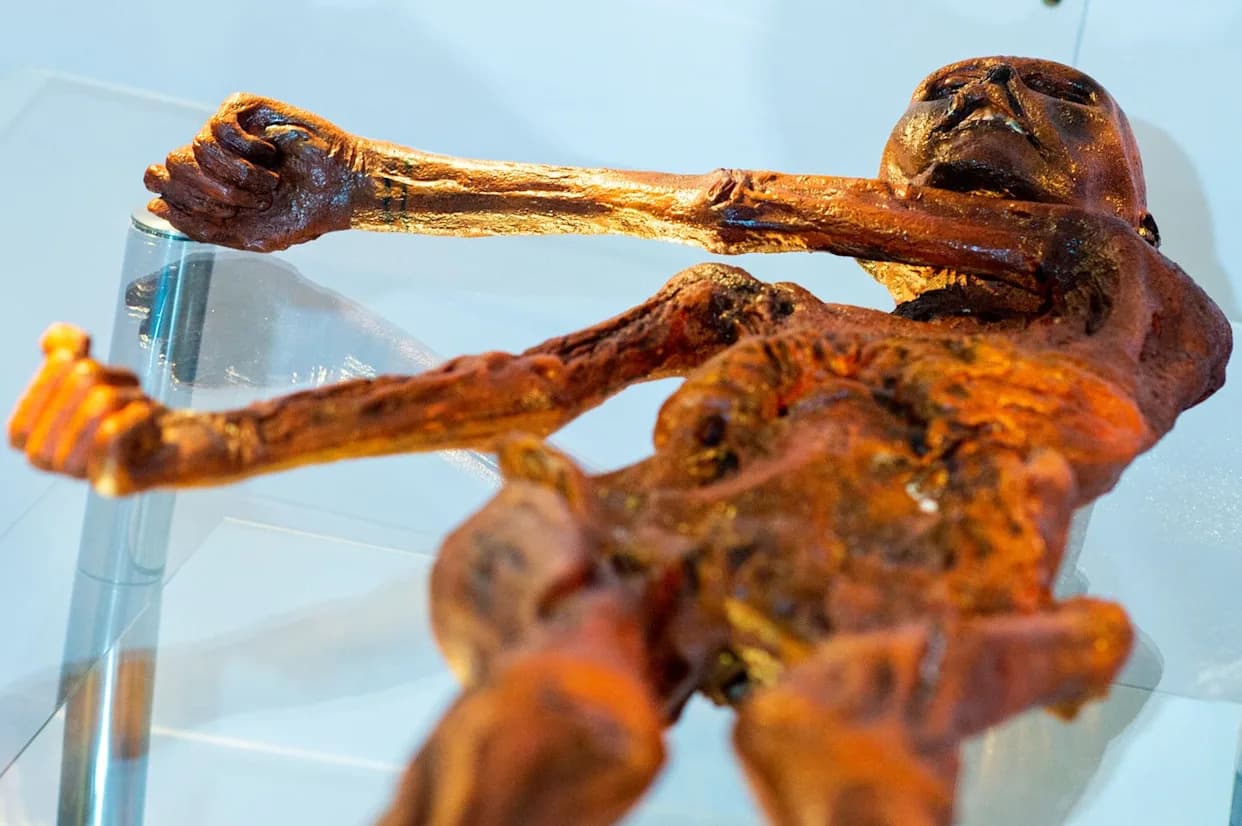
Scientists Found Life on a 5,300-Year-Old Mummypicture alliance - Getty Images
Researchers studying the microbiome of Ötzi the Iceman—one of the best-preserved ancient human remains—have isolated four living, cold-adapted yeast species clinging to his desiccated body. The discovery, led by scientists at Eurac Research in Bolzano, Italy, combines genetic reconstruction and culture-based experiments to show that Ötzi’s remains continue to host a dynamic microbial community more than 5,300 years after his death.
What the scientists found
Ötzi, discovered in 1991 on the Austria–Italy border and conserved in a custom sub-zero vault at the South Tyrol Museum of Archaeology, has long offered a rare window into Copper Age life. In a new study published in Microbiome, researchers report traces of cold-adapted (psychrophilic) yeasts in multiple sample types taken from the mummy: skin swabs, meltwater within the remains, and stomach contents. By recovering both degraded and modern DNA fragments and by isolating living strains, the team concludes that at least some of these yeasts have persisted through centuries and can survive under current storage conditions (~-6° Celsius).
Ancient vs. modern—and what it means
The researchers acknowledge that some microbes may have been introduced during Ötzi’s 1991 discovery and later conservation work. However, the mixture of ancient and contemporary genetic signatures supports the idea that the mummy experienced thaw–refreeze cycles over millennia, enabling intermittent microbial activity. As Frank Maixner, the study’s senior author, summarized:
“We see continuity here. These yeasts have accompanied Ötzi on his long journey through the millennia.”
Lab work and surprising abilities
To separate ancient survivors from modern contaminants, the team cultured microbes from the samples and produced four viable yeast species. Notably, three of the isolates can metabolize phenol—a compound historically used to control fungal growth and applied during conservation—demonstrating metabolic flexibility that may have aided their persistence.
Practical experiments and implications
Researchers ran a proof-of-concept fermentation using the cold-adapted yeasts to make a sourdough starter. Because these strains are adapted to low temperatures, they can ferment without additional heating, which could save energy. The starter did cause dough to rise within 24 hours, though the team reported the resulting bread still needed refinement. Lead author Mohamed Sarhad noted they are also considering other low‑temperature fermentation applications, including beer.
Beyond potential biotechnological uses, the work highlights how ancient human remains can remain biologically active interfaces long after death, offering insights into past microbiomes and microbes with unusual adaptations. The study also underscores the need for careful conservation practices and biosecurity when working with long-preserved human material.
Key quotes
“We want to characterize these yeasts more precisely in terms of their function and systematically investigate their properties,” said Mohamed Sarhad. “At the same time, we’re considering how they could be put to practical use and would like to experimentally test various potential applications.”
Help us improve.





















