
US strikes overnight reportedly damaged civilian water infrastructure on Iran's southern coast, cutting supplies to Kuhestak and 10 nearby villages, Iranian media said. More than 20,000 residents are said to be without drinking water amid temperatures above 30°C, creating urgent humanitarian concerns. The strikes came after the downing of a US helicopter off Oman, according to US officials, and Iran reportedly struck US bases in the Gulf and Jordan. CENTCOM later said the US "self-defense strikes" were completed.
US Strikes Leave About 20,000 Without Water in Southern Iran as Tensions Escalate
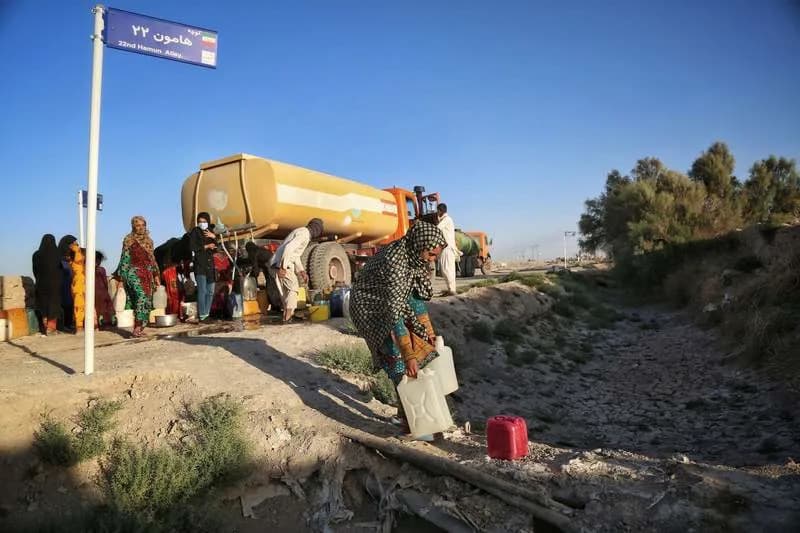
FILE PHOTO - Iranians fill water from a tanker near the dried-up Lake Hamun in Zabol. (is associated with: «Iran: Some 20,000 residents left without water following US strike») Mohammad Dehdast/dpa
Thousands of residents on Iran's southern coast have been left without drinking water after overnight US strikes reportedly damaged civilian water infrastructure, Iranian media said on Wednesday.
Mehr news agency, citing a government official, reported that the drinking-water supply to the city of Kuhestak in Hormozgan Province and 10 nearby villages was completely severed.
“As a result of this incident, more than 20,000 residents of the region, who already live under difficult climatic conditions and extreme heat, have been cut off from access to water,”the agency quoted the official as saying. Iranian outlets published images they said show destroyed water reservoirs.
Temperatures along Iran’s southern coast are currently well above 30°C, raising immediate humanitarian concerns for those now without access to safe drinking water.
The reported strikes followed an incident on Monday night in which US forces say Iranian units shot down a US military helicopter off Oman — an action US President Donald Trump cited as the reason for the attacks. Iranian media said Tehran then retaliated by striking US bases across the Gulf region and in Jordan. Early on Wednesday, CENTCOM — the US command responsible for the area — said the US "self-defense strikes" targeting Iran were completed.
Verification and context: Independent confirmation of the extent of infrastructure damage and any casualties has not yet been published; current reporting relies primarily on Iranian state and regional media. Humanitarian agencies have not issued a detailed response as of the latest reports.
Humanitarian impact: With more than 20,000 people reportedly cut off from water amid extreme heat, the risk of dehydration and public-health problems is elevated. Local and international relief efforts, as well as independent on-the-ground reporting, will be important to confirm needs and coordinate assistance.
What to watch next: Independent verification of damage, official statements from humanitarian agencies, and any further military developments that could affect civilians and critical infrastructure in the region.
Help us improve.





















