
U.S. officials told ABC News that sharp exchanges between Israel and Iran have alarmed the Trump administration about the risk of a wider war. President Trump called Prime Minister Netanyahu twice—first urging restraint after Iran’s missile barrage and later pressing more forcefully to halt further strikes. Both countries said they would comply for now, but warned they could resume hostilities if provoked. Diplomacy remains fragile, complicated by disputes over nuclear commitments and financial terms between Washington and Tehran.
Trump Urges Restraint as Israel and Iran Exchange Heavy Fire
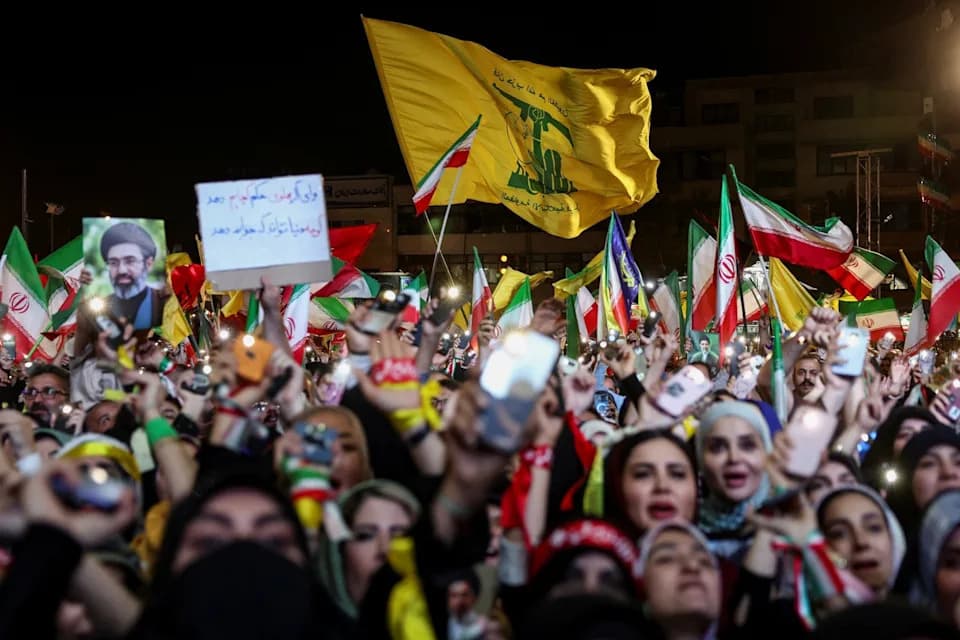
Majid Asgaripour/via Reuters - PHOTO: A Hezbollah flag is seen during an anti-U.S. and anti-Israel rally after Iran's missile attack on Israel, in Tehran, Iran, on June 7, 2026.
The latest round of strikes between Israel and Iran has heightened concern within the Trump administration about the risk of a broader regional war, U.S. officials told ABC News. President Donald Trump made repeated calls to Israeli Prime Minister Benjamin Netanyahu as tensions escalated, seeking to prevent Israel from mounting further large-scale retaliatory attacks.
According to two sources familiar with the conversation, Mr. Trump phoned Mr. Netanyahu after Iran launched a missile barrage on Sunday and initially sought to persuade the prime minister against a major counterstrike. The president’s tone reportedly softened during the first call, but as Israeli and Iranian forces continued to trade strikes, administration officials grew alarmed at the intensity and potential for rapid escalation.
That alarm prompted a second call in which Mr. Trump more forcefully urged Israel to stand down. "Israel and Iran must immediately stop 'shooting,'" the president posted Monday morning on his social media platform.
Immediate Developments
Both Israel and Iran publicly signaled they would comply with the president’s request for the moment, but officials warned either side could resume hostilities if provoked. U.S. officials view renewed direct conflict as increasingly possible given Tehran’s willingness to play a larger role in clashes via its proxy, Hezbollah, in southern Lebanon.
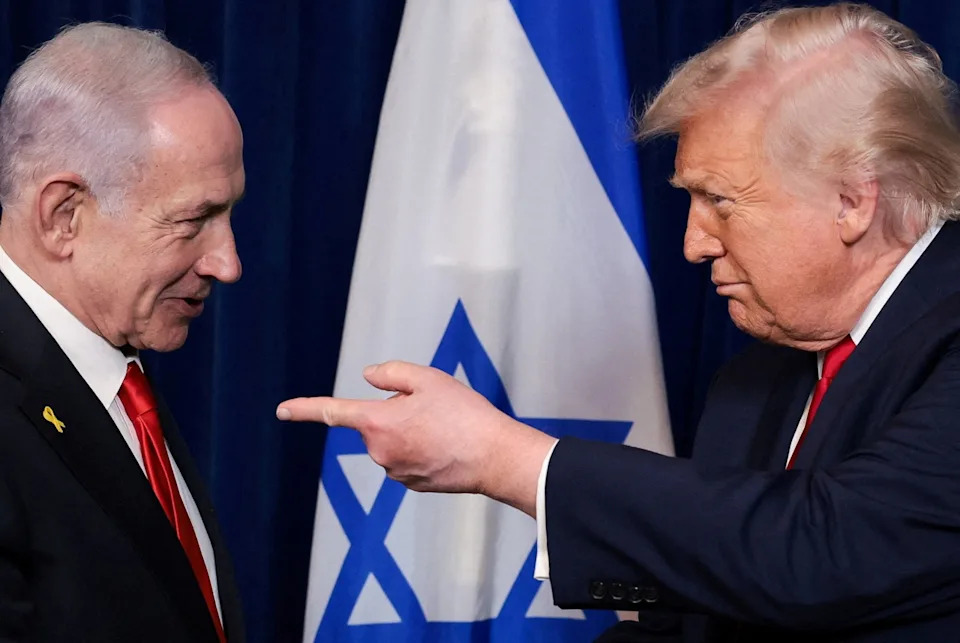
Jonathan Ernst/Reuters - PHOTO: Donald Trump points his finger towards Israeli Prime Minister Benjamin Netanyahu during a press conference after meeting at Mar-a-Lago club in Palm Beach, Florida, December 29, 2025.
Hours before Iran’s direct missile strikes—the first since the fragile cease-fire took hold in April—Israel struck Hezbollah positions near Beirut. Netanyahu described those strikes as retaliation for a prior Hezbollah attack. Iran had earlier warned it would respond if Israel continued operations against Hezbollah.
Statements And Stakes
Iran’s joint military command warned that "if the aggressions and provocations continue, including in southern Lebanon, much more severe and decisive actions than before will follow." In contrast, Mr. Netanyahu maintained that Iran and Hezbollah "are weaker than ever," while cautioning that "our struggle with them is not over yet."
U.S. officials say the administration has privately urged Israel to moderate its campaign in Lebanon to preserve diplomatic space for negotiations, though Israel insists the operations are vital to its national security. American frustration has reportedly grown over what some in Washington view as Israeli domestic political considerations shaping military decisions.
Wider Diplomatic Context
Separately, the Trump administration says it is close to an understanding with Iran that could extend the cease-fire, reopen navigation through the Strait of Hormuz and launch detailed nuclear talks. But sources involved in those negotiations say significant obstacles remain, including disagreements over the initial scope of Iran’s nuclear commitments and financial terms for Tehran. Washington has sought to keep talks over the Lebanon fighting distinct from broader negotiations with Iran, while Tehran insists any agreement should apply to Lebanon and result in a full Israeli withdrawal from the country.
Why It Matters: A misstep or a single provocative strike in southern Lebanon or elsewhere could rapidly widen the conflict beyond localized exchanges, drawing in regional actors and jeopardizing fragile diplomacy between Washington and Tehran.
Help us improve.





















