Genomic analysis of 3,723 people across 85 populations finds Indigenous Andeans average about 10 salivary amylase gene copies versus a global average near seven. Population-genetic models indicate individuals with ≥10 copies had an estimated 1.24% higher chance of surviving and reproducing, a signal consistent with natural selection after potato domestication roughly 10,000 years ago. The functional advantage may involve greater calorie extraction from starchy foods, microbiome or metabolic effects, and follow-up experiments are planned.
Ancient Potatoes, Modern Genes: Andeans Evolved Extra Amylase Copies for Better Starch Digestion
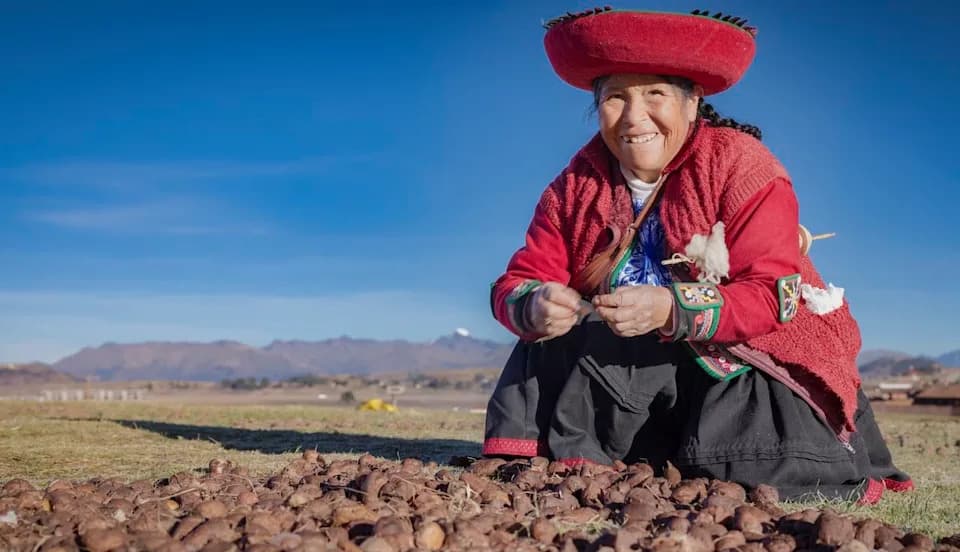
Indigenous Andeans in Peru have more copies of a gene that helps with starch digestion than anyone else in the world. . | Credit: hadynyah via Getty images
A new genetic study suggests Indigenous Andeans in Peru carry an unusually high number of copies of the salivary amylase gene — the gene that helps break down starches in the mouth — likely as an adaptive response to long-term potato cultivation.
What the Study Found
Researchers analyzed genome data from 3,723 people across 85 populations and mapped copy-number variation of the salivary amylase gene. They report that the Indigenous Andeans sampled average about 10 copies of the gene, compared with a global average near seven copies. Using population-genetic models, the team estimated individuals with 10 or more copies had an approximately 1.24% higher chance of surviving and leaving offspring beginning around 10,000 years ago — consistent with natural selection following local potato domestication.
Evidence, Limits and Other Populations
The Akimel O'odham people from southern Arizona and northern Mexico also showed high amylase copy numbers in the dataset, but their sample size was too small for reliable selection tests. The authors describe the Andean signal as strong: such a modest-sounding selective advantage compounds across generations and can produce large evolutionary change over millennia.
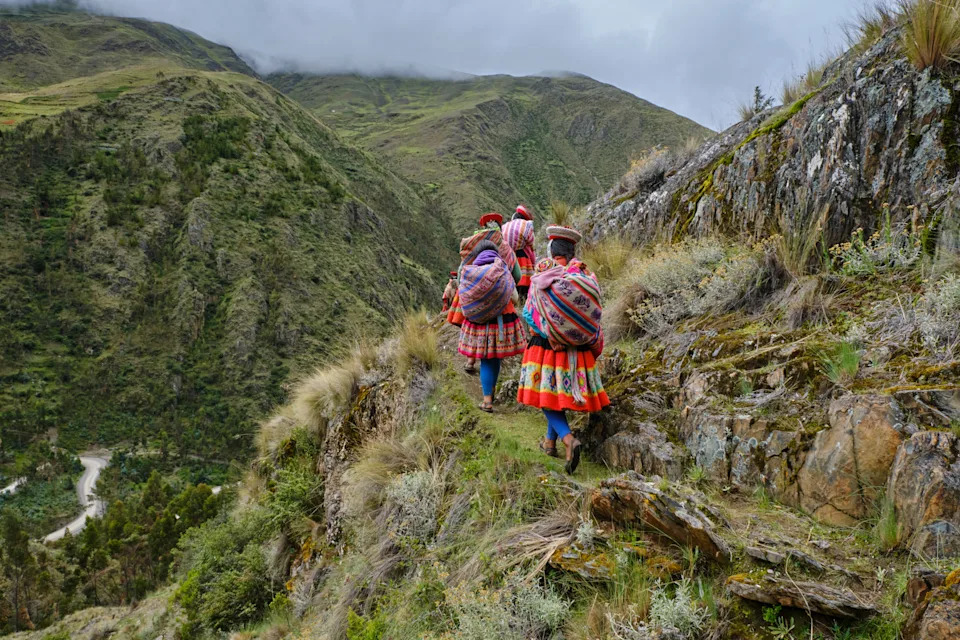
Indigenous populations in the Andes domesticated the potato around 6,000 to 10,000 years ago. | Credit: Tuul & Bruno Morandi via Getty images
"It's actually a life-or-death kind of situation," said study co-author Omer Gokcumen of the University at Buffalo, emphasizing the strength of the selective pressure implied by the data.
Possible Functional Reasons
The precise physiological advantage remains under investigation. The researchers and outside experts suggest several plausible mechanisms: increased calorie extraction from cooked potatoes, changes in the oral or gut microbiome, altered metabolism, or impacts on immunity. Follow-up laboratory and physiological experiments are underway to test these hypotheses.
Why This Matters
The work illustrates how cultural practices such as plant domestication can shape human genomes. As human genomics expert Charles Lee noted, salivary amylase copy-number variation is a clear example of how complex structural variants can intersect with diet, culture and human evolution.
Study Source: Paper published May 5 in Nature Communications. Analysis based on 3,723 genomes from 85 populations; key analyses focused on Indigenous Andean samples from Peru.
Help us improve.