
State-linked footage shows crowds in Tehran and Kermanshah celebrating after Iran launched ballistic missiles at Israel, an action Tehran described as retaliation for strikes in Lebanon. Analysts caution that televised rallies are largely choreographed displays by regime loyalists rather than clear indicators of nationwide support. Iran is also facing severe economic strain — official figures show annual inflation surging and merchandise imports plunging — which observers say could erode long-term domestic backing for the government.
State Media Shows Celebrations After Iran’s Missile Strikes On Israel; Analysts Call Rallies Choreographed
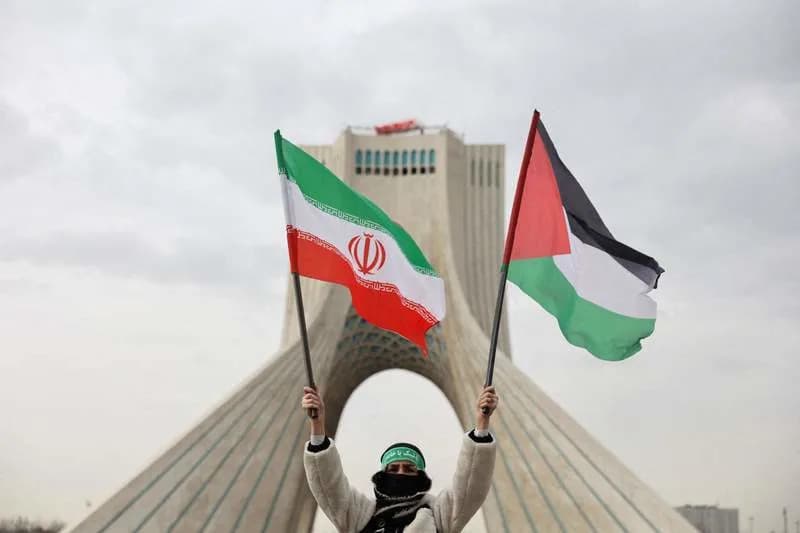
A person holds up an Iranian and Palestinian flag near Azadi Tower during the 47th anniversary of the Islamic Revolution in Tehran, Iran February 11, 2026. (photo credit: MAJID ASGARIPOUR/WANA (WEST ASIA NEWS AGENCY) VIA REUTERS)
State-linked Iranian outlets released footage showing people in Tehran and Kermanshah celebrating after Iran launched ballistic missiles toward Israel, ending a period of relative calm that followed a pause in hostilities in April. Videos show drivers honking, crowds chanting and flags bearing Iran’s emblem alongside banners associated with Hezbollah.
What Happened
Iran said the late-night and early-morning missile launches were retaliation for Israeli strikes inside Lebanon. Iranian material framed the barrage as a response to actions by Israel and as support for allied groups in Lebanon, including Hezbollah, which has been engaged in exchanges with Israeli forces.
Footage And Eyewitness Comments
State-linked outlet Tabnak published clips of people driving through city streets, sounding horns and shouting phrases such as Allahu Akbar. NBC News also aired video of a civilian who described the scenes as an expression of "pride," saying Iran’s missile capability "still exists" despite months of regional tension and conflict.
Analysts’ Caution
Roger Macmillan, a security analyst and Iran specialist, warned that such televised gatherings often reflect a managed display rather than broad public opinion. He said these events are typically organized by core regime loyalists and Basij networks and should not be treated as a representative sample of Iranian sentiment.
Macmillan and other analysts argue the rallies function as choreographed signals of cohesion during moments of military escalation rather than spontaneous, countrywide celebrations.
Economic Context
Economic strain in Iran provides important context for domestic reactions. Arman Khaleghi, head of Iran’s Chamber of Commerce, Industries and Mines, told Al Jazeera that multiple factors have driven inflation to historic levels, including removal of a subsidized exchange rate, market disruptions from earlier protests, rising wages and energy costs, and disruptions to trade.
Official Central Bank figures cited in reporting show annual inflation rose to 77.2% for the period from April 21 to May 20, and point-to-point inflation for goods reached 113%. The central bank also reported a 32% decline in merchandise imports in the fiscal year ending March 21 compared with the prior year. Media outlets have documented shortages of some medicines and a deepening cost-of-living squeeze.
Potential Political Effects
Analysts say that sustained economic hardship could weaken the regime’s ability to mobilize supporters. "Once the regime stops making salary payments, their will to fight will ebb away," Macmillan said, arguing that when economic pressures bite even regime enforcers and loyalists may begin to question leadership and priorities.
Sources And Caveats
This article draws on state-linked Iranian media, international outlets such as NBC News, comments from Iranian economic and security figures, and Central Bank data cited in recent coverage. Some claims circulating in media narratives about the sequence of events and motivations remain contested; the report corrects an earlier inaccurate reference to the assassination of Iran’s Supreme Leader, which is false — Ayatollah Ali Khamenei remains alive. The descriptions above reflect publicly available footage and expert commentary but do not attempt to independently verify every claim made by the parties involved.
Help us improve.





















