
After 100 days, a fragile ceasefire has reduced but not ended hostilities. The human toll is severe—thousands killed and millions displaced in Iran and Lebanon—and Israeli forces occupy roughly 2,000 sq km of Lebanese territory. The effective closure of the Strait of Hormuz collapsed oil flows, sending Brent from about $70 to near $100 per barrel and pushing petrol prices higher worldwide. Diplomacy in Islamabad faltered amid deep mistrust, leaving markets and households vulnerable to further shocks.
100 Days Of The Iran War: Human Toll, Global Market Shock And A Fragile Ceasefire
(Al Jazeera)
Sunday marks 100 days since a conflict that US President Donald Trump predicted would end “very fast” began. Despite a ceasefire agreed on April 8, sporadic fighting, disrupted shipping and faltering diplomacy have kept the region and global markets under strain.
INTERACTIVE - LEBANON YELLOW LINE_MAY31_2026_3-1780440840
Death Toll, Displacement And Frontlines
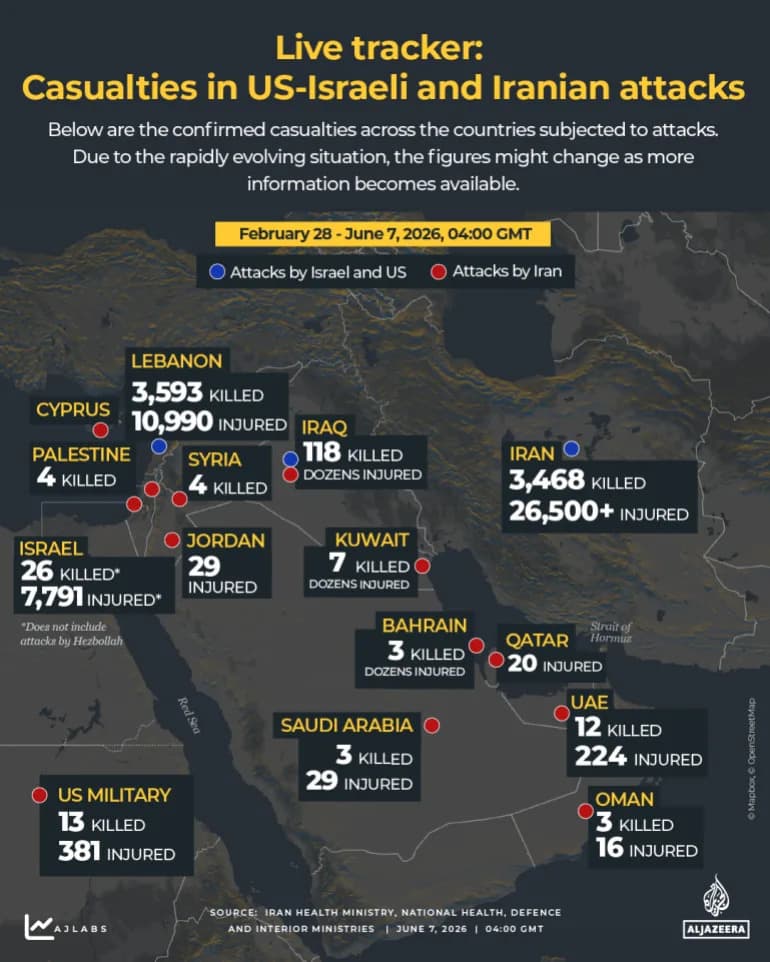
Preliminary official and open-source counts show a heavy human cost: at least 3,593 confirmed killed in Lebanon, 3,468 in Iran and 29 in Gulf states. Iranian strikes since the start of the US–Israel campaign have also been linked to the deaths of 26 Israelis and 13 US soldiers. These totals remain provisional as reporting continues.
[Al Jazeera]
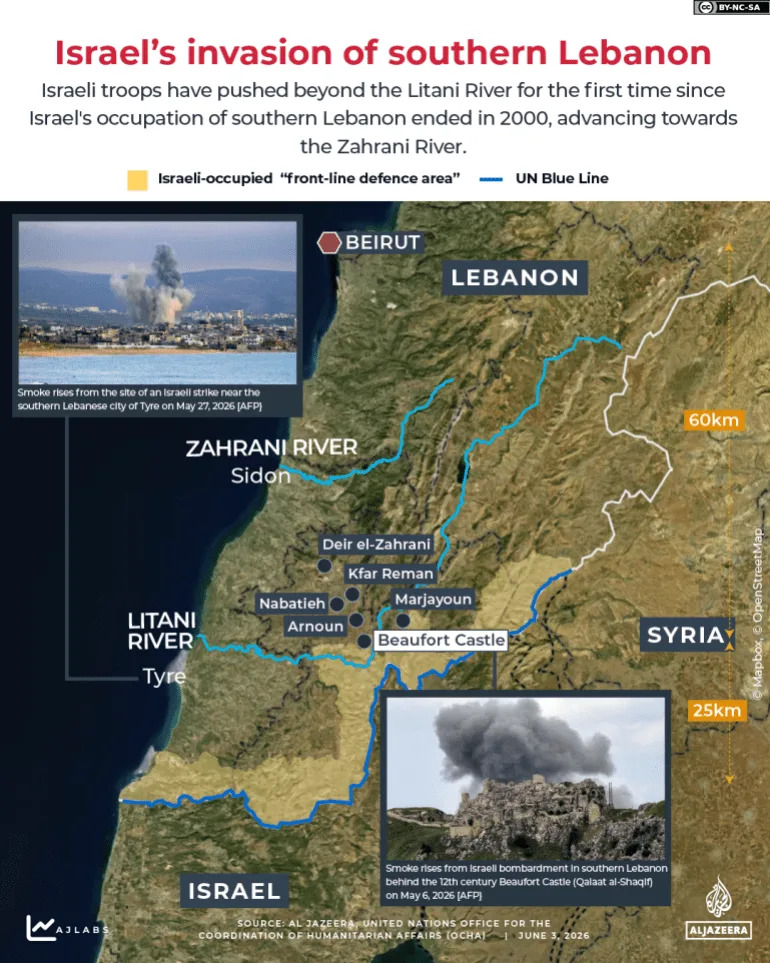
Although a separate ceasefire took effect in Lebanon on April 17, heavy Israeli bombardment of the country’s south has continued. More than 1 million Lebanese people have been displaced, and Prime Minister Nawaf Salam described the operations as “a scorched‑earth policy and collective punishment.” By June 1, Israeli forces had reached the outskirts of Nabatieh and seized Beaufort Castle, occupying roughly 2,000 sq km (770 sq mi)—almost one‑fifth of Lebanon.
INTERACTIVE - 100-daysHow many ships passed through the Strait of Hormuz-1780591111
In Iran, US‑Israeli strikes in the campaign’s opening weeks displaced more than 3 million people and damaged critical infrastructure and civilian sites.
Interactive_100days_war_June4_2026-02-1780589852
Strait Of Hormuz, Shipping And Trade
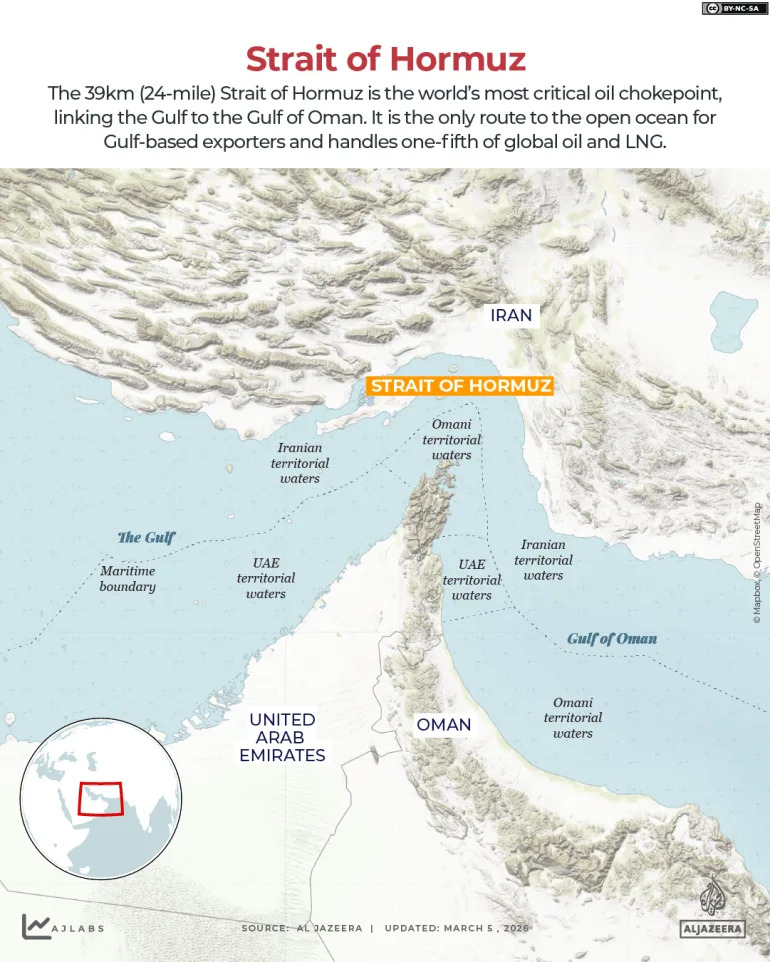
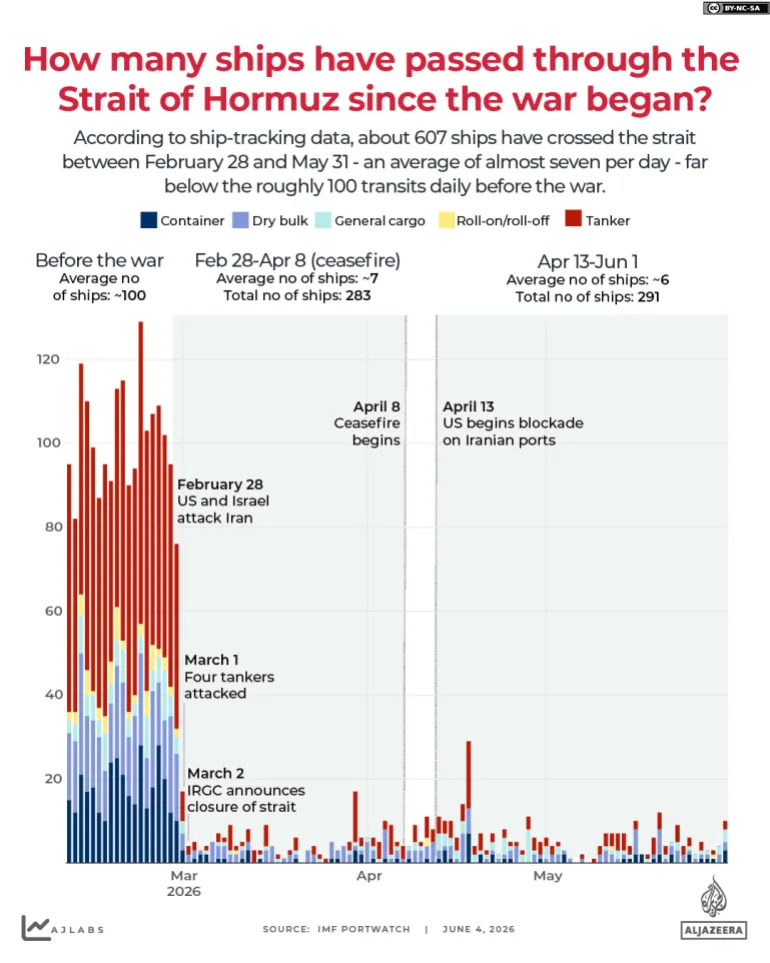
The Strait of Hormuz—a strategic chokepoint that previously handled about one‑fifth of the world’s oil and gas—has experienced a dramatic fall in traffic. Ship‑tracking data show around 607 vessels transited between February 28 and May 31 (an average of ~7 per day), versus roughly 100 daily transits before the war. A US naval blockade of Iranian ports since mid‑April and the de facto closure of the strait have stranded tankers, lengthened voyage routes, tightened vessel availability and pushed freight rates sharply higher.
Energy Shock And Cost‑Of‑Living Impacts
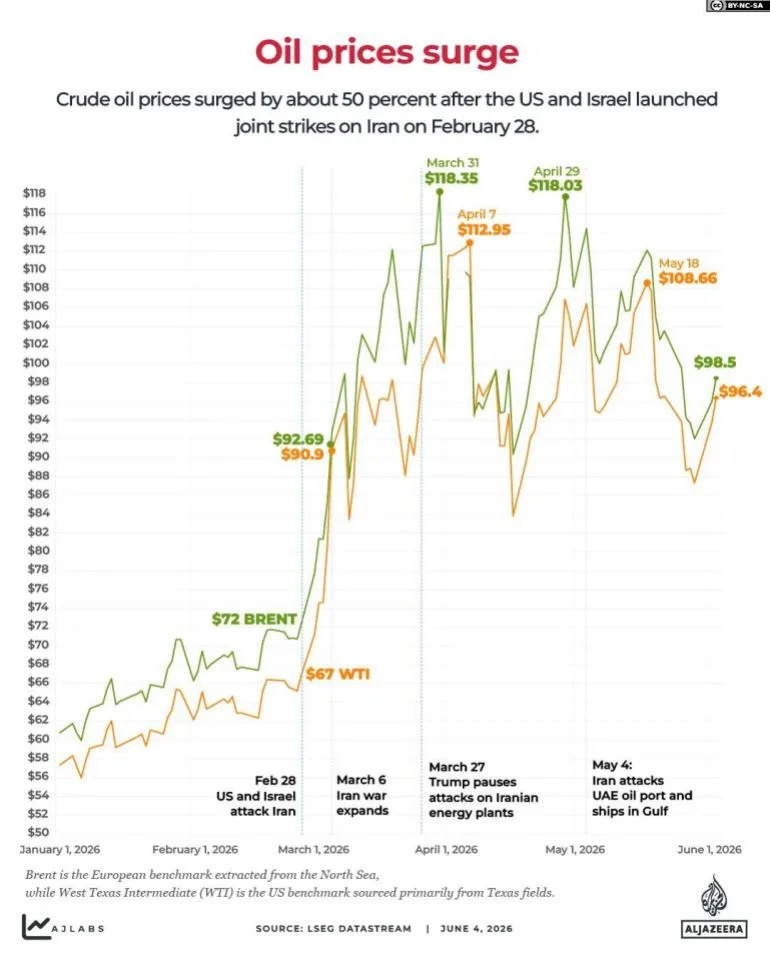
The International Energy Agency called the disruption the largest energy shock on record. Brent crude moved from about $70 per barrel before the war to above $100 within a week, peaking near $120 before stabilising around $100. Social media commentary by President Trump—notably on Truth Social—repeatedly moved oil futures, contributing to volatile, multibillion‑dollar swings.
[Al Jazeera]
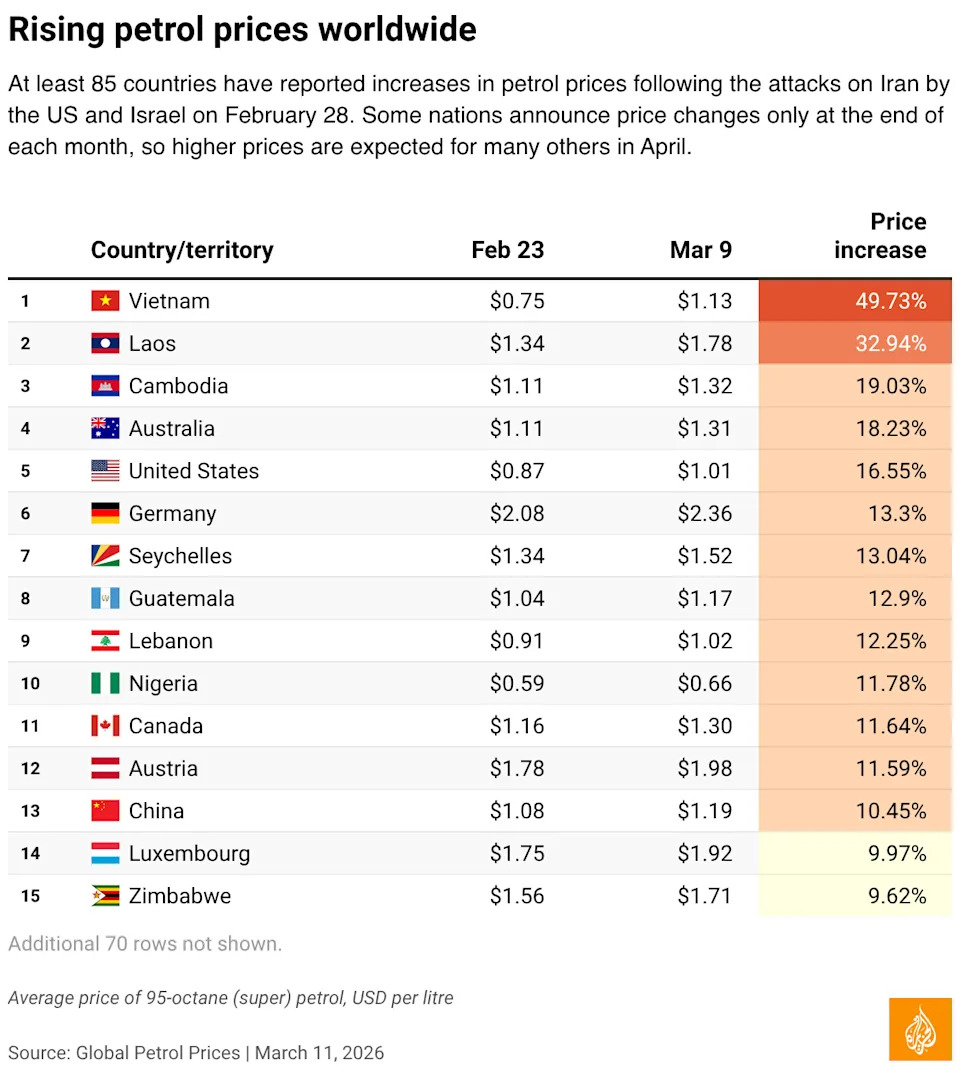
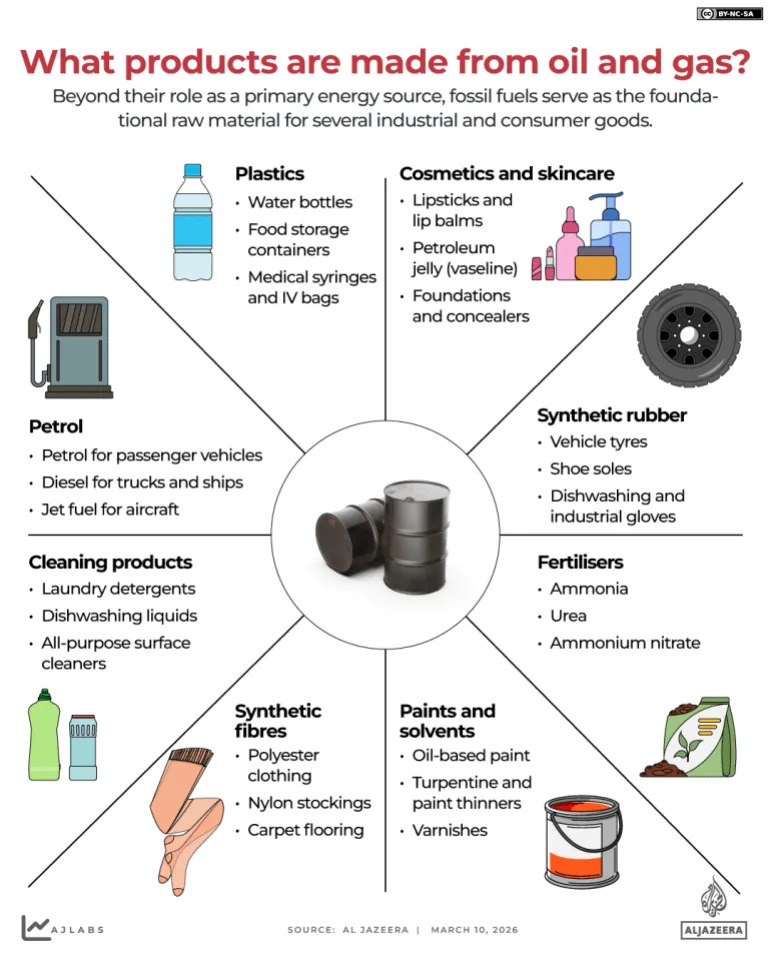
Consumers have felt the impact: at least 146 countries reported higher petrol prices since late February. Some of the sharpest increases were recorded in Asia and emerging markets—Myanmar saw petrol rises exceeding 90% in the conflict’s first three months, Nigeria over 50%, and Peru roughly 40%. Higher energy and natural‑gas costs also raised fertiliser prices and food‑production expenses, amplifying inflationary pressures through the global supply chain.
Interactive_100days_war_June4_2026-01-1780589849
Financial Markets And The Wider Economy
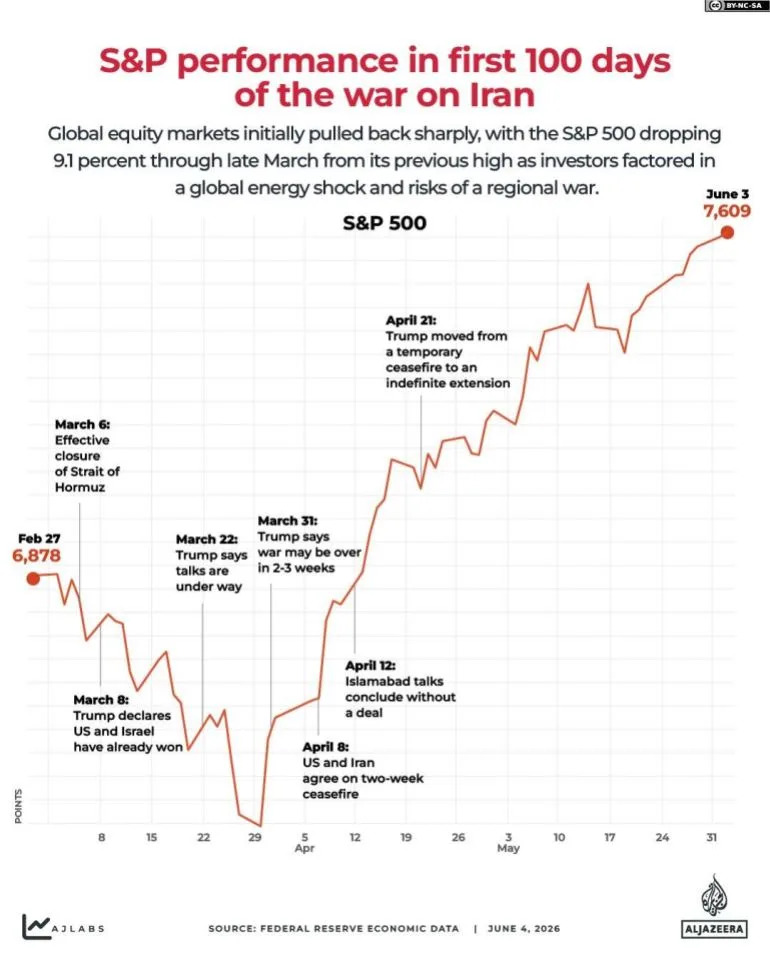
Global equity markets initially reacted sharply: the S&P 500 fell about 9.1% through late March as investors priced in an energy shock and the risk of a broader regional conflict. European and Asian indices were hit hard given their exposure to energy inputs, while US markets were buoyed by a parallel boom in artificial‑intelligence infrastructure and semiconductor demand, helping the Nasdaq and S&P 500 reach record highs despite the geopolitical shock.
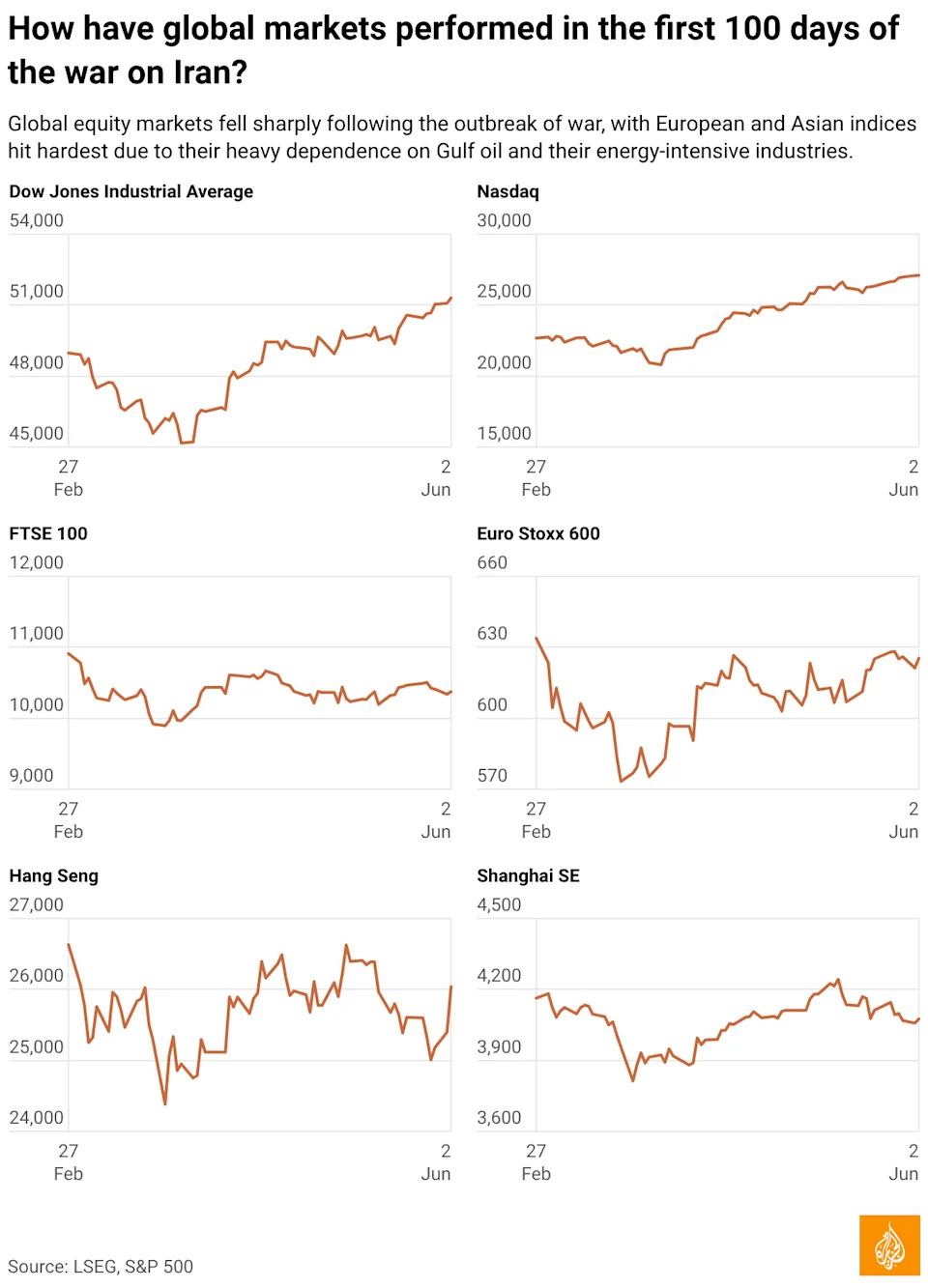
Analysts warn sustained high energy prices could contract growth, raise inflation and increase recession risk. Hadi Kahalzadeh of the Quincy Institute said the war has already contracted global GDP and raised inflation, though the full, long‑term effects on supply chains remain uncertain.
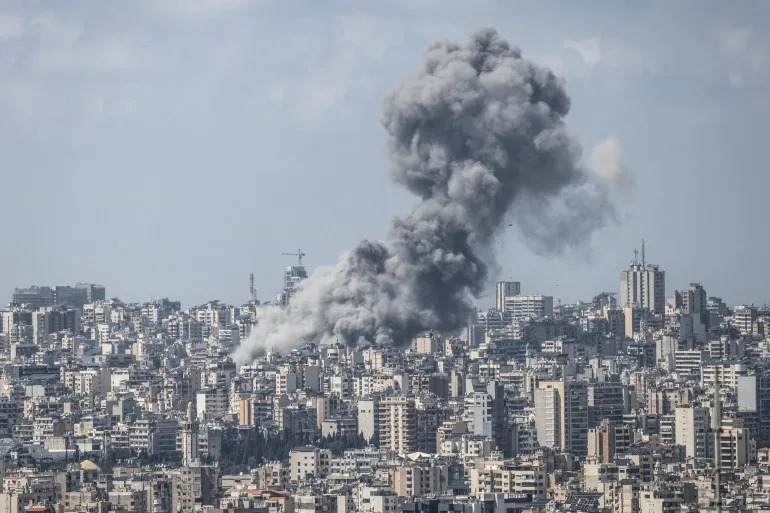
Smoke rises following Israeli air strikes over Beirut and its southern suburbs on April 8, 2026 [Anwar Amro/AFP]
Diplomacy, Ceasefires And Faltering Talks
A Pakistan‑brokered two‑week ceasefire took effect on April 8, with an agreement intended to pause hostilities and reopen shipping through the strait. Within hours, however, Israel launched more than 100 air strikes across Lebanon, killing over 250 people. Negotiations in Islamabad (April 11–12) produced limited progress and collapsed over nuclear issues and mutual mistrust: Tehran rejected US positions, and US officials dismissed Iran’s counter‑proposals.
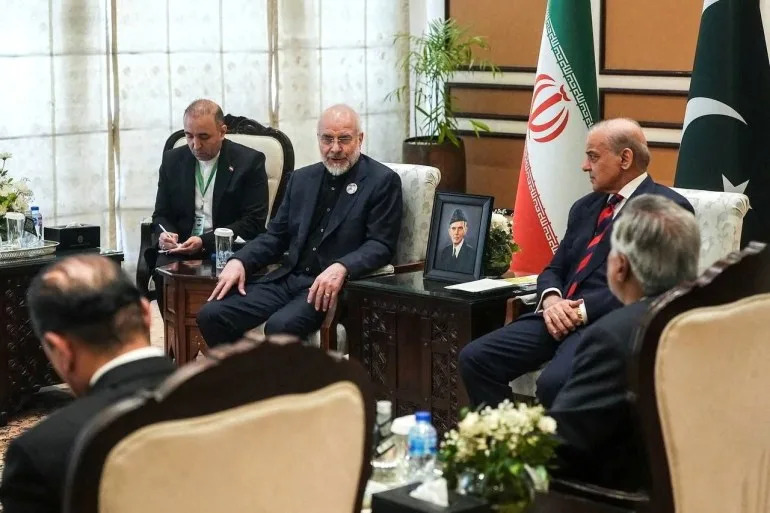
Pakistan’s Prime Minister Shehbaz Sharif meets with Iranian Parliament Speaker Mohammad Bagher Ghalibaf, as delegations from the United States and Iran are expected to hold peace talks, in Islamabad, Pakistan, April 11, 2026. [Handout/Reuters]
“A narrower, detailed agreement is going to be much harder to reach,” said Omar Rahman of the Middle East Council on Global Affairs, noting a deep trust deficit between Tehran and Washington.
Twice, fighting resumed in the middle of diplomacy—underscoring how fragile talks remain and how easily ceasefires can fray.
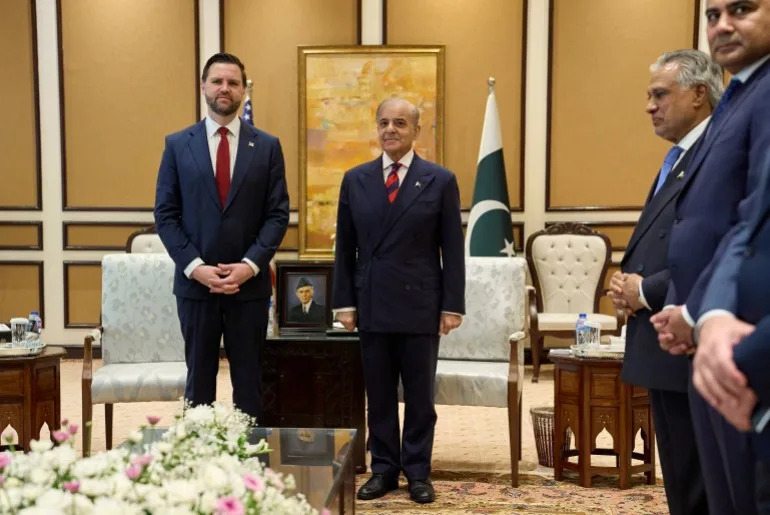
Left to right, US Vice President JD Vance meets Pakistan’s Prime Minister Shehbaz Sharif during their meeting on April 11, 2026, at Islamabad, Pakistan [Jacquelyn Martin/Pool/Getty Images]
Political Fallout
Domestically in the US, the conflict and the administration’s handling of it have affected public opinion: as of June 2 the RealClearPolitics average showed President Trump at 40.3% approval and 57% disapproval, a net negative gap of 16.7 points.
After 100 days, the ceasefire has reduced but not ended hostilities. Shipping and trade remain disrupted, millions are displaced, and global markets continue to absorb a potent energy shock. Negotiations may resume, but without durable, enforceable agreements and greater mutual trust the human and economic toll could widen further.
Help us improve.





















