Armenia’s June 7 parliamentary election is a strategic inflection point: it may determine whether a U.S.-brokered peace with Azerbaijan and a U.S.-preferred trade corridor endure. Recent high-level U.S. visits—by Vice President J.D. Vance and Secretary of State Marco Rubio—and a presidential endorsement signal strong American interest. Leaked documents and investigations point to a coordinated Russian influence campaign backing billionaire Samvel Karapetyan. The author urges targeted sanctions under Executive Order 14024 and accelerated U.S. investment in Armenia’s AI and software sectors to strengthen Armenian resilience.
Why Armenia’s Election Is a Strategic Test for the United States
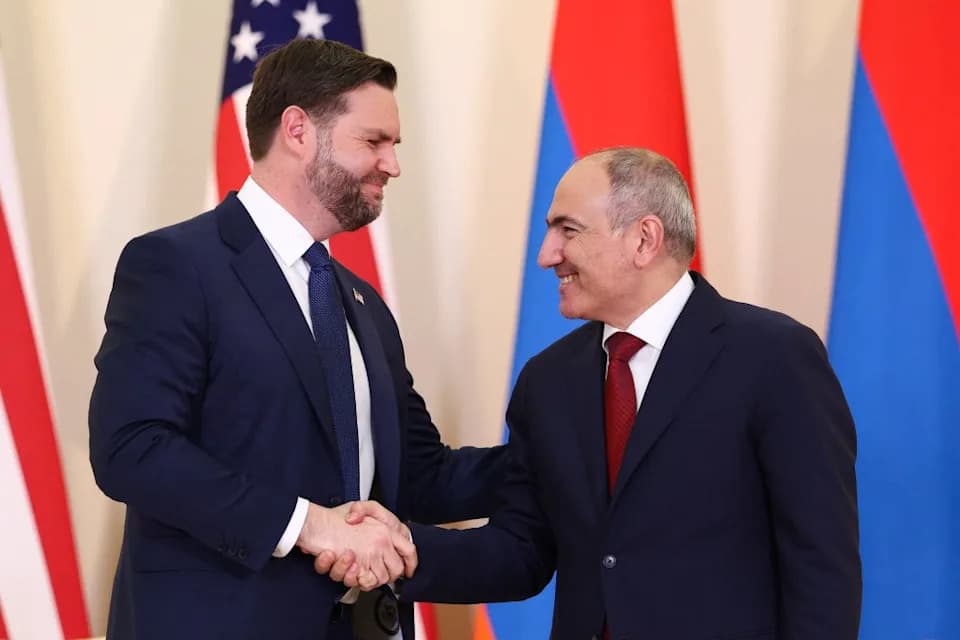
U.S. Vice President JD Vance (L) and Armenian Prime Minister Nikol Pashinyan (R) shake hands at the end of a press conference following their meeting in Yerevan on February 9, 2026.
Over the past six months, U.S. foreign policy has been consumed by crises involving Iran, Russia, and the wider fallout from a war that has reshaped the Middle East. Yet Washington has also focused on a small South Caucasus nation of roughly three million people: Armenia.
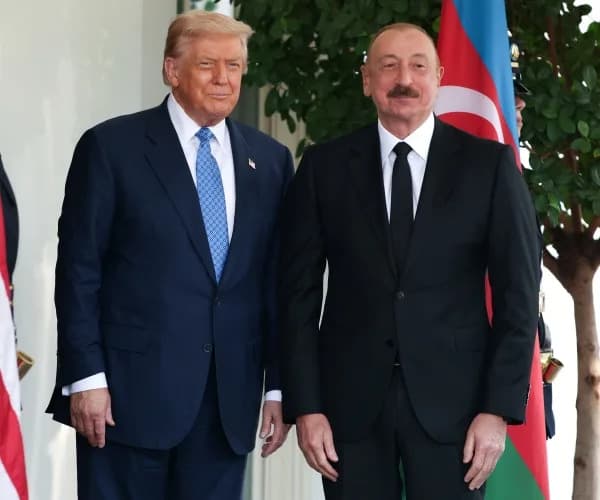
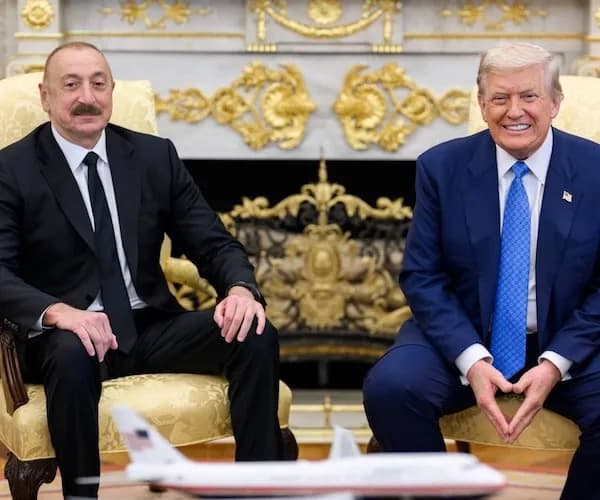
American engagement in Yerevan has been conspicuous and high-level. In February, Vice President J.D. Vance became the highest-ranking U.S. official to visit Armenia, announcing up to $9 billion in nuclear-energy investment and an $11 million sale of reconnaissance drones. On May 26, Secretary of State Marco Rubio paused in Yerevan—while negotiations over the Iran war were at a sensitive point—to sign a framework agreement on the Trump Route for International Peace and Prosperity (TRIPP), a strategic partnership charter, and a memorandum on critical minerals. The next day, President Donald Trump publicly endorsed Prime Minister Nikol Pashinyan’s reelection.
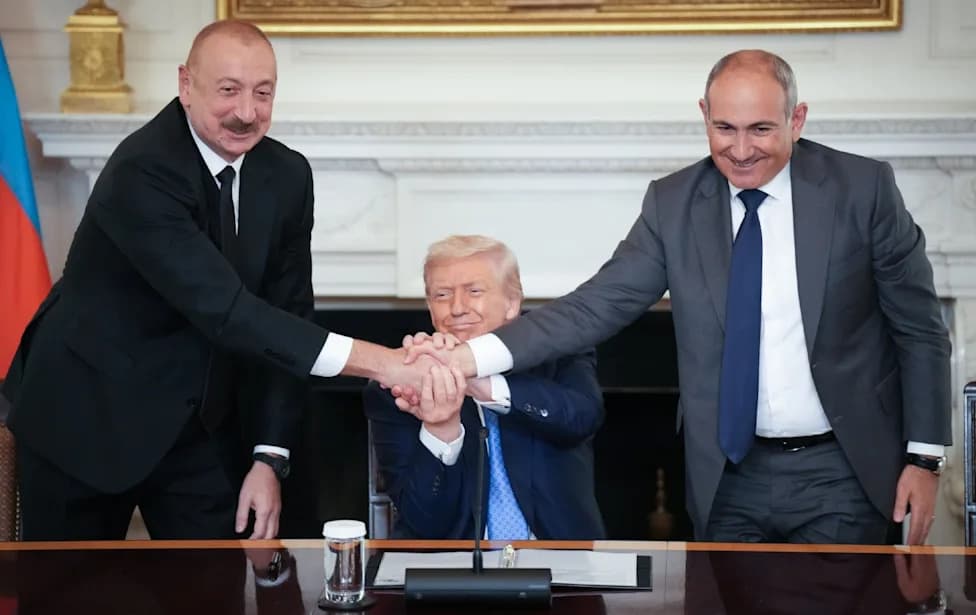
Those gestures matter. Armenia’s parliamentary vote on June 7 will likely determine whether the U.S.-brokered peace arrangement with Azerbaijan endures and whether a U.S.-preferred corridor stretching from the Mediterranean to Central Asia can be sustained. The TRIPP corridor, negotiated at the White House last August, would operate under majority U.S. oversight and create a crucial chokepoint along the Middle Corridor trade route. Paired with a critical-minerals agreement, the corridor could secure American access to Central Asian rare earths and help reduce strategic dependence on China.
Russia’s Campaign of Influence
Evidence points to an organized Russian campaign to shape Armenia’s political outcome. Late-May leaks tied to the Social Design Agency—a sanctioned Russian PR firm reportedly operating under the oversight of the Russian presidential administration—describe an operation called "Russian Armenians Decide," which targeted the Armenian diaspora in Russia through Kremlin-affiliated media. The leaked files suggest Sergei Kiriyenko, first deputy chief of staff in the Kremlin, oversaw the budget for the initiative.
Independent reporting by The Insider has also identified officers from the SVR, FSB, and GRU allegedly posted at the Russian embassy in Yerevan, including a purported SVR resident operating under diplomatic cover and a GRU officer with a history of mapping NATO targets. The prime minister has reportedly been the subject of focused SVR collection for years under the internal code name "Boroda" ("The Beard").
Moscow’s Preferred Candidate And The Playbook
Moscow’s preferred candidate appears to be Samvel Karapetyan, a Russian-Armenian billionaire whose Tashir Group built the headquarters of Russia’s Investigative Committee. Karapetyan was placed on the U.S. Treasury’s "Kremlin List" in 2018. Investigations have also linked him to property and finance arrangements—most notably a French Riviera villa reportedly acquired via a €115 million Gazprombank loan structured in ways that investigators describe as effectively state-subsidized.
These tactics follow a familiar Kremlin playbook: using religious institutions, oligarchs, media networks, and economic pressure to shape domestic politics in neighboring states. In Armenia this has meant leveraging the influential Apostolic Church, applying agricultural import bans, and broadcasting narratives that seek to delegitimize the elected government. At the same time, public claims by Russian officials warning that EU accession could cost Armenia a large share of GDP add to the pressure.
Allies, Allies-of-Convenience, And Mixed Signals
The campaign has drawn unexpected amplifiers. American media personalities and transnational legal advocates have given airtime and platforms to pro-Karapetyan voices. Diaspora groups have offered competing interpretations of U.S. engagement: some see Washington’s visits as vital support for peace and development; others, including prominent diaspora leaders, characterize high-level visits as unwelcome electoral interference. Notably, criticism of U.S. diplomatic steps has not been matched with equivalent public denunciations of the documented Russian influence campaign.
What Washington Should Do
U.S. assistance to Armenia has already signaled a bipartisan strategic interest. To sharpen that signal, two practical steps would be especially consequential:
- Targeted Sanctions: The Treasury Department should consider designating Samvel Karapetyan under Executive Order 14024 if the evidentiary record supports it—the same authority used previously to sanction foreign actors who undermine democratic processes for the benefit of the Russian state. Such a designation would make clear that interference in allied democracies carries concrete costs.
- Economic Diversification Through Tech Investment: The United States should accelerate targeted investment in Armenia’s growing software and artificial-intelligence sectors. Armenia already outperforms many peers in software engineering per capita; a focused program could help establish a regional tech hub and offer an economic trajectory less dependent on a single political or transit corridor.
The tools are available. The question is whether there is sufficient political will to use them.
Joseph Epstein is director of the Turan Research Center and a senior fellow at the Yorktown Institute. The views expressed here are his own.
Help us improve.