The U.S. announced sanctions on June 4 targeting Cuban President Miguel Díaz-Canel, members of Raúl Castro’s family, the Cuban military and several organizations accused of financing Havana’s international activities. Senator Marco Rubio said the measures aim to disrupt networks that allegedly support radical movements and threaten U.S. security. Díaz-Canel condemned the actions as illegitimate and vowed to resist. The designations follow other U.S. moves, including a GAESA divestment deadline and a January 2026 fuel-related executive order that U.N. and WHO agencies say has disrupted essential services in Cuba.
U.S. Imposes Broad Sanctions on Cuban President Díaz-Canel, Castro Family and Military-Linked Firms
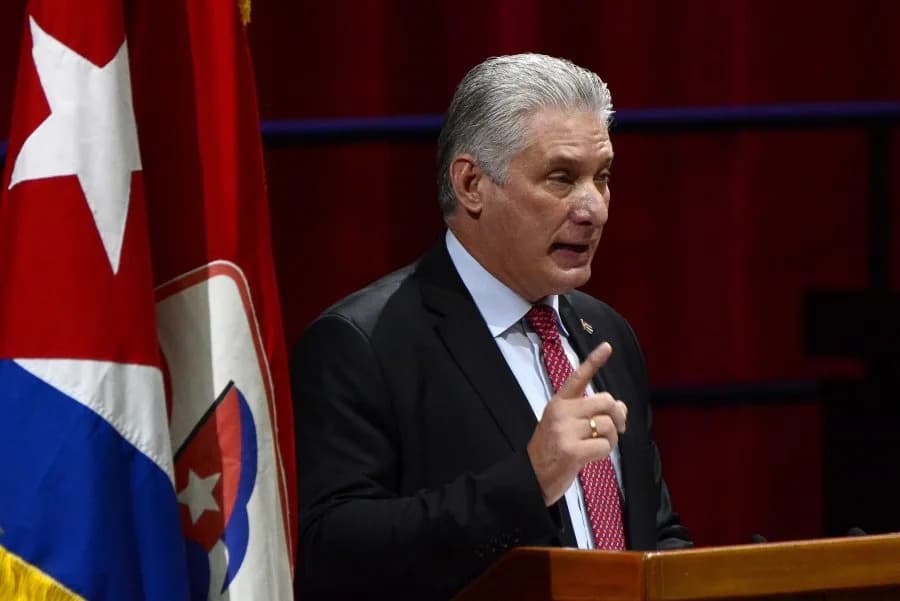
Cuban President Miguel Diaz-Canel was slapped with sanctions by the United States on Thursday as Washington continued to ratchet up pressure of the island nation's communist government. File Photo by Ley Royero/EPA-EFE
June 4 (UPI) — The United States on Thursday announced a new round of sanctions that directly target Cuban President Miguel Díaz-Canel, members of former President Raúl Castro’s family, the Cuban military and several organizations tied to the island’s state apparatus.
Sanctions Announced
Senator Marco Rubio announced the measures in a statement saying the listed individuals and entities were targeted because they "fund the [Cuban] regime and its efforts to mobilize its radical revolutionary movements in the United States and around the world." Rubio described President Díaz-Canel as a threat to U.S. national security and said the Ministry of the Revolutionary Armed Forces of Cuba, which controls numerous majority holdings and subsidiaries, is now "considered blocked."
Entities and Individuals Designated
Newly designated organizations include the Cuban Institute of Friendship with the Peoples (ICAP), Amistur Cuba S.A., the Committees for the Defense of the Revolution (CDR) and Minera La Victoria S.A. The move also names military-linked conglomerates that the U.S. says help finance and facilitate the regime’s international activities.
Individuals sanctioned include Alejandro Castro Espín, the former head of Cuban intelligence and a son of Raúl Castro, and Raúl Alejandro Castro Calis, Castro Espín’s son.
U.S. Rationale
"For decades, Cuba has been the world capital for radical left-wing terrorism," Rubio said, accusing Havana of recruiting, training and backing violent Marxist and "third-worldist" movements across the hemisphere and beyond. "Today, we are targeting the network that enables and funds Cuba's subversive and radical operations."
Cuban Response
In a written response, President Díaz-Canel called the sanctions "illegitimate," saying they were intended to reinforce blockade measures and deepen confrontation with the United States. "This political blindness is added to the coercive measures applied in recent weeks against our country, designed to harm the Cuban people," he said, adding that the "aggressiveness and perversity of the Yankee government will clash with our determination to confront the worst scenarios and resist the imperialist onslaught."
Context and Impact
The latest designations follow earlier U.S. steps aimed at increasing pressure on Havana. The administration has set a deadline for foreign firms to sever ties with GAESA, the business conglomerate controlled by Cuba’s Armed Forces, a move that prompted many tourism and service companies to withdraw from the island. Separately, a January 2026 executive order by President Donald Trump that imposed a fuel blockade on Cuba has been cited by U.N. and World Health Organization agencies as contributing to shortages of electricity, fuel, medicines and other essential supplies.
According to the U.N. Office for the Coordination of Humanitarian Affairs and the World Health Organization, the disruptions have affected emergency care, blood banks, laboratories, immunization programs and maternal and child health services.
What Comes Next
The new measures are likely to complicate Cuba’s international financial and commercial relationships and could accelerate the exit of foreign companies with existing ties to state and military-linked enterprises. Washington says the goal is to choke off funding and institutional support for activities it views as destabilizing; Havana condemns the steps as coercive and harmful to ordinary Cubans.
Help us improve.