
Using five years of ALMA observations, astronomers have identified a roughly 20,000‑year‑old wind emanating from Sagittarius A*, the Milky Way’s central supermassive black hole. The new map is about 100 times deeper and 80 times sharper than earlier surveys and reveals a cone‑shaped cavity lacking cold gas that the team attributes to hot black‑hole wind. Chandra X‑ray data align with the molecular features, strengthening the interpretation. The wind appears relatively weak and variable, and Sagittarius A* is likely in a quieter phase now.
ALMA Reveals Long‑Sought Wind From Milky Way’s Central Black Hole
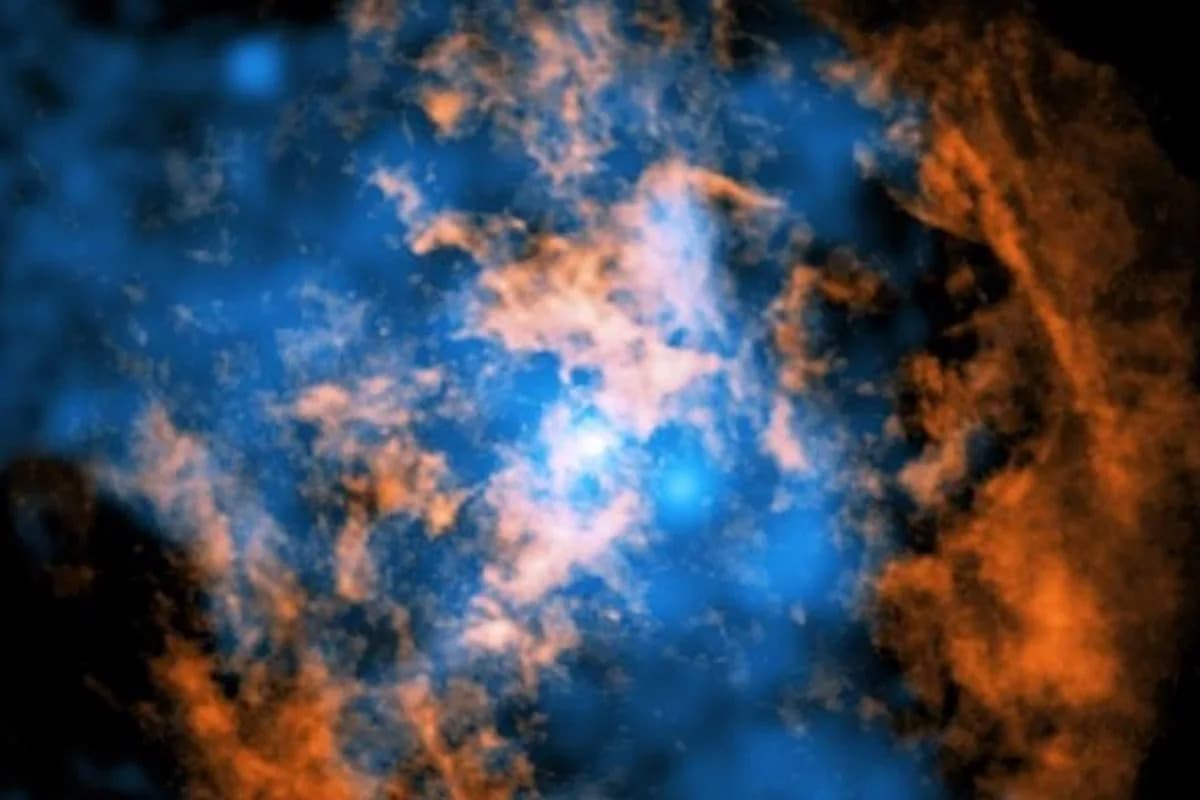
Scientists just solved a decades-old mystery about the black hole in the middle of our galaxy
A team of astronomers using the Atacama Large Millimeter/Submillimeter Array (ALMA) reports the first clear evidence of a wind driven by Sagittarius A* — the supermassive black hole at the center of the Milky Way.
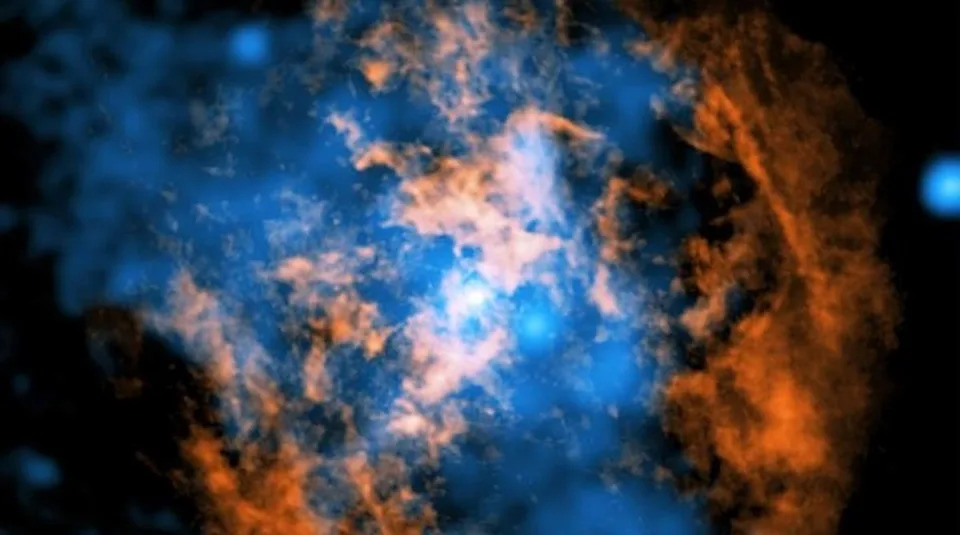
Astronomers say they’ve solved a longstanding mystery about Sagittarius A*, the supermassive black hole in the center of our galaxy. The white dot in the center of this composite image shows the black hole, the orange and blue areas mark surrounding gas and X-ray data and a cone-shaped cavity seen in the orange data is the key to their findings (X-ray: NASA/CXC/Northwestern Univ./M. Gorski; Radio: ESO/NAOJ/NRAO/ALMA; Image processing: NASA/CXC/SAO/K. Arcand and P. Edmonds)
By combining and reprocessing five years of ALMA observations, the researchers produced a map roughly 100 times deeper and 80 times sharper than previous surveys. That enhanced view exposed a large, cone‑shaped cavity in the molecular gas around the black hole — a region largely depleted of cold gas that the team attributes to a hot outflow originating from Sagittarius A*.
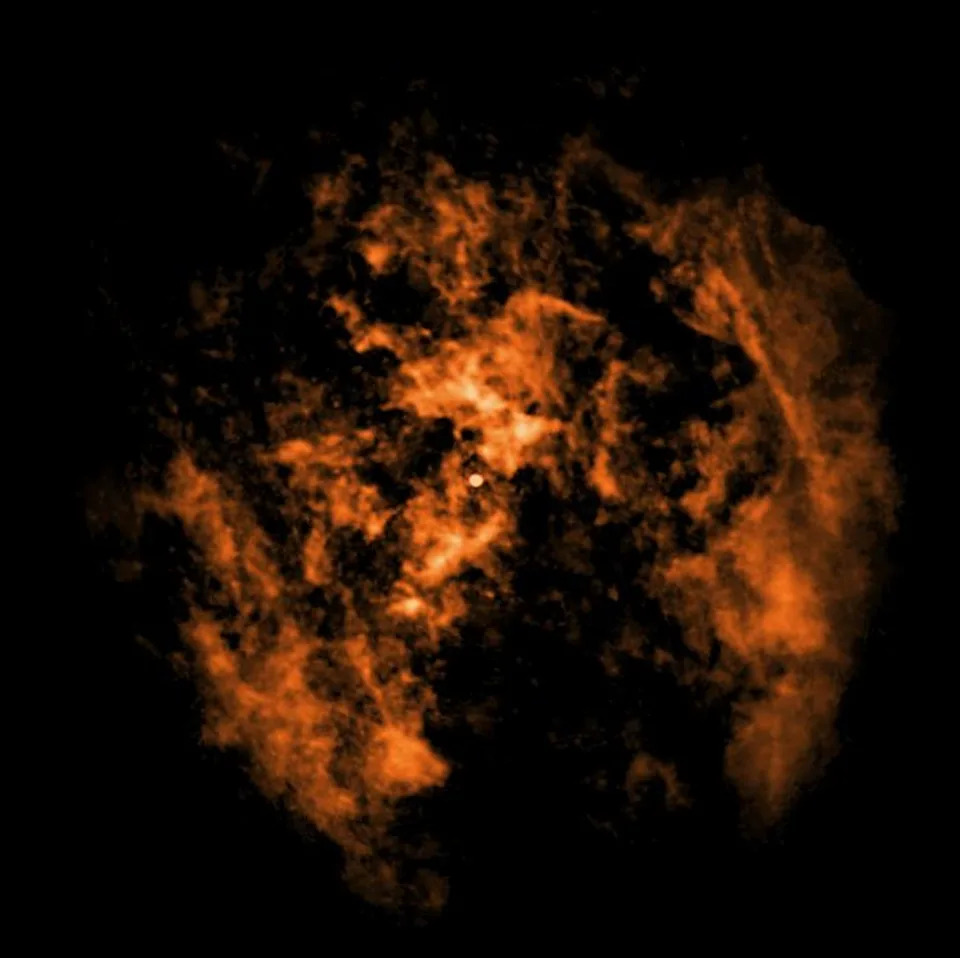
Data from the Atacama Large Millimeter/Submillimeter Array (ALMA) radio telescopes in Chile maps the location of cold gas around Sagittarius A* in this image (X-ray: NASA/CXC/Northwestern Univ./M. Gorski; Radio: ESO/NAOJ/NRAO/ALMA; Image processing: NASA/CXC/SAO/K. Arcand and P. Edmonds)
How they found it. The group carefully subtracted the bright radio emission from material directly orbiting the black hole to isolate the surrounding molecular gas. The resultant image revealed structures that had been hidden by dust and confusion in earlier data.
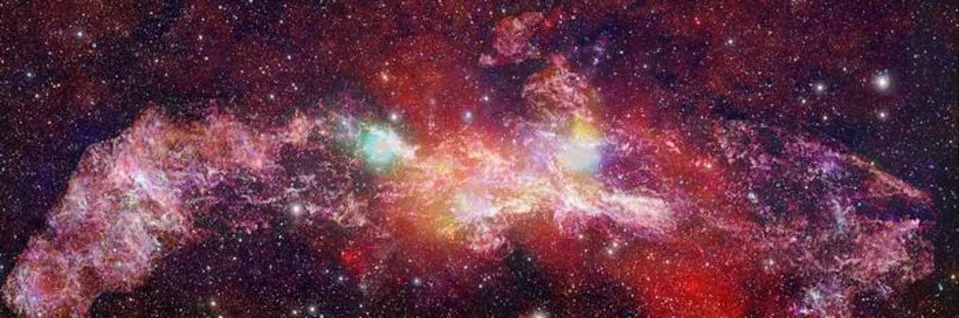
This composite image of the Milky Way center was made using data from the Atacama Large Millimeter/Submillimeter Array radio telescopes and X-ray data from NASA’s Chandra X-ray Observatory (ALMA(ESO/NAOJ/NRAO)/S. Longmore et al. Background: ESO/D. Minniti et al.)
“Unless a black hole exists in a perfect vacuum, it must blow a wind somehow,” said Mark Gorski, an astrophysicist at Northwestern University and co‑lead author. “With these new observations, we finally see the wind’s imprint — the feature everyone has been looking for for 50 years.”
The authors argue that winds from nearby stars are far too weak to carve out a cavity of this size. Instead, a hot, relatively weak and likely variable wind from the black hole itself best explains the absence of cold molecular gas in the cone‑shaped region.
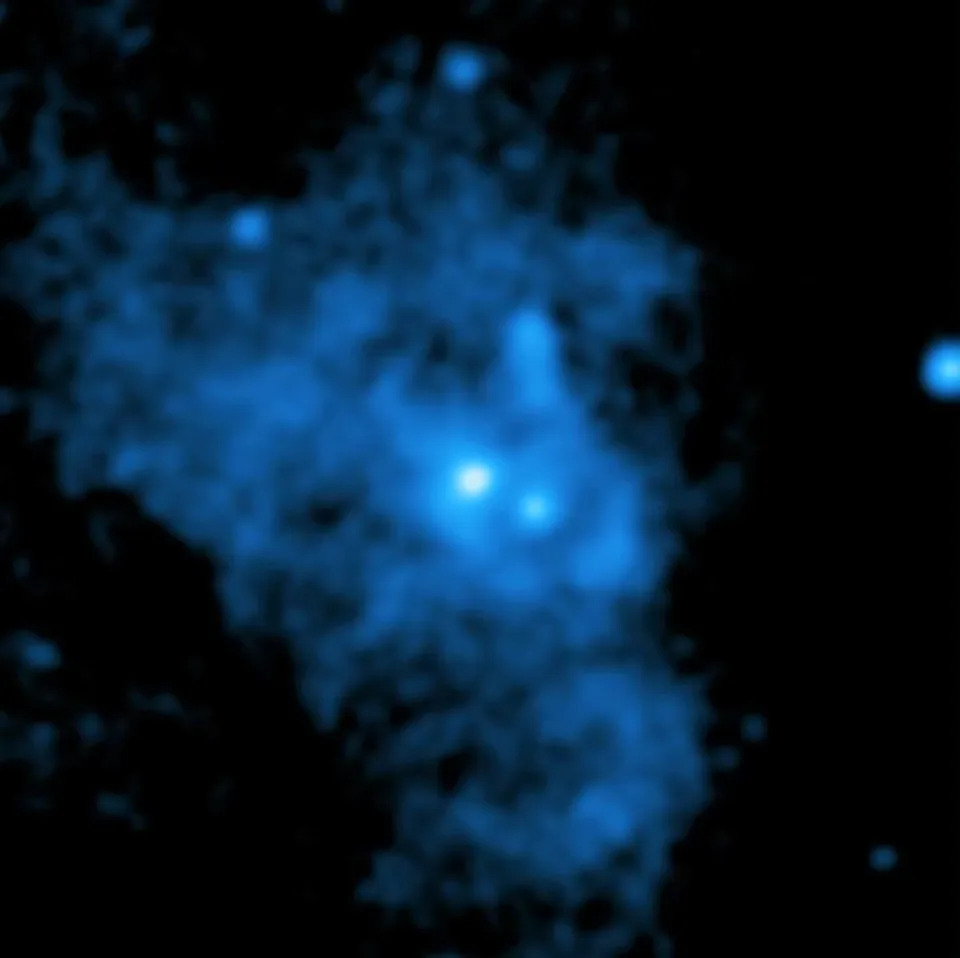
X-ray data from NASA’s Chandra X-ray Observatory shows the area around the black hole (X-ray: NASA/CXC/Northwestern Univ./M. Gorski; Radio: ESO/NAOJ/NRAO/ALMA; Image processing: NASA/CXC/SAO/K. Arcand and P. Edmonds)
Multiwavelength confirmation. The ALMA molecular map aligns with X‑ray emission previously seen by NASA’s Chandra X‑ray Observatory in the same region, strengthening the interpretation that the cavity is real and linked to energetic activity from Sagittarius A*.
Sagittarius A* was first identified in 1974, and these observations suggest it is currently in a quieter phase, though evidence remains for earlier, more active periods. As co‑lead Elena Murchikova noted, the wind appears to wander in direction and is not especially powerful — a reminder that our galactic center shares behaviors seen in other galaxies.
Why it matters. Detecting this wind helps clarify how black holes influence their surroundings and contribute to galaxy evolution. Even modest outflows can heat or displace cold gas, affecting star formation and the broader galactic ecosystem.
Study led by researchers at Northwestern University and collaborators; data from ALMA and NASA’s Chandra X‑ray Observatory.
Help us improve.





















