
The House Oversight Committee released Pam Bondi’s closed‑door transcript about the Jeffrey Epstein files, intensifying partisan disputes as Congress considers Todd Blanche’s DOJ nomination. Bondi told lawmakers Blanche "was in charge of the process and the entire release of the Epstein files" and said roughly 3 million of ~6 million pages have been made public. Democrats say her remarks downplay redaction errors that exposed victims; Republicans point to her praise of Blanche. Calls are growing for Blanche to testify about redactions, production timing, and related interviews.
Bondi Transcript Ignites Partisan Clash Over Epstein Records — Questions Loom For DOJ Nominee Todd Blanche
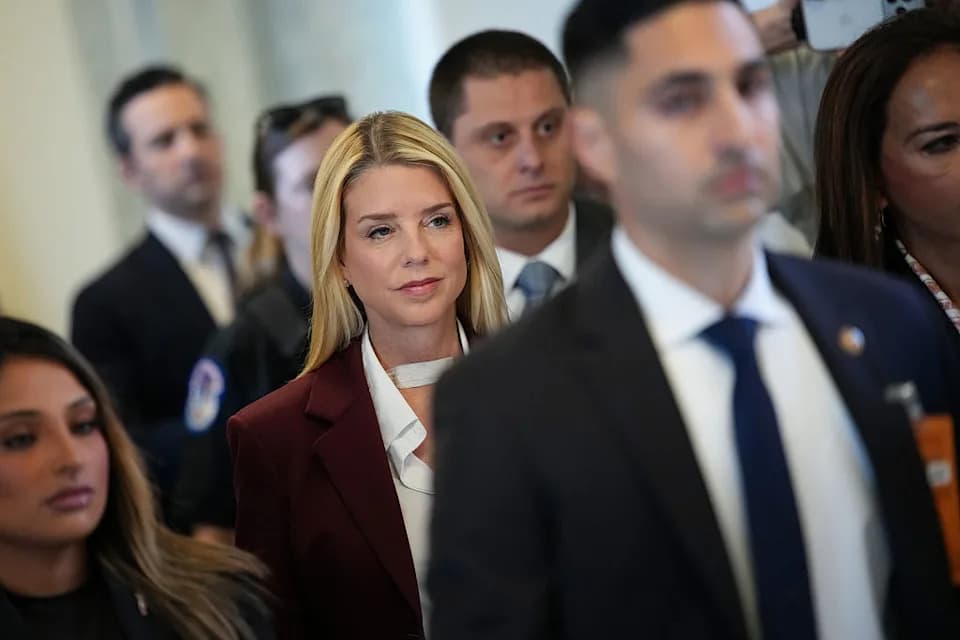
WASHINGTON, DC – MAY 29: Former U.S. Attorney General Pam Bondi (C) arrives to testify at a closed-door interview with the House Oversight Committee on Capitol Hill on May 29, 2026 in Washington, DC. Bondi will be asked questions on the federal government’s handling of the Jeffrey Epstein case and release of related files to the public. (Photo by Andrew Harnik/Getty Images)
Pam Bondi, former U.S. attorney general under President Donald Trump, has become the focal point of a renewed partisan battle after the House Oversight Committee published the transcript of her closed‑door interview about the Jeffrey Epstein records. The exchange deepens disputes over how the Justice Department handled millions of pages of sensitive documents and who should be held accountable as Congress weighs Todd Blanche’s nomination to lead the DOJ.
What Bondi Said
In the released transcript, Bondi repeatedly states that Todd Blanche "was in charge of the process and the entire release of the Epstein files." She told lawmakers that roughly three million of about six million documents covered by the Epstein Files Transparency Act have been made public, while the remaining documents are under review and are largely duplicates or protected by privilege.
"Todd Blanche is one of the most highly ethical individuals I know, and I think he is making an incredible Acting Attorney General...Todd did an excellent job, in my opinion, and is doing an excellent job as our Attorney General. I’m not blaming anything on Todd."
Why Lawmakers Are Concerned
Democrats argue Bondi’s transcript statements contradict her earlier public comments and understate the impact of flawed redactions that revealed victims’ information. Republicans point to Bondi’s praise of Blanche’s conduct and ethics as evidence she did not blame him. The disagreement has spilled onto social media and driven renewed demands for Blanche to testify about the redactions, the timeline for document production, and his role in interviews related to Ghislaine Maxwell.
Privilege Claims And Limits Of Testimony
Bondi declined to discuss conversations with former President Donald Trump, citing executive and attorney‑client privilege concerns, which heightened Democratic suspicions that key decisions are being shielded from congressional oversight. The transcript also shows Bondi drawing a distinction between documents available in the DOJ’s public "Reading Room" and materials she described as unresponsive or privileged.
Potential Implications
The transcript could complicate Blanche’s confirmation and prompt additional hearings or oversight demands. Lawmakers, victims’ advocates, and the public are watching to see whether the committee will press Blanche for further answers and whether the Justice Department will accelerate or clarify its document releases.
Note: This is a developing story. Updates will follow as new information becomes available.
Help us improve.





















