A new transcriptomic clock uses RNA gene-activity patterns to estimate biological age and mortality risk. Trained on more than 11,000 samples from mice, rats, macaques and humans, the model found conserved gene signatures that mark slower versus faster molecular aging across tissues. The clock matched top epigenetic predictors at forecasting time to death in blood samples and detected disease-related aging signals, offering a practical tool for testing interventions—though further validation in diverse populations is needed.
New Transcriptomic ‘Clock’ Estimates Lifespan and Tracks Chronic Disease Across Species
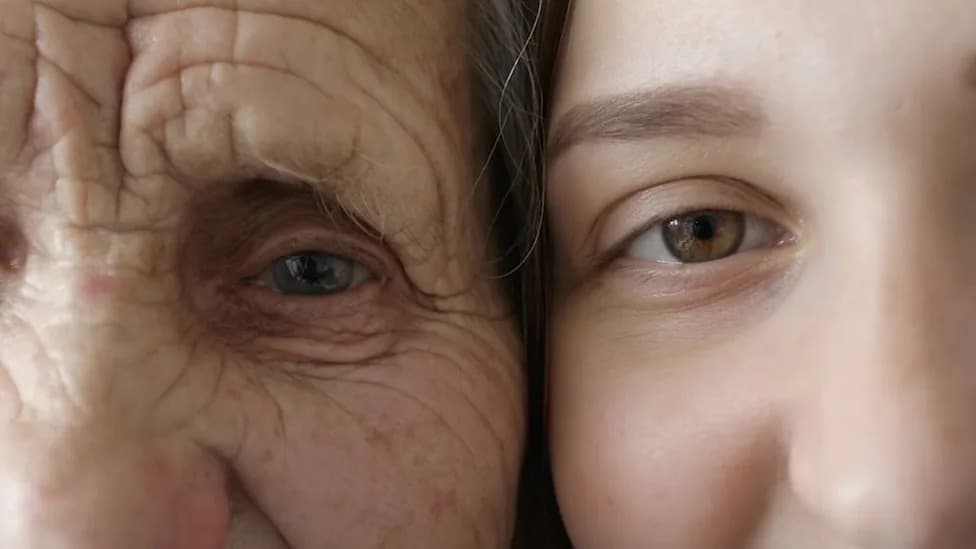
(geralt/Pixabay/Canva)
Researchers have developed a new molecular "transcriptomic" clock that estimates how far an individual is through life and highlights molecular features linked to chronic illness. Instead of measuring DNA chemical marks, this method reads patterns of gene activity (RNA) to produce a signature of biological aging that correlates with mortality risk.
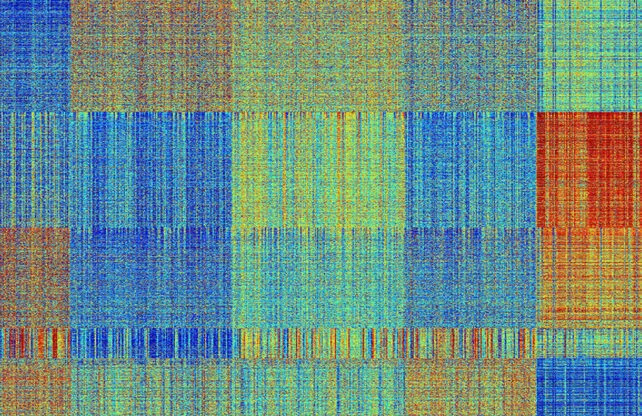
A read-out of gene expression, which indicates gene activity. (Dvir Netanely/CC BY-SA 3.0/Harvard Medical School)
How the Clock Works
The team trained their model on a large, cross-species dataset—more than 11,000 samples from mice, rats, macaques and humans—spanning multiple tissues including blood and muscle. Because gene expression changes predictably with age, the researchers used those shifts to build an age and mortality predictor that generalizes across organs and species.
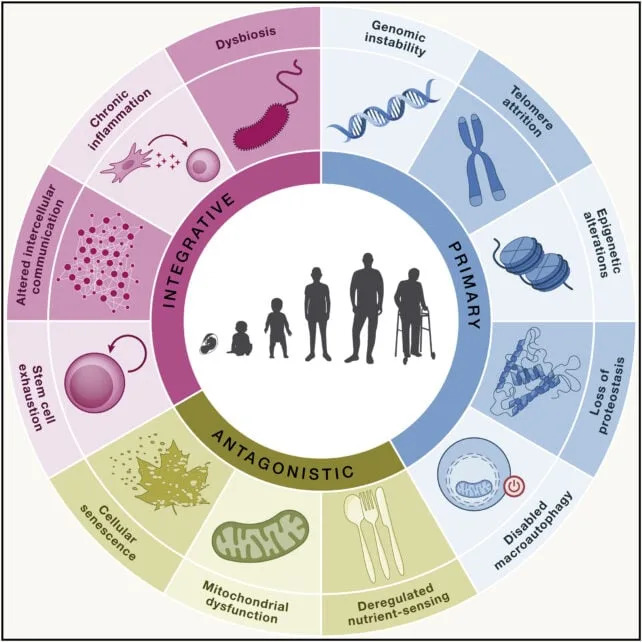
Inflammation is one hallmark of aging. (López-Otín et al.,Cell, 2023)
“We developed multi-species, multi-tissue transcriptomic clocks of chronological age and expected mortality across more than 11,000 samples from four mammals, addressing the need for interpretable aging biomarkers that generalize across organs and species, while reflecting health status.”
Key Findings
The investigators identified gene sets whose activity signals slower versus faster molecular aging. Genes involved in healthy cell division and wound repair tended to mark slower aging, while genes linked to cell death and inflammation indicated accelerated aging and an older biological age. These signatures were surprisingly conserved across species and cell types, suggesting they reflect core biological features of aging rather than species-specific noise.
YouTube Thumbnail
When tested on human blood samples, the transcriptomic clock matched the performance of leading epigenetic clocks at forecasting time to death. In animal models and human tissues affected by chronic disease, the clock also detected expected aging-related changes, indicating sensitivity to health status and disease-driven acceleration of aging.

Subscribe to ScienceAlert's free fact-checked newsletter
Why This Matters
This RNA-based approach may be easier to interpret in terms of biological function than epigenetic markers, because it directly measures gene activity. The cross-species consistency implies the clock could be useful for comparative aging studies, and for evaluating the effects of drugs or lifestyle interventions on biological age more rapidly than waiting for long-term clinical outcomes.
“This study reveals conserved signatures and a modular architecture of mortality regulation, providing a framework for quantifying and targeting aging of cellular subsystems across species and tissues,” the authors write in their paper published in Nature.
Limitations and Next Steps
The researchers and outside experts caution that transcriptomic signatures may reflect adaptive or compensatory responses rather than causal drivers of aging. The clock is an estimation tool and does not replace clinical trials; it is best suited for early assessment and mechanistic research. Further validation in more diverse human populations and refinement to capture different aging dimensions are needed.
Overall, the transcriptomic clock represents a promising new tool for aging research: it links gene-activity patterns to mortality risk, performs comparably to top epigenetic predictors in blood, and offers a practical way to test interventions across species and tissues.
Help us improve.