
Researchers have identified a young, specialized group of worker honeybees that build queen chambers and run a feverlike state to melt and blend chemicals into wax. The peanut-shaped queen cells are chemically distinct — softer but with a higher melting point — and larvae raised in worker wax grew smaller and had lower survival despite receiving royal jelly. Published in Nature, the study suggests a queen's environment, in addition to diet, can influence development and calls for further chemical analysis of queen wax.
Queen-Making Goes Beyond Royal Jelly: Specialized Worker Bees Shape Queen Development
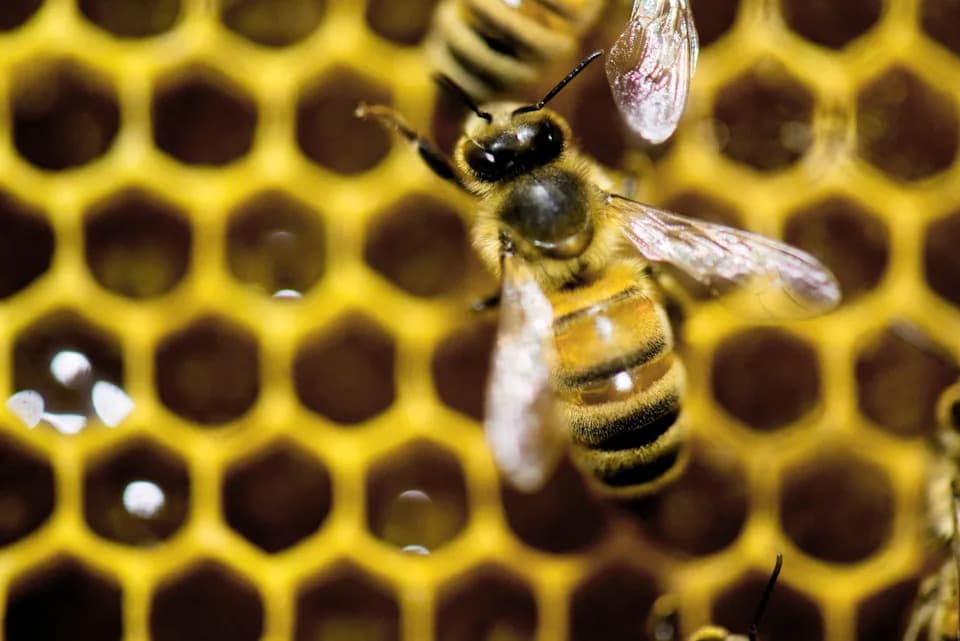
FILE - A hive of honeybees on display at the Vermont Beekeeping Supply booth at the annual Vermont Farm Show at the Champlain Valley Expo in Essex Junction, Vt., Jan. 28, 2014. (AP Photo/Andy Duback, File)(AP Photo/Andy Duback)
Scientists have discovered a distinct subset of young worker honeybees that specialize in constructing the queen's peanut-shaped chamber and in doing so create environmental conditions that influence queen development.
Specialized Queen-Cell Builders
Worker bees perform many duties that keep a colony functioning: foraging for food, tending brood and caring for the queen, who lays all the eggs. New research published in Nature shows that the workers tasked with building queen cells undergo a feverlike physiological change that helps them melt and blend particular chemicals into the wax they use.
No one had ever thought that there might be a specialized group of workers that were building these queen cells — Julia Bowsher, North Dakota State University (not involved in the study)
What the Researchers Found
The newly identified builders are younger than typical workers and display distinctive gene-expression patterns that appear to make them uniquely suited to this role. The queen chambers they construct are chemically different from worker-comb wax: the chambers are softer in texture yet have a higher melting point than worker-cell wax.
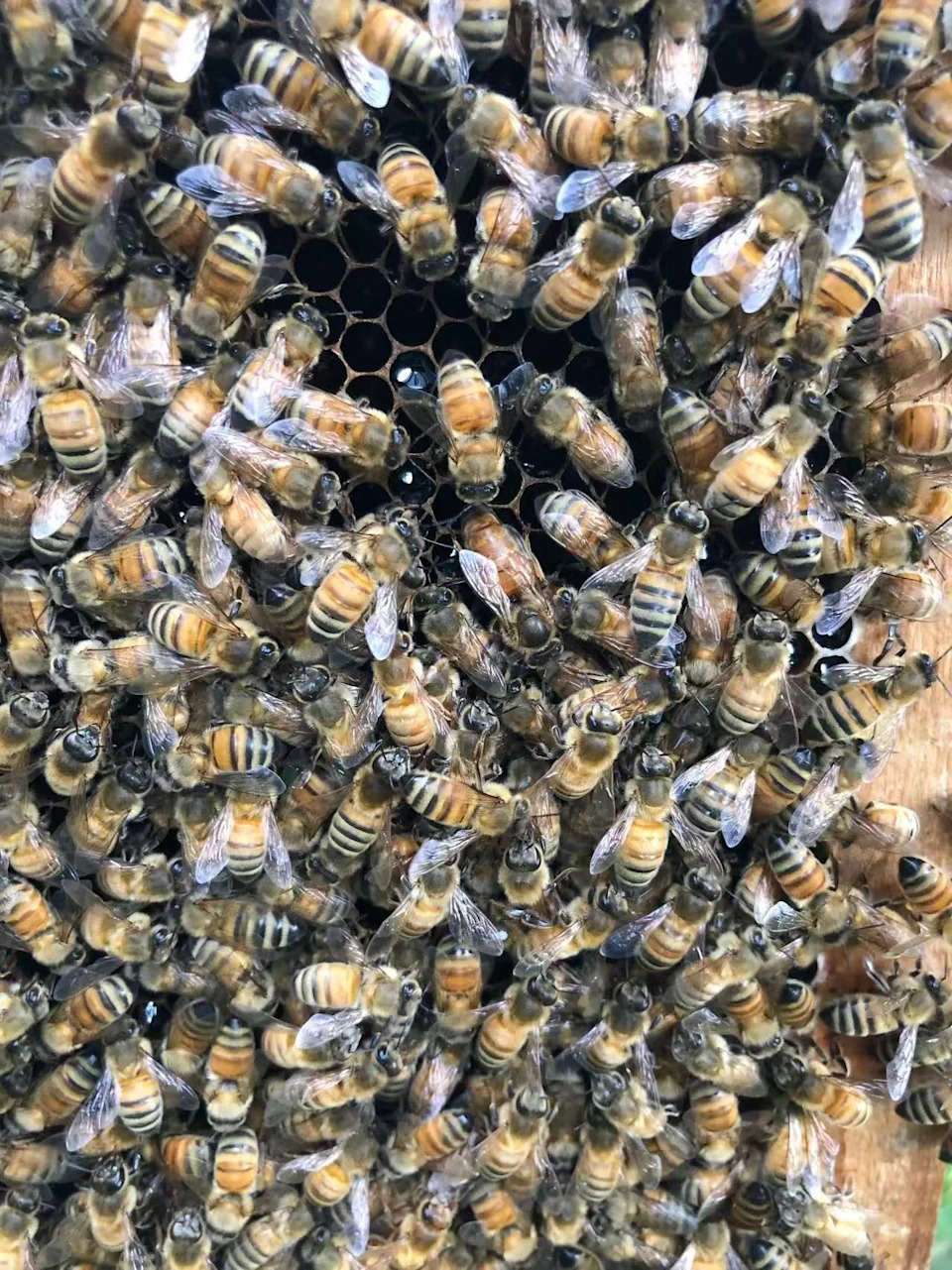
This 2021 image provided by Kai Wang shows various honeybees. (Kai Wang via AP)(Kai Wang via AP)
To test whether the cell environment matters, researchers raised developing queens in rearing cups capped with either queen-type wax or worker-type wax. Although all larvae received royal jelly, those reared in worker wax emerged smaller and had lower survival rates, suggesting that environment — not diet alone — helps determine whether a larva becomes a fully developed queen.
For centuries, we believed 'you are what you eat' was the only rule for making a queen bee. Our study rewrites that rule to say 'you are where you live, too' — Kai Wang, co-author, Chinese Academy of Agricultural Sciences
Why It Matters
Understanding how queen cells are made matters for both basic biology and agriculture. Honeybees are key pollinators for crops such as blueberries, squash, watermelon and almonds. The discovery that wax composition and the specialized behavior of certain workers affect queen growth opens new lines of research into colony health and breeding.
Researchers say further work is needed to identify the specific chemicals or active ingredients in queen wax that influence larval development, and to learn more about the genetics and behavior of the queen-cell builders.
Source: Reporting based on a study published in Nature and coverage by The Associated Press.
Help us improve.





















