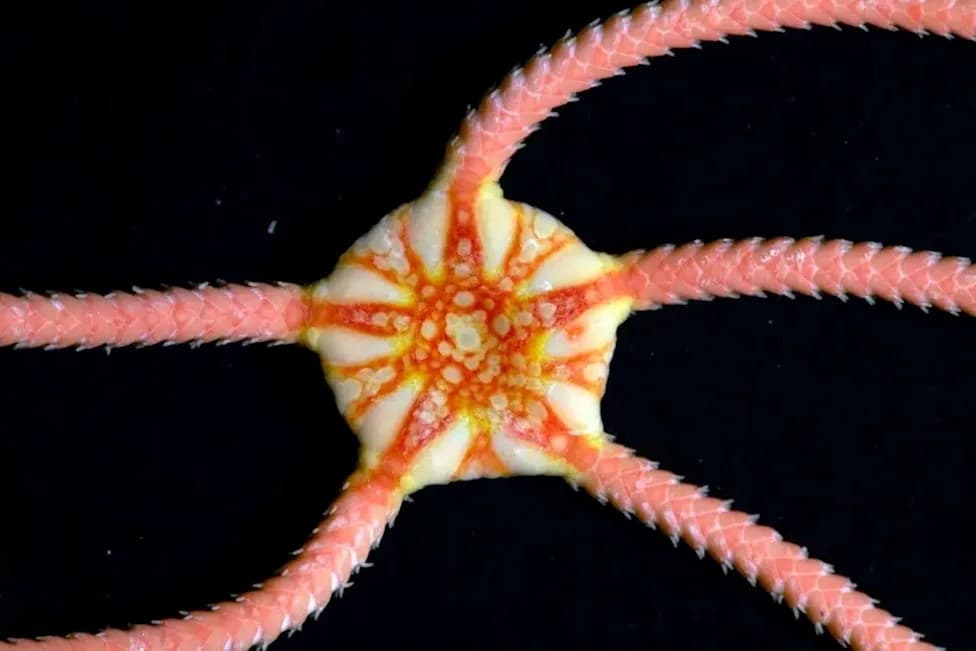
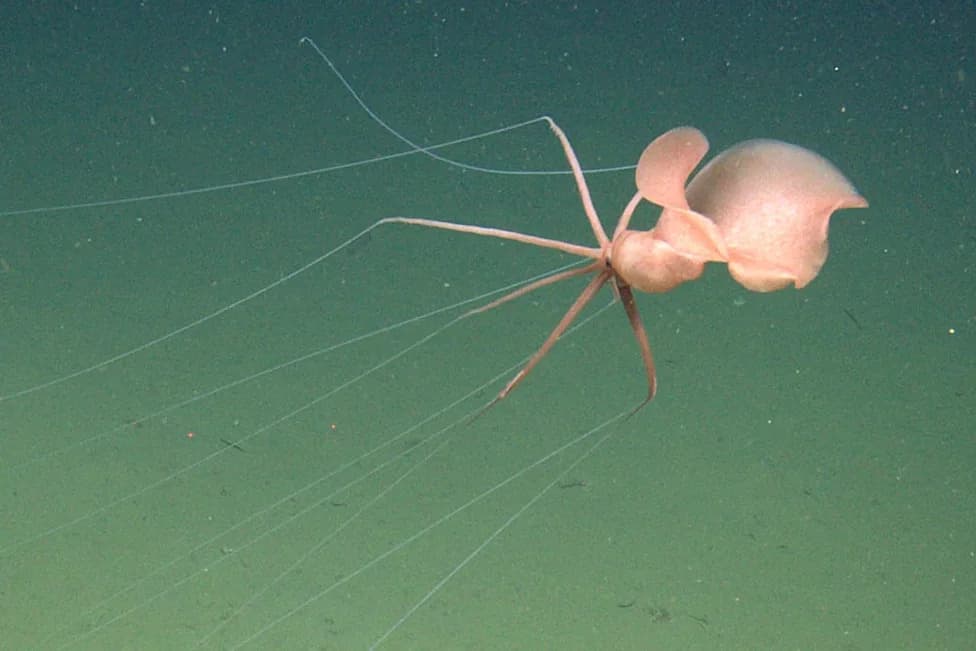
Researchers using environmental DNA (eDNA) detected traces of a giant squid in two deep‑sea canyons off Western Australia while cataloguing 226 marine species. Nearly 200 water samples were collected at five depth levels during a 2020 RV Falkor expedition, down to roughly 2.8 miles (4.5 km). The study — published in Environmental DNA — also recorded species not previously known from the region and found distinct biological communities at different depths, underscoring the value of eDNA for noninvasive deep‑sea monitoring and conservation planning.
Rare Giant Squid Detected via eDNA in Deep Canyons Off Western Australia — 226 Species Catalogued
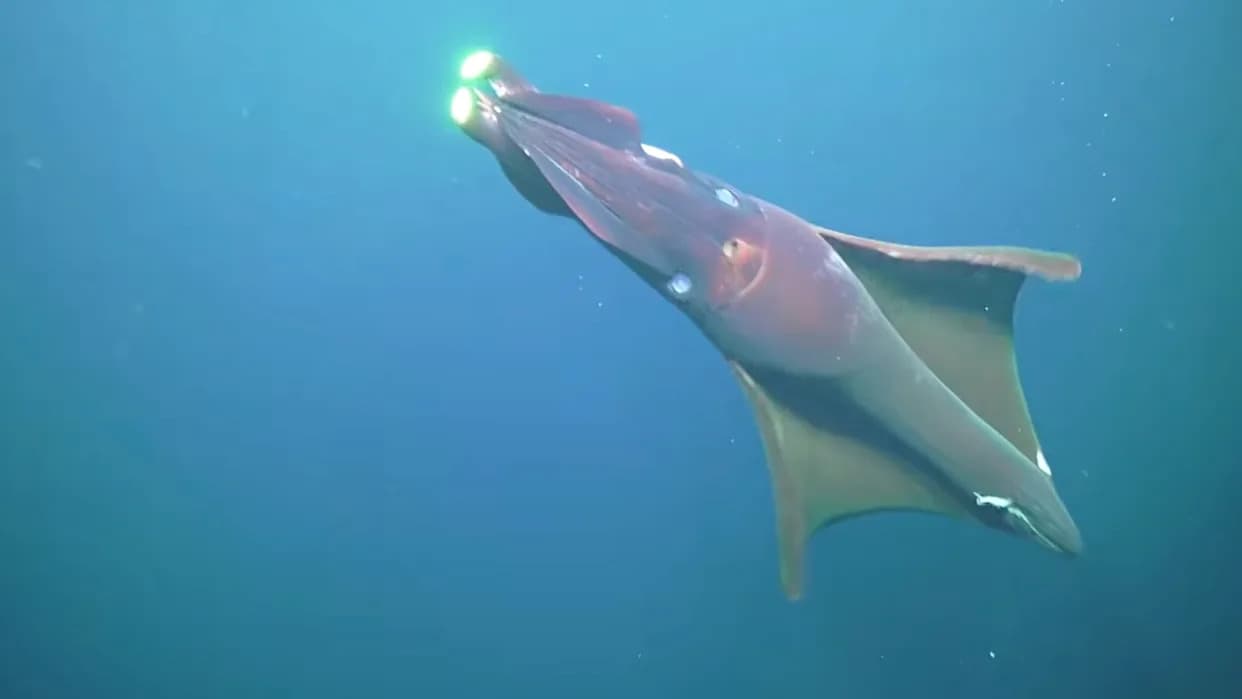
Photo Credit: Schmidt Ocean Institute
Researchers have detected genetic traces of a rare giant squid in deep-sea canyons off Western Australia while cataloguing hundreds of other deep‑water species. The discovery, made using environmental DNA (eDNA), came as part of a broader effort to map life far below the ocean surface near the Ningaloo coast.
During a 2020 expedition aboard the Schmidt Ocean Institute's RV Falkor, the team collected nearly 200 water samples across five depth levels in two submarine canyons — Cape Range and Cloates — reaching depths of roughly 2.8 miles (about 4.5 km). Scientists compared fragments of DNA shed in mucus, skin, feces and other tissues against reference genetic databases to identify which animals had recently passed through the area.
Analysis published in March in the journal Environmental DNA revealed evidence of a giant squid in both canyons and a total of 226 marine species recorded from the sampled depths. Several of those species had not previously been documented in Western Australian waters, including the faceless cusk eel and the sleeper shark.
“We found a large number of species that don't neatly match anything currently recorded, which doesn't automatically mean they're new to science, but it strongly suggests there is a vast amount of deep‑sea biodiversity we're only just beginning to uncover,” said Georgia Nester, the study's lead author.
Giant squid are infrequently observed, and prior to this study scientists had documented a giant squid in Western Australian waters only twice, with the most recent confirmed signs more than 25 years ago, according to co‑author Lisa Kirkendale (Curtin University).
Why eDNA Matters
Environmental DNA allows researchers to detect rare, fragile or fast‑moving animals that traditional methods—like cameras, nets or trawls—can easily miss. Even a single water sample can contain genetic traces from multiple species, making eDNA a powerful, noninvasive tool to complement surveys and improve biodiversity inventories.
Conservation Implications
The study also found that different depth zones hosted distinct communities and that the two canyons differed from each other, indicating deep‑sea habitats are not interchangeable. These patterns imply conservation efforts may need to be tailored to specific depth zones and features rather than relying on one‑size‑fits‑all protections. Long‑term eDNA monitoring can help policymakers track ecosystem changes, identify priority areas for protection, and monitor species with minimal disturbance.
Next steps include expanding reference genetic databases to improve species-level matches, conducting targeted follow-up surveys using complementary methods, and continuing time-series sampling to track changes in deep‑sea biodiversity.
Help us improve.