University of Stuttgart researchers engineered lipid vesicles with an engineered minimal protein system that can constrict and split membranes, demonstrating core physical requirements for membrane fission. The artificial compartments cannot yet synthesize their own proteins, so repeated autonomous division is not possible, and daughter-vesicle size and content vary. The study advances synthetic cell experiments and has implications for drug delivery, origin-of-life research, and self-organizing materials.
Minimal Protein Toolkit Drives Artificial Cell Division in Stuttgart Breakthrough
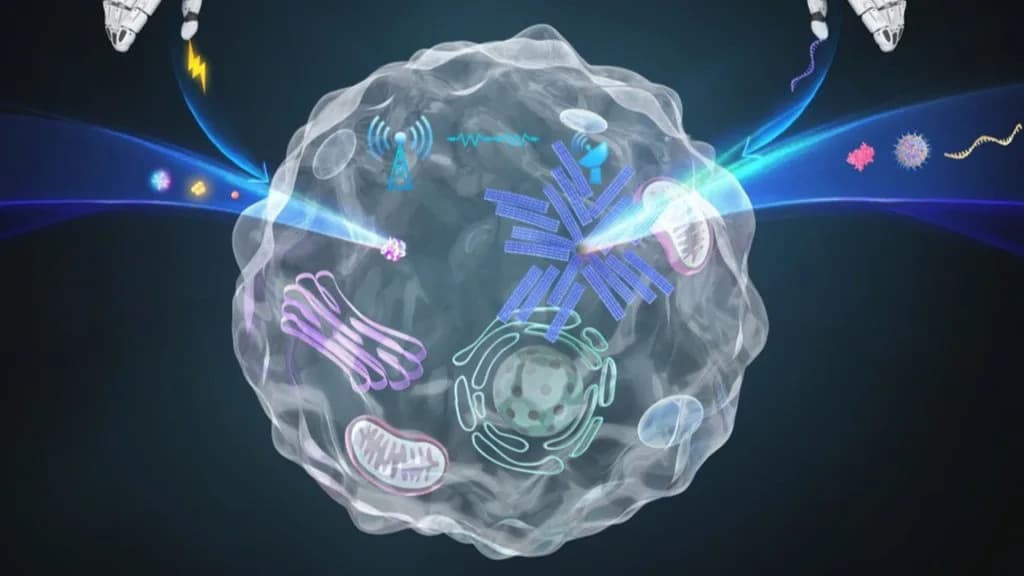
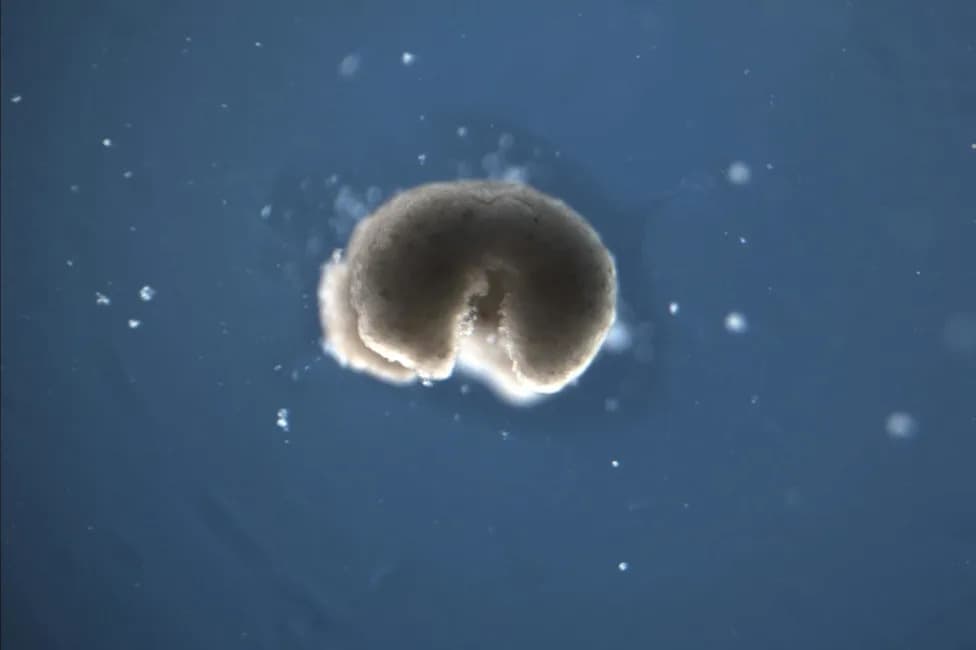
Researchers at the University of Stuttgart have engineered lipid vesicles that can constrict and split using a stripped-down protein system, advancing experimental synthetic cell research.
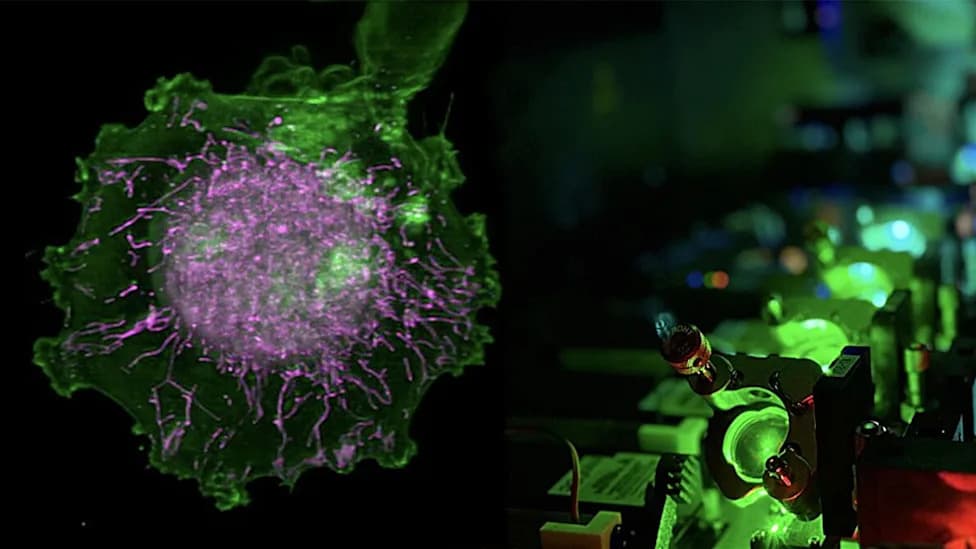
The team produced membrane-bound lipid vesicles—synthetic compartments that structurally resemble cells—and loaded them with a minimal set of engineered proteins capable of generating mechanical forces that deform and ultimately sever the membrane. By intentionally simplifying the biochemical environment, the researchers isolated the physical principles that underlie membrane constriction and fission.
Bottom-Up Approach
This work follows a bottom-up synthetic biology strategy: assembling life-like behaviors from defined molecular parts rather than modifying existing organisms. The goal is not to recreate a full living cell, but to identify the smallest set of components required to reproduce a specific function—in this case, membrane division.
How Division Was Achieved
In living cells, division is driven by cytoskeletal proteins such as bacterial FtsZ or eukaryotic tubulin. The Stuttgart team implemented an engineered minimal protein system that produces internal forces sufficient to constrict a lipid membrane. A major technical challenge was controlling where and when these proteins became active inside the vesicles; the team solved this well enough to observe division-like shape changes and membrane fission under defined experimental conditions.
Limitations and Next Steps
The system does not create a self-replicating synthetic cell. The vesicles cannot synthesize the proteins they require, so repeated, autonomous division across generations is not yet possible without refreshing molecular components externally. Division events are also less precise than in biological cells: daughter vesicle sizes and molecular contents show variability, and symmetric, reliably reproducible fission—such as that seen in E. coli—remains a target for improvement.
Key next milestones highlighted by the research include integrating autonomous genetic replication and protein expression into the same compartment, improving the fidelity and symmetry of division, and refining the spatial and temporal control of the protein machinery.
Broader Implications
Beyond basic science, this experimental demonstration has practical relevance. Vesicles that can be triggered to divide or respond predictably to stimuli could inform more sophisticated drug-delivery systems. The findings also contribute to origin-of-life research by clarifying the minimal physical requirements for membrane fission, and they provide a conceptual blueprint for engineers developing self-organizing or self-repairing materials.
By delivering a clear laboratory demonstration of protein-driven membrane fission in a pared-down system, the Stuttgart team supplies empirical data to a field where theory has often raced ahead of experiment.
The University of Stuttgart announcement contains technical details on the molecular components and the experimental parameters used to elicit division.
Help us improve.