
Senator Marco Rubio told NATO allies to expect adjustments to U.S. troop levels in Europe as the alliance seeks to repair ties with President Trump ahead of a July summit. Confusing announcements — including a reversal to send 5,000 troops to Poland and a planned withdrawal of 5,000 troops from Germany — have raised concerns about transatlantic coordination. NATO ministers called for a structured drawdown so Europe can strengthen its own defenses while leaders focus on demonstrating increased spending and burden-sharing at the Ankara summit.
Rubio Urges NATO Allies To Prepare For U.S. Troop Reductions In Europe
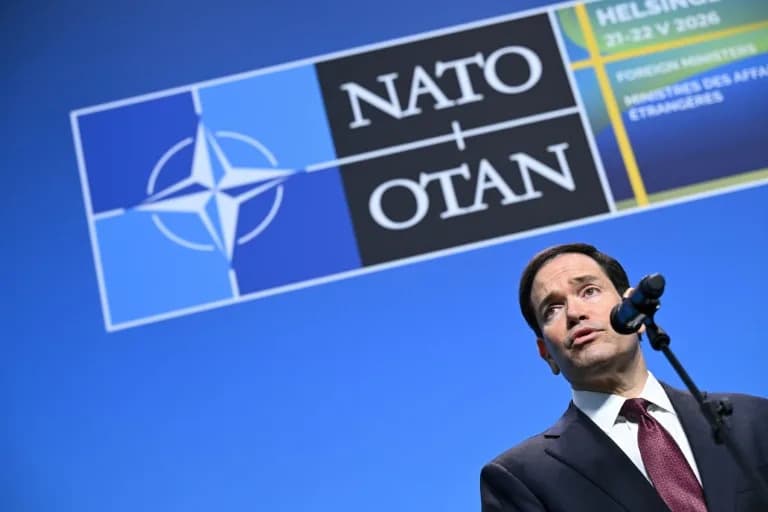
US Secretary of State Marco Rubio was meeting NATO counterparts in Sweden (Jonathan Nackstrand)(Jonathan Nackstrand/AFP/AFP)
Senator Marco Rubio told Washington's NATO partners on Friday that they should be ready for adjustments to U.S. troop levels in Europe as the alliance attempts to smooth relations with President Donald Trump ahead of a July summit in Ankara.
The comments came after a week of mixed signals from Washington that left allies scrambling for clarification. While President Trump surprised NATO foreign ministers in Helsingborg by announcing he would send 5,000 troops to Poland — reversing an earlier U.S. decision to call off the deployment — the administration also said it planned to withdraw about 5,000 troops from Germany.
Coordination Concerns
The apparent U-turn drew praise from Dutch Prime Minister Mark Rutte and Poland's foreign minister, but it also underscored concerns about coordination between the United States and its allies amid rising tensions with Russia. "It is confusing indeed, and not always easy to navigate," Swedish Foreign Minister Maria Malmer Stenergard said.
After the Helsingborg talks, Rubio said "it was well understood in the alliance that the United States' troop presence in Europe is going to be adjusted." He added that those adjustments "were already ongoing, and have been done in coordination with our allies," while acknowledging allies may not welcome all the changes.
Rubio also signaled that Washington would likely announce reductions in the number of U.S. troops it makes available to NATO for emergency deployments — a move several ministers said was widely expected as the U.S. shifts focus and Europe steps up its own defenses.
Planning A Structured Drawdown
Norwegian Foreign Minister Espen Barth Eide urged that any drawdown be "structured so that Europe is able to build up when the U.S. reduces its presence." NATO officials and European ministers emphasized the need for clear timetables and cooperation so that deterrence and readiness are not weakened.
Wider Political Context
The discussions followed a period of heightened tensions between Washington and European capitals over U.S. pressure for greater support in a confrontation with Iran and threats by President Trump to reconsider U.S. commitments to NATO. Some allies have dispatched ships nearer the Strait of Hormuz as contingency support if tensions persist.
Diplomats hope the Ankara summit will shift attention to demonstrating stronger European defense spending and fairer burden-sharing — including more coordinated arms purchases and continued support for Ukraine — even as alliance leaders manage uncertainty about future U.S. force posture in Europe.
Help us improve.





















