
ESA's SMILE mission will launch from Kourou aboard a Vega-C rocket to study how Earth's magnetic shield reacts to space weather. The spacecraft carries four scientific instruments to monitor solar wind, energetic flares and magnetospheric responses. After an initial ~700 km insertion, SMILE will move into a highly elliptical orbit with an apogee near 121,000 km to observe aurora-producing interactions and improve understanding of space-weather processes.
ESA Launches SMILE To Probe Earth's Magnetic Shield And Aurora Origins

FIlE PHOTO: The northern lights shine in the night sky above the Flensburg Fjord. (zu dpa: «European Space Agency's 'Smile' mission set to start») Birgitta von Gyldenfeldt/dpa
The European Space Agency (ESA) is set to launch the SMILE mission to study how Earth's magnetic shield responds to space weather and how interactions with the solar wind create auroras.
Launch Details
SMILE (Solar Wind Magnetosphere Ionosphere Link Explorer) is scheduled to lift off from Europe’s spaceport in Kourou, French Guiana, aboard a Vega-C rocket at 03:52 GMT on Tuesday. The Vega-C will insert the spacecraft into an initial low Earth orbit at roughly 700 kilometres before the satellite uses a series of manoeuvres to transfer to its operational orbit.
Mission Objectives and Instruments
The spacecraft carries four scientific instruments designed to monitor the solar wind, energetic solar flares and the magnetosphere’s response. Researchers hope SMILE will deepen understanding of the magnetosphere, clarify how solar wind–magnetosphere interactions produce phenomena such as the aurora borealis, and improve knowledge of space-weather processes that affect Earth.
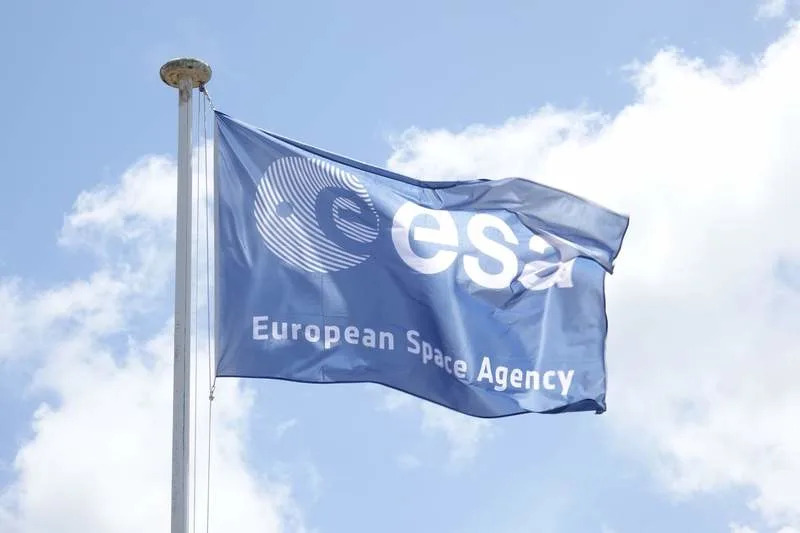
FILE PHOTO: A flag with the logo of the European Space Agency (ESA) flutters in the wind on the premises of the Kourou space station in French Guiana. (zu dpa: «European Space Agency's 'Smile' mission set to start») Janne Kieselbach/dpa
Orbit and Duration
After launch and a sequence of orbital adjustments, SMILE will move into a highly elliptical orbit around Earth with an apogee reaching approximately 121,000 kilometres. This wide-ranging orbit will allow long, uninterrupted observations of the dayside magnetosphere and the boundary regions where solar wind energy enters Earth’s magnetic environment.
International Partnership
SMILE is a European–Chinese collaboration with contributions from several ESA member states, including Germany, Austria and Switzerland. The mission brings together international expertise in space instrumentation, data analysis and modeling.
Why It Matters: By imaging interactions between the solar wind and Earth’s magnetic shield, SMILE will provide new, large-scale views of magnetospheric processes and help scientists better understand and anticipate space-weather effects that can influence satellite operations and communications.
Help us improve.





















