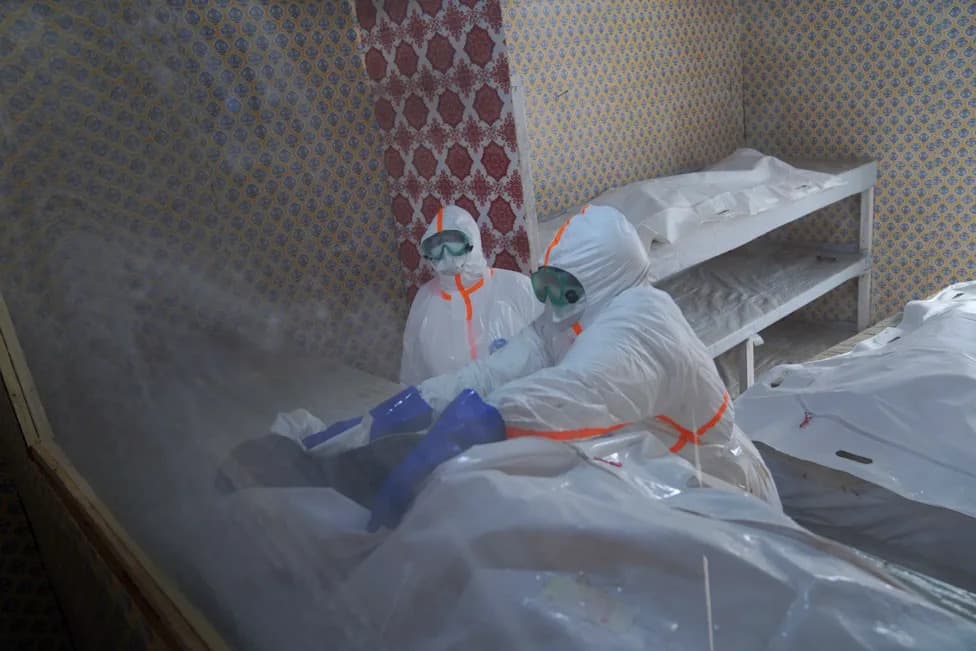
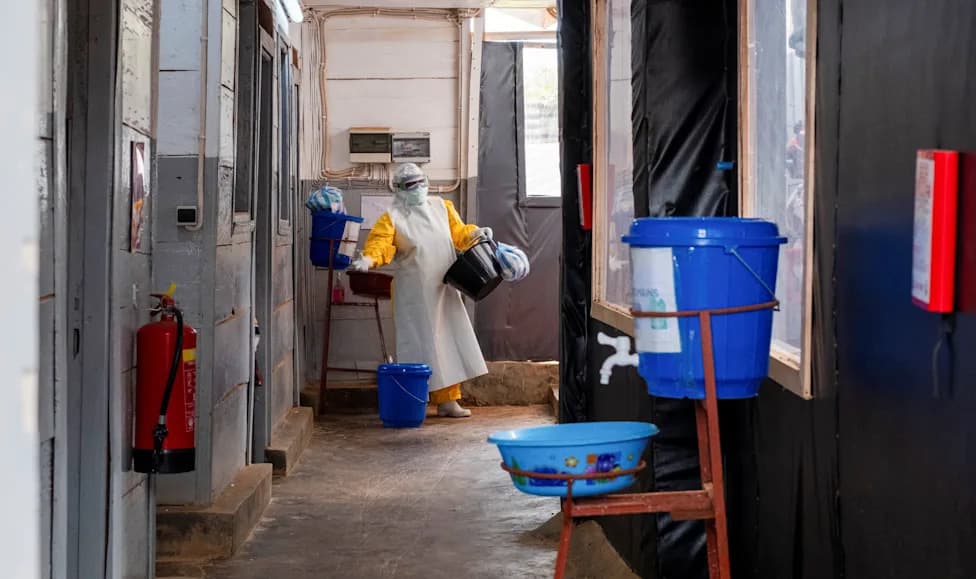
Fast-moving Ebola outbreak in eastern DRC: Delayed detection in Ituri province allowed wide transmission, with 393 suspected cases and 105 suspected deaths reported across nine health zones and eight lab-confirmed infections. WHO has declared a public health emergency after cases were confirmed in Uganda, and international partners including the ECDC and U.S. CDC are deploying staff and supplies. The outbreak is caused by the Bundibugyo virus, which has no approved strain-specific vaccine or therapeutics; weakened surveillance and local insecurity complicate containment.
Ebola Emergency in Eastern DRC: WHO Declares International Alert After Rapid Spread
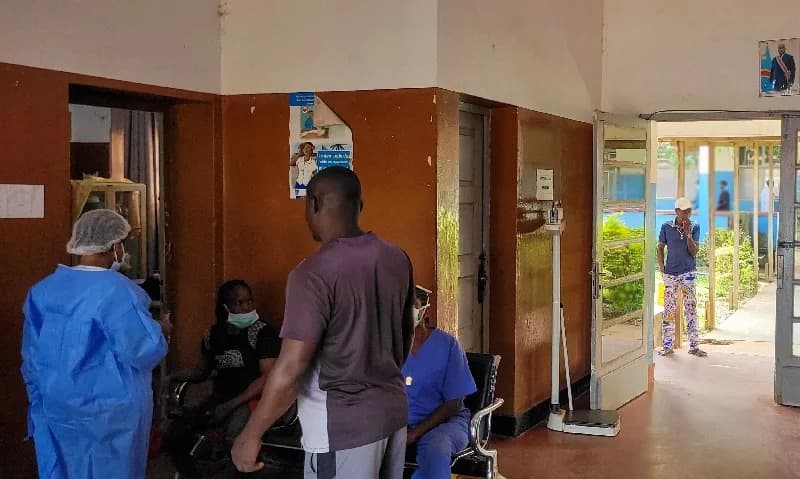
People at Bunia General Referral Hospital following confirmation of an Ebola outbreak involving the Bundibugyo strain in Bunia, Ituri province, Democratic Republic of Congo, May 16, 2026. REUTERS/Victoire Mukenge
Medical teams and international agencies are racing to contain a rapidly spreading Ebola outbreak in eastern Democratic Republic of Congo after delayed detection allowed the virus to spread across communities and cross borders.
Outbreak Snapshot
Local health authorities report 393 suspected cases and 105 suspected deaths across nine health zones in Ituri province, with eight laboratory-confirmed infections. Authorities and local sources also report an additional confirmed case in Goma, North Kivu, and two confirmed cases in Kampala, Uganda. The World Health Organization has declared the situation a public health emergency of international concern because of the risk of international spread.
Response Efforts
A delegation led by DRC Health Minister Samuel Roger Kamba arrived in Bunia with tents and supplies to expand treatment capacity and relieve overwhelmed hospitals. WHO said it has exhausted protective equipment stocks in Kinshasa and is preparing aircraft to bring additional supplies from regional depots. The European Centre for Disease Prevention and Control is deploying an expert to support planning in Africa, and the U.S. Centers for Disease Control and Prevention is sending staff to the region and assisting affected Americans.
Regional measures include the temporary suspension of visa services by the U.S. embassy in Uganda, border controls that have turned back travelers, and Uganda's postponement of large public gatherings such as next month's Martyrs' Day event.
Virus, Risks and Challenges
Investigators identified the outbreak as caused by the Bundibugyo species of Ebola virus. Unlike the more widely known Zaire strain, Bundibugyo currently has no approved strain-specific therapeutics or licensed vaccine, raising concern among responders. By way of context, the 2018-2020 Zaire outbreak in North Kivu and Ituri killed nearly 2,300 people and was hampered by ongoing armed conflict.
WHO estimates that Ebola case fatality rates have varied historically from about 25% to 90%, with an average near 50% depending on the strain and the quality of clinical care. Ebola spreads through direct contact with bodily fluids of infected people or contaminated materials.
Detection Delays and Systemic Weaknesses
WHO was first alerted on May 5 to an unknown, highly fatal illness in Mongbwalu that included rapid deaths among health workers. Tests initially returned negative for the Zaire strain and were not escalated promptly, delaying identification until May 14 and a formal outbreak declaration on May 15. Responders and aid agencies warn that reduced surveillance funding and insecurity in eastern Congo have weakened early detection and response capacity.
Local plea: 'This is not a mystical disease,' Minister Kamba said, urging people to report symptoms early so they can receive care and help prevent further spread.
What Comes Next
Health teams are prioritizing rapid case identification, isolation of patients, contact tracing, and the shipment of personal protective equipment and clinical supplies. International partners are coordinating logistics and technical support, but responders warn that the situation could worsen if surveillance and security constraints are not addressed.
If you are in the affected area: seek care immediately for fever or other symptoms after contact with a sick person, avoid direct contact with bodily fluids, and follow guidance from local health authorities.
Help us improve.