
Astrophotographer Andrew McCarthy persuaded Artemis 2 commander Reid Wiseman to capture bursts of lunar images during the mission's April flyby. By stacking a small number of Wiseman's exceptionally clean frames, McCarthy revealed subtle, real color variations tied to lunar mineralogy—blues in titanium-rich basalts and browns or reds in iron-rich or weathered soils. The absence of a lunar atmosphere made these orbital shots far cleaner than most ground-based images. NASA has released over 12,000 mission photos, and McCarthy plans additional edits and highland close-ups.
Artemis 2 Commander Teams With Astrophotographer to Reveal Rare Color on Moon's Far Side
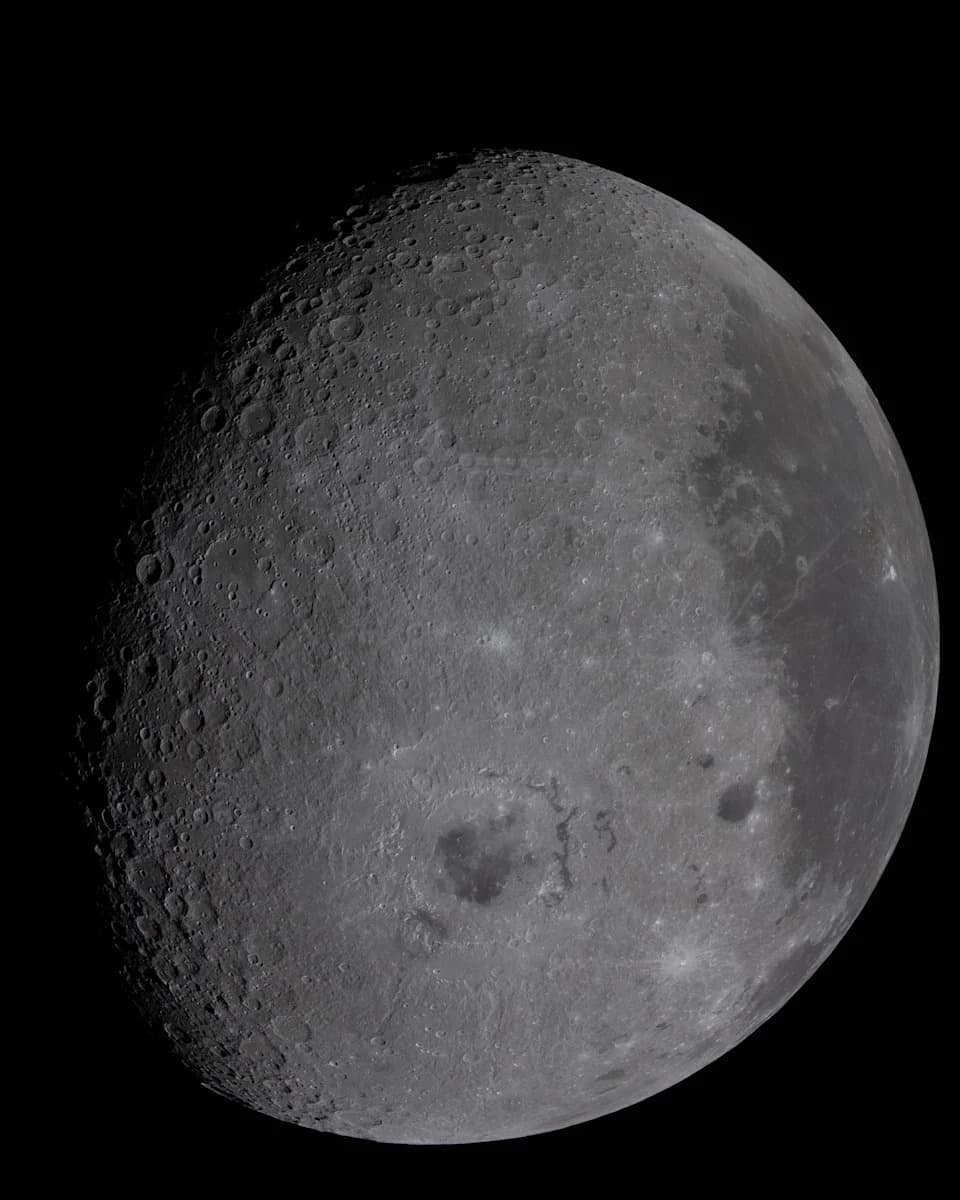
A single frame of the moon, Artemis 2 photo ART002-E-9680. | Credit: NASA
Just weeks before Artemis 2's launch window, astrophotographer Andrew McCarthy had a last-minute idea: could the astronauts photograph the Moon the same way he does from Earth, using bursts of exposures suitable for image stacking? He reached out by direct message to Artemis 2 commander and NASA astronaut Reid Wiseman — and Wiseman agreed.
From a DM to the Far Side
Artemis 2 launched on April 1 and carried four astronauts on a roughly 10-day flyby of the Moon's far side, splashing down on April 10. During that flight the crew captured thousands of images — more than 12,000 have since been released by NASA — including a series of high-quality frames McCarthy later used to produce rich, color-enhanced views of the lunar surface.
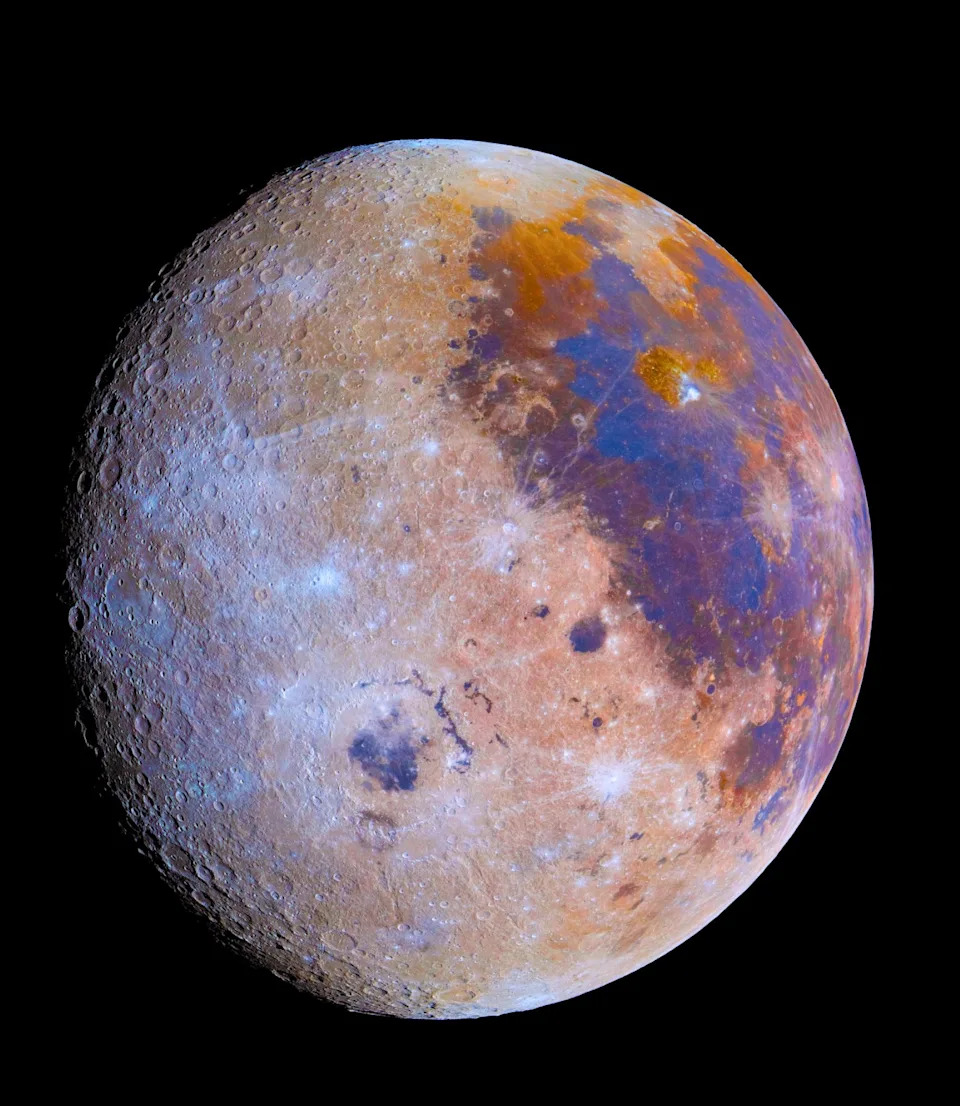
A stacked photo compilation of the far side of the moon. | Credit: Andrew McCarthy/cosmicbackground.io
How Stacking Reveals Subtle Lunar Color
On Earth, McCarthy combines hundreds to thousands of images of the Moon to boost faint color differences the naked eye can’t detect in a single exposure. That technique, called stacking, aligns and averages many frames so random noise diminishes while persistent signals (true surface colors) remain.
"I don't want to show you something the way your eyes see it. I want to show you something as if you had superhuman vision… the camera becomes cyborg eyes for our vision," McCarthy said.
Applied to Wiseman’s orbital frames, stacking produced striking color contrasts: titanium-rich basalts appear bluish, while iron-rich or older, weathered materials take on brown or reddish hues. These tones correspond to real mineralogical differences in the regolith and convey useful geological information.
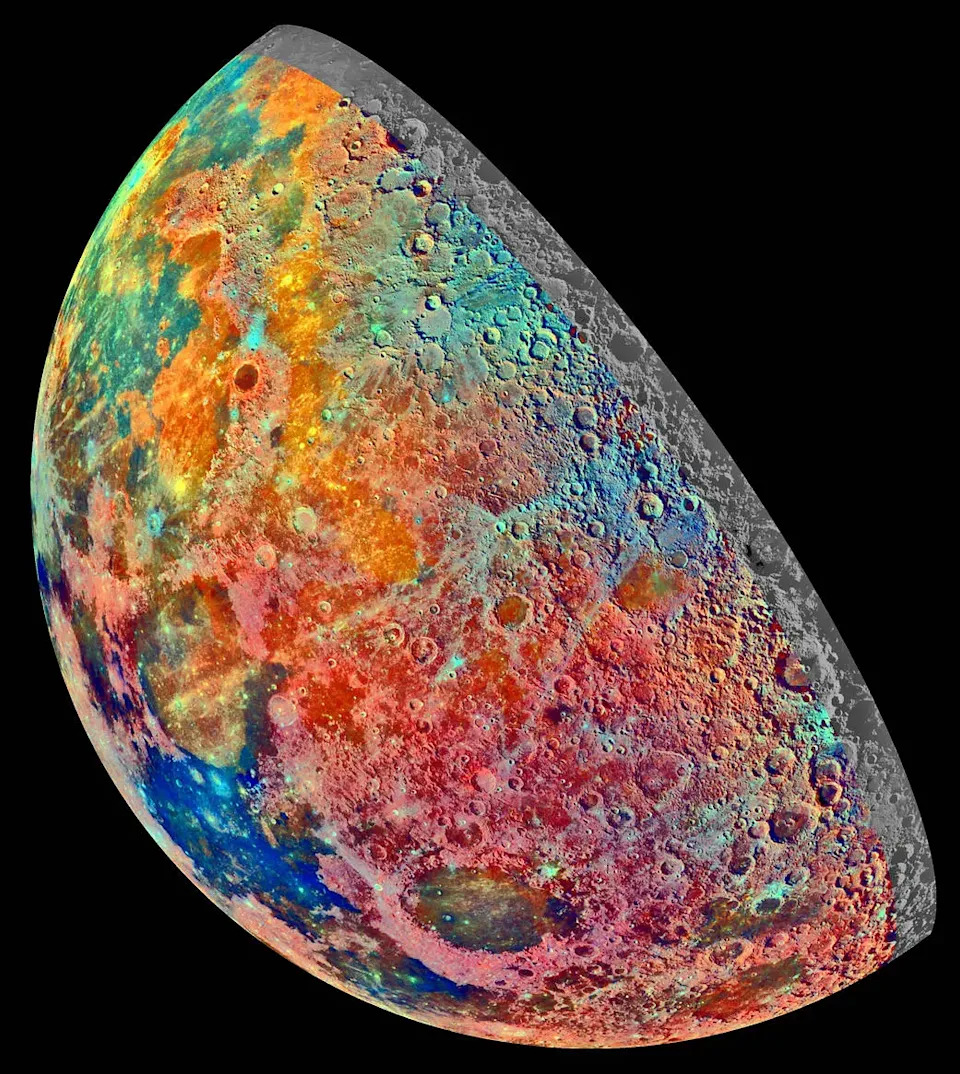
Mosaic of 53 images was recorded by the Jupiter-bound Galileo spacecraft as it passed near our own large natural satellite in 1992. The pictures were recorded through three spectral filters and combined in an exaggerated false-color scheme. | Credit: NASA
Why Orbital Photos Were Cleaner
McCarthy noted key advantages to images taken from lunar orbit. The absence of an atmosphere means far fewer color casts and less blurring than ground-based shots, so fewer exposures were required to reach high signal-to-noise: where he might stack hundreds or thousands of ground photos, McCarthy needed only about 10–15 of Wiseman’s frames from a single burst to achieve high-fidelity results.
Collaboration and Results
McCarthy worked with Wiseman and NASA's lunar photography team — who trained the Artemis 2 crew on the cameras aboard the Orion capsule — to build a shooting plan that included bursts at different exposures and timings during the flyby. Although NASA has published mineral-mapping images before (for example, Galileo’s Earth-flyby views in 1992), McCarthy says the human-operated camera stacks produced a different level of dynamic detail.
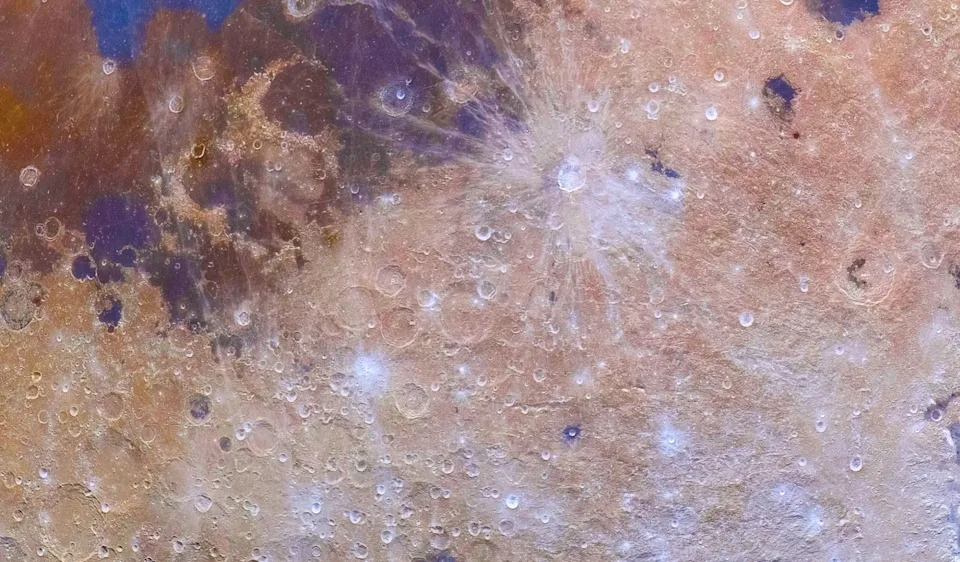
A stack of about 20 images from the photo collaboration. | Credit: Andrew McCarthy/cosmicbackground.io
"With the really, really high-fidelity image stacks from the stuff that Reid got, I'm able to bring out that saturation," McCarthy said. He described the data as "phenomenally clean" and the best he's ever worked.
What's Next
McCarthy has only begun to explore the Artemis 2 trove. He plans more edits and closer studies of highland regions and other close-up shots that have yet to be processed or published.
Key facts: Artemis 2 launched April 1, splashed down April 10; NASA has released more than 12,000 mission images; McCarthy used stacking to reveal real mineral-based colors in the lunar far side using a relatively small number of exceptionally clean frames taken by Reid Wiseman.
Help us improve.





















