
WHO has confirmed five hantavirus infections tied to the Hondius cruise ship and reported three additional suspected cases, including three deaths. Laboratory tests identified the Andes virus strain, which can rarely spread between people after prolonged close contact. The WHO says overall public health risk is low but cautions more cases may appear given an incubation period of up to six weeks. Argentina will send 2,500 diagnostic kits to support testing while international investigations continue.
WHO Confirms Hantavirus Cluster Aboard Hondius Cruise — Five Cases Confirmed, Three Dead
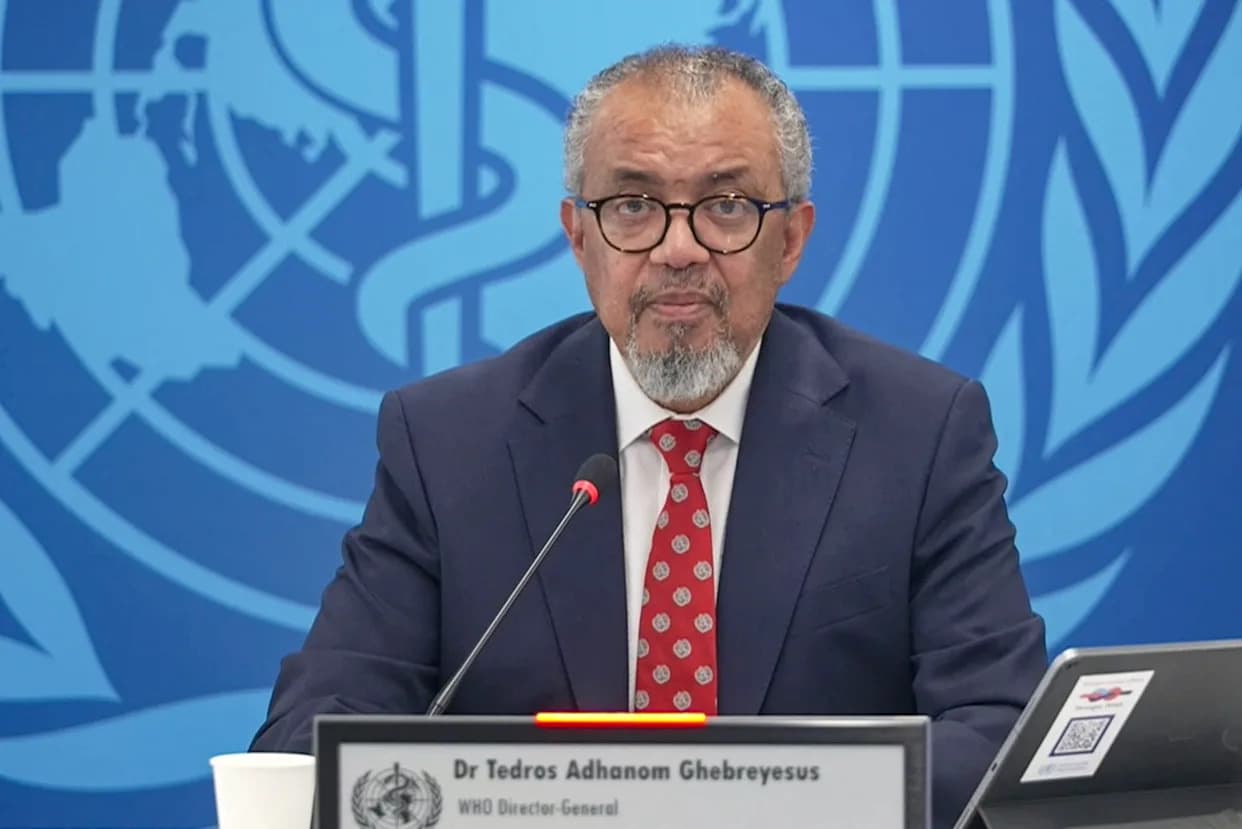
WHO Director-General Tedros Adhanom Ghebreyesus in Geneva during a virtual media conference on the hantavirus deaths aboard a cruise ship [AFP]
The World Health Organization (WHO) has confirmed five laboratory‑confirmed cases of hantavirus linked to deaths aboard the Dutch‑flagged cruise ship Hondius; three additional cases are suspected. The agency says the Andes virus strain was identified and, while more cases remain possible, the overall public health risk is considered low.
What Happened
WHO Director‑General Tedros Adhanom Ghebreyesus told reporters the agency was notified by the United Kingdom about a cluster of passengers with severe respiratory illness aboard the Hondius, which was sailing from Cape Verde toward Tenerife in the Canary Islands.
Cases, Deaths and Timeline
To date, eight people connected to the ship have been reported ill: five laboratory‑confirmed infections and three suspected cases. Three people have died. The first victim developed symptoms on April 6 and died five days later; no diagnostic samples were taken at that time. His wife later fell ill after going ashore in Saint Helena and died on April 25. A third passenger developed symptoms on April 25 and died seven days afterwards.
Virus and Transmission
Laboratory testing identified the Andes virus strain on the Hondius. Andes virus circulates in parts of Latin America and is the only hantavirus with documented, limited human‑to‑human transmission. Previous person‑to‑person spread has been associated with prolonged, close contact — for example among household members, intimate partners and health‑care workers.
Risk Assessment and Next Steps
WHO said the public health risk remains low, but warned that more cases could emerge because hantavirus incubation can be up to six weeks. Argentine authorities are investigating the travel history of the first two victims, who had been on a bird‑watching trip in Chile, Argentina and Uruguay before boarding the ship. Argentina will supply 2,500 diagnostic kits to laboratories in five countries to support testing.
International Notifications
WHO notified the governments of 12 countries whose nationals disembarked in Saint Helena: Britain, Canada, Denmark, Germany, the Netherlands, New Zealand, Saint Kitts and Nevis, Singapore, Sweden, Switzerland, Türkiye and the United States.
Quote: "While this is a serious incident, WHO assesses the public health risk as low," Tedros Adhanom Ghebreyesus said.
Authorities continue contact tracing, testing and investigations to determine exposure routes and any further spread. Travelers who were aboard the Hondius and feel unwell should seek medical care and inform clinicians about their travel and ship‑board history.
Help us improve.





















