
The Republican party-line immigration bill contains a $1 billion provision described as East Wing security funding, a move that reignites controversy over the so-called "ballroom." Senate leaders added language to bar "non-security" spending on the roughly $400 million project, but critics say the broad wording could become a political liability. About 50 of 53 GOP senators would need to back the funding; Democrats are expected to force votes and intraparty disagreement — including from Sen. Rand Paul and Sen. Lisa Murkowski — increases the risk the provision could be modified or removed.
GOP’s $1B East Wing Provision Risks Turning Reconciliation Fight Into a ‘Ballroom’ Battle
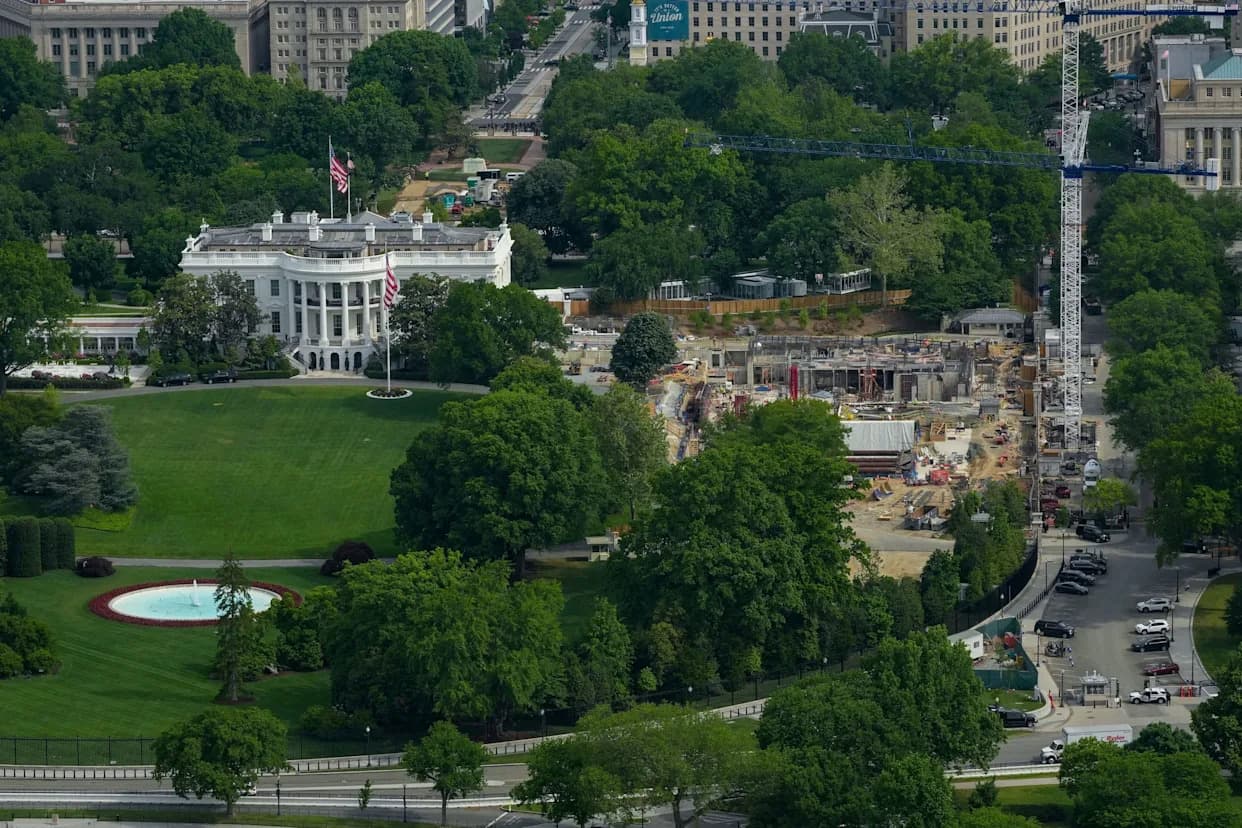
Republicans’ party-line immigration bill includes a $1 billion appropriation described as funding to "secure" the East Wing project at the White House — a move that effectively reignites debate over the disputed "ballroom," even though the bill does not use that term.
Why the Funding Matters
The Judiciary Committee inserted language intended to prevent explicit "non-security" spending on the roughly $400 million East Wing construction that former President Trump has sought. Committee leaders say the money is aimed at security upgrades to the White House complex, not to underwrite a social venue. Opponents, however, warn that the broad $1 billion wording will draw intense public scrutiny and political backlash.
Key Republican Reactions
"If there is a billion taxpayer dollars for the ballroom, then the whole debate over reconciliation becomes a ballroom debate," said a senior Republican aide, warning the allocation could derail the broader bill.
Another aide defended the provision: "It isn't for the ballroom. It's money to secure the White House complex. It's a new structure (paid for by private donations), but private donors cannot fund the needed security."
Political Stakes and Vote Math
What might have been an easy party-line vote is now a more difficult lift: roughly 50 of 53 Republican senators would need to back the White House funding provision for the bill to survive. Sen. Lisa Murkowski's earlier vote against the budget resolution narrowed the GOP margin, and Democrats are expected to force recorded votes on the funding language.
Sen. Rand Paul (R-Ky.) has proposed a narrower approach — suggesting a modest appropriation to resolve legal questions about congressional approval rather than full taxpayer financing — while Sen. Ron Johnson (R-Wis.) has voiced support for limited security funding, calling it a "reasonable long-term investment for security reasons" and preferring capital spending to programs he deems wasteful.
Possible Outcomes
Because the $1 billion wording is relatively loose, senators could move to carve out explicit prohibitions on using funds for a ballroom or strip the East Wing provision altogether. Any such maneuver would likely spark intraparty debate and could expose the bill to additional votes or amendments that jeopardize its passage.
Bottom line: The inclusion of East Wing security money transforms a procedural allocation into a politically fraught issue that could complicate, delay or even derail the party-line reconciliation effort, depending on how senators choose to define and vote on the language.
Help us improve.





















