
Apophis, an asteroid about the size of the Eiffel Tower, will pass roughly 20,000 miles (≈32,000 km) from Earth on April 13, 2029 — closer than many satellites in orbit. Ongoing observations and radar tracking have allowed NASA to rule out an Earth impact for at least 100 years. The mission OSIRIS-REx has been retargeted as OSIRIS-APEX to study Apophis after the flyby, and ESA is planning its own mission. The close approach will subject the asteroid to strong tidal forces that may slightly change its orbit and spin.
Eiffel Tower–Sized Asteroid Apophis Will Fly Closer Than Many Satellites — No Impact Risk, NASA Says
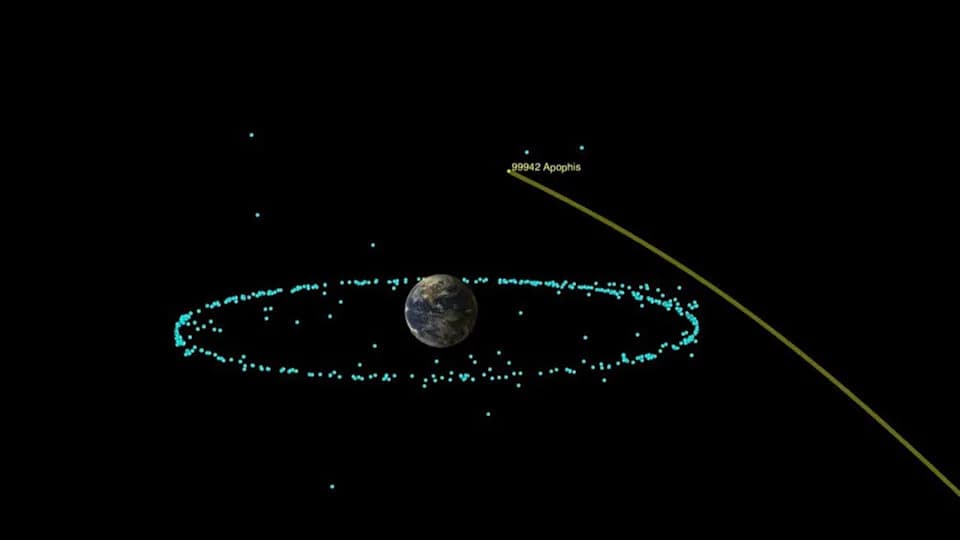
NASA simulation shows how Apophis, a large asteroid, will pass by Earth in 2029, but there is no risk of impact, the space agency said.(Fox News)
Asteroid Apophis, roughly the size of the Eiffel Tower, is expected to make an unusually close pass by Earth on April 13, 2029. NASA projects the space rock will pass at about 20,000 miles (≈32,000 km) above Earth’s surface — a distance closer than the orbital paths of many satellites.
Classified as a potentially hazardous near-Earth object because of its size and orbit, Apophis is composed of primordial material left over from the early Solar System. When it was first detected in 2004, early orbit estimates left open the possibility of an Earth impact in 2029, 2036, or 2068. Continued observations using optical telescopes and ground-based radar have since refined its trajectory.
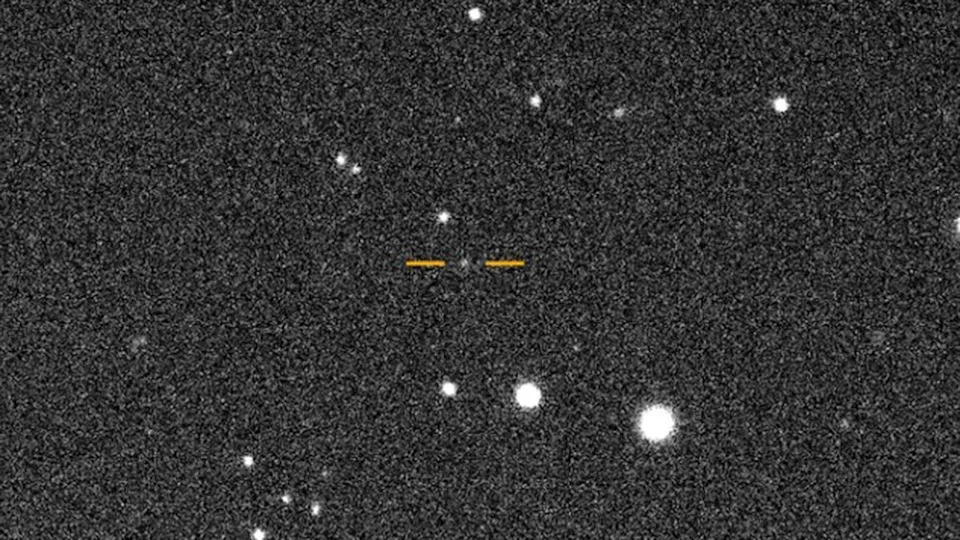
A skyscraper-size asteroid named 2025 SC79 was discovered in September 2025 hidden in the sun's glare.
“When it was discovered in 2004, it appeared Apophis might impact Earth in either 2029, 2036, or 2068,” NASA said. “Since then, astronomers have closely watched Apophis using optical telescopes and ground-based radar, allowing its orbit to become better understood. Based on this data, NASA is now confident that there is no risk of Apophis impacting Earth for at least 100 years.”
Apophis was discovered on June 19, 2004, by Roy Tucker, David Tholen, and Fabrizio Bernardi at Kitt Peak National Observatory near Tucson, Arizona. Initial observations were limited by technical and weather problems, and follow-up measurements later in 2004 — including observations from Australia — were crucial to determining its orbit.
Science Opportunity and Spacecraft Missions
The 2029 close approach presents a rare scientific opportunity. Observatories on Earth and in space will study Apophis’s size, shape, rotation, surface properties, and composition as it passes. The flyby will also subject the asteroid to strong tidal forces from Earth, which will pull, twist, stretch, and squeeze the body — effects that can change its spin state and slightly alter its orbit around the Sun.
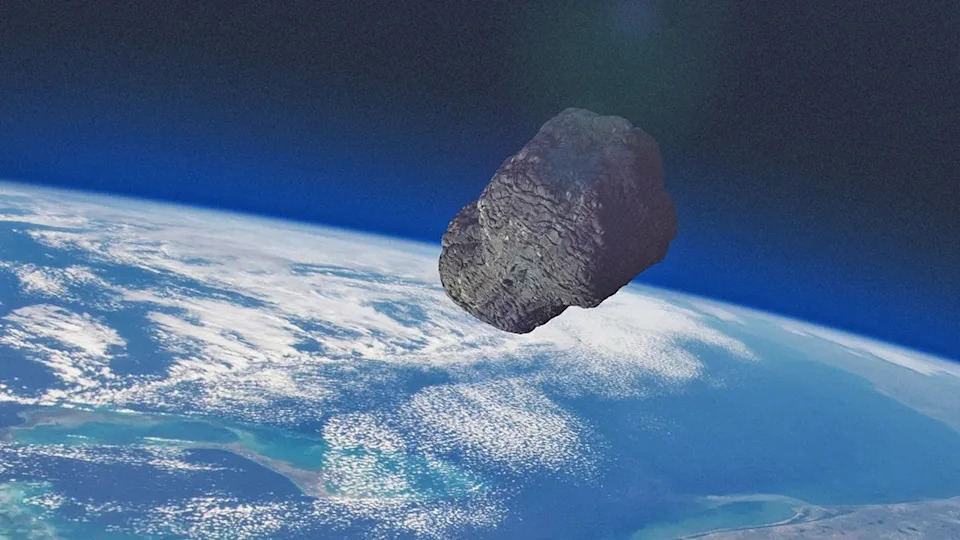
A skyscraper-size asteroid named Apophis was discovered in 2004 by astronomers. Artist's rendering.
NASA has retasked its OSIRIS-REx spacecraft — which returned a sample of asteroid Bennu to Earth in September 2023 — to rendezvous with Apophis after the 2029 flyby. The mission has been redesignated OSIRIS-APEX (OSIRIS-Apophis Explorer) and will study the asteroid up close. The European Space Agency is also planning a mission to observe and characterize Apophis.
What Skywatchers Can Expect
Weather permitting, Apophis should be visible to observers across the Eastern Hemisphere without telescopes or binoculars during parts of its close approach. Exact visibility will depend on local sky conditions and the asteroid’s apparent brightness as it passes.
Although the flyby will be close by astronomical standards, current data indicate there is no risk of impact for at least the next 100 years. Scientists will continue monitoring Apophis to refine its orbit and to learn more about how close planetary encounters can alter small bodies.
Help us improve.





















