
Key Takeaway: Nabih Berri, Lebanon's parliament speaker and leading Shi'ite politician allied with Hezbollah, said negotiations with Israel cannot proceed until fighting in southern Lebanon stops. Despite a mid-April ceasefire that was extended into May, evacuations and cross-border attacks continue, complicating U.S.-led diplomacy. Lebanon seeks a permanent arrangement to end repeated invasions, while Israel demands Hezbollah's disarmament.
Lebanon's Nabih Berri Rules Out Talks With Israel Until Fighting in the South Stops
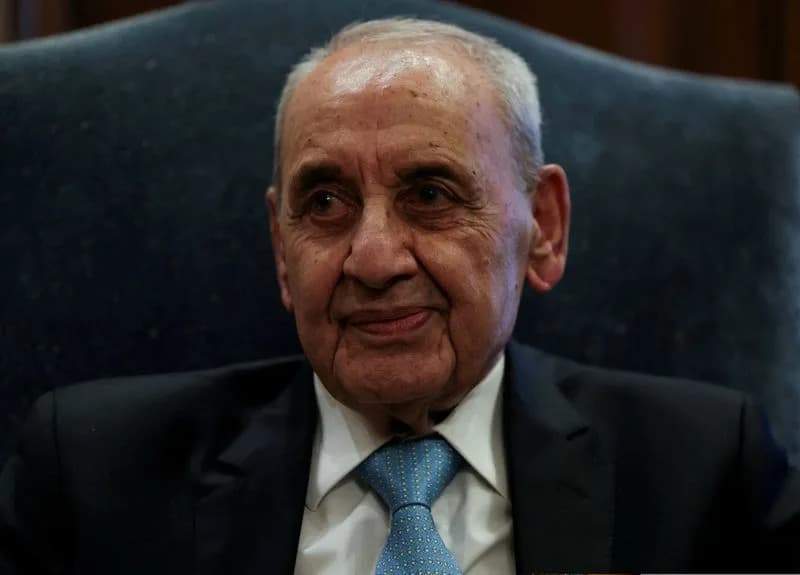
FILE PHOTO: Lebanese Parliament Speaker Nabih Berri meets with Italian Prime Minister Giorgia Meloni (not seen) in Beirut, Lebanon October 18, 2024. REUTERS/Mohamed Abd El Ghany/File Photo
BEIRUT, May 4 (Reuters) - Nabih Berri, Lebanon's parliament speaker and the country's most senior Shi'ite politician and a close ally of Hezbollah, said on Monday that negotiations with Israel cannot proceed unless the fighting in southern Lebanon stops, despite a nominal ceasefire.
Berri's comments, given to An-Nahar newspaper and summarized by his office, came as the Israeli military ordered residents to evacuate four additional villages in southern Lebanon. The move underscored the obstacles facing U.S.-led efforts to broker a longer-lasting settlement after rare, direct talks between the two sides last month.
Background: Israel launched an incursion into Lebanon in March with the stated aim of degrading Hezbollah, the Iran-aligned Shi'ite armed movement. The conflict has occurred amid broader regional tensions involving Iran, the United States and Israel. Tehran has said any comprehensive deal must include an end to fighting in Lebanon; Washington has argued the issues are distinct.
Israel and Lebanon agreed a ceasefire in mid-April that was extended into May. While large-scale hostilities have diminished, violence has not stopped: Israeli forces maintain an occupation of parts of southern Lebanon and have demolished villages there, and Hezbollah has continued to mount attacks on Israeli positions.
Berri told An-Nahar that "stopping the war before any political track" must be the priority, and that he would not accept negotiations without guarantees that Israel would halt its attacks.
The Israeli military on Monday warned residents in four villages beyond its self-declared security zone to leave immediately, accusing Hezbollah of breaching the ceasefire and saying it intended to act against the group. Hezbollah, for its part, reported it carried out 11 operations against Israeli forces in southern Lebanon on Sunday.
Diplomacy and Demands: The Lebanese government is seeking a permanent arrangement with Israel to end the recurring cycle of invasions and strikes, while stopping short of describing the aim as a formal peace treaty. Israel insists any agreement must include the permanent disarmament of Hezbollah.
U.S. President Donald Trump, who hosted delegations from both countries during last month’s ceasefire talks, said there was "a great chance" of reaching a peace agreement this year and expressed a desire to convene a meeting between Israeli Prime Minister Benjamin Netanyahu and Lebanese President Michel Aoun. Both Hezbollah and Berri have objected to the proposed face-to-face meetings.
President Michel Aoun has expressed support for ambassador-level talks with Israel aimed first at securing a stable ceasefire, to be followed by broader negotiations addressing Lebanon's other demands, including a full Israeli withdrawal, the return of displaced people, and the release of captives held by Israel.
Human Cost and Domestic Impact: Lebanon's health ministry reports more than 2,600 people have been killed in the conflict since March 2. Israel reports that 17 of its soldiers have died in southern Lebanon and that two Israeli civilians were killed by Hezbollah attacks. The war has deepened domestic divisions in Lebanon over Hezbollah's armed status; the government has pushed for the group's peaceful disarmament since last year.
Reporting by Tom Perry; editing and consolidation by Reuters. Quotes attributed to Berri are based on a summary released by his office.
Help us improve.





















