
Apophis, a near-Earth asteroid about the size of the Eiffel Tower, will safely pass roughly 20,000 miles (32,000 km) from Earth on April 13, 2029. NASA says tidal forces from Earth will likely change Apophis’s orbit and rotation, offering a rare scientific opportunity. Discovered in 2004 and composed of primordial solar-system material, Apophis will be closely observed by international missions and telescopes during the flyby.
Apophis Asteroid Will Pass Safely Within 20,000 Miles of Earth on April 13, 2029 — What Scientists Expect
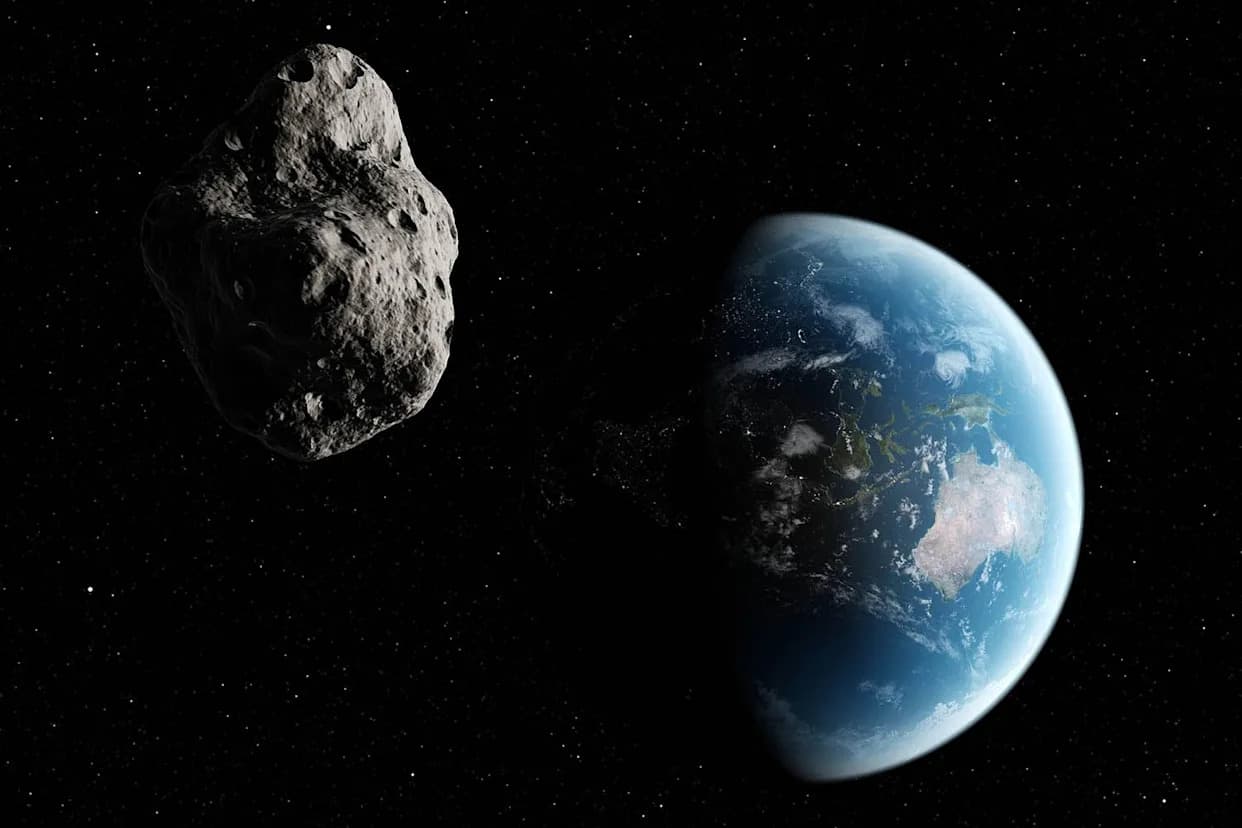
An asteroid approaching Earth (stock artwork)Credit: Getty
Apophis, a near-Earth asteroid roughly the size of the Eiffel Tower, will make a very close — but safe — flyby of Earth on April 13, 2029. NASA predicts the asteroid will pass at about 20,000 miles (~32,000 km) from Earth's surface, a distance closer than many satellites in geosynchronous orbit.
Why This Flyby Matters
Although Apophis poses no immediate impact threat, the encounter is scientifically significant. Earth's gravity will tug on the asteroid during the close approach, producing tidal forces that should alter Apophis's orbit around the Sun and may change how it spins and is oriented. Those effects are rare for an object of this size and provide a valuable natural experiment for planetary scientists.
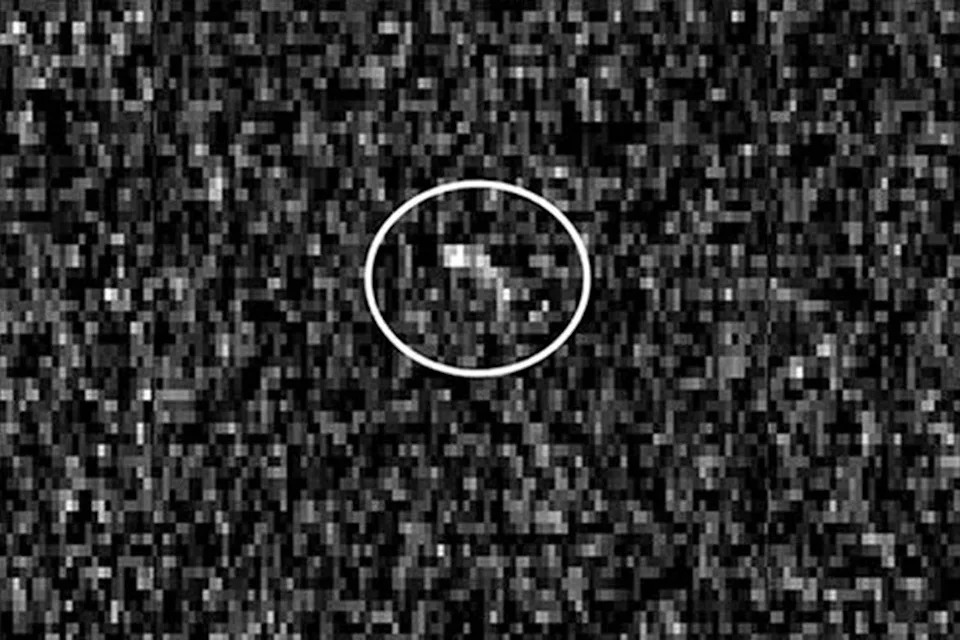
Apophis asteroid recorded by radio antennasCredit: NASA/JPL-Caltech and NSF/AUI/GBO
What We Know About Apophis
Discovered in 2004 by Roy Tucker, David Tholen and Fabrizio Bernardi at Kitt Peak National Observatory, Apophis is composed of primordial material left over from the early solar system—about 4.6 billion years old. Its precise shape is not yet known, but size estimates put it at roughly the scale of Paris’s Eiffel Tower.
"The most important thing happening in this event is that Apophis will be pulled, twisted, stretched and squeezed by the gravity of Earth as it goes by, in a way that happens only during a very close encounter," NASA wrote. Scientists expect the overall pull to slightly enlarge Apophis’s orbit and lengthen its orbital period, while tidal effects could speed up or slow its rotation and change its orientation.
How Scientists Will Study the Flyby
Researchers plan extensive observations before, during and after the 2029 passage to measure how Apophis responds to Earth's gravitational pull. Teams involved include NASA mission specialists and European scientists developing dedicated observations; NASA has discussed using assets from the OSIRIS-REx extended mission and the European Space Agency has proposed a Rapid Apophis Mission for Space Safety (RAMSES) to capture high-resolution imagery and other data.

NASA logoCredit: Mario Tama/Getty
Because Apophis will pass closer than many communication satellites, the flyby also offers an unprecedented opportunity for ground- and space-based instruments to collect detailed data on the structure, composition and dynamics of a relatively large near-Earth object.
Background And Naming
The asteroid was named Apophis after the ancient Egyptian god associated with chaos. The name coincides with a villain from the TV series Stargate SG-1, which the discoverers recognized, but astronomers state the naming was not directly inspired by the television character.
Scientists continue to monitor Apophis and refine orbital calculations. While early projections briefly included possible Earth impacts in several future years, ongoing observations have ruled out any immediate danger from the 2029 passage.
What To Expect Next: More observations, planned spacecraft encounters and images as Apophis approaches in 2029 will improve scientists’ understanding of how close gravitational encounters can reshape small bodies in the solar system.
Help us improve.





















