Ron Takeda says a suspected juvenile great white followed him for about 10 minutes while hydrofoil surfing between UC Santa Barbara and Carpinteria on April 25. The shark reportedly swam beneath his board, made audible thrashing sounds, but eventually left and Takeda completed a 12‑mile ride without injury. Experts say warmer coastal waters and an expected El Niño may increase juvenile white shark sightings along Southern California and push their range northward. Authorities emphasize most shark encounters are exploratory rather than predatory.
California Hydrofoil Surfer Says 'Relentless' Great White Trailed Him for 10 Minutes — He Completed a 12‑Mile Ride
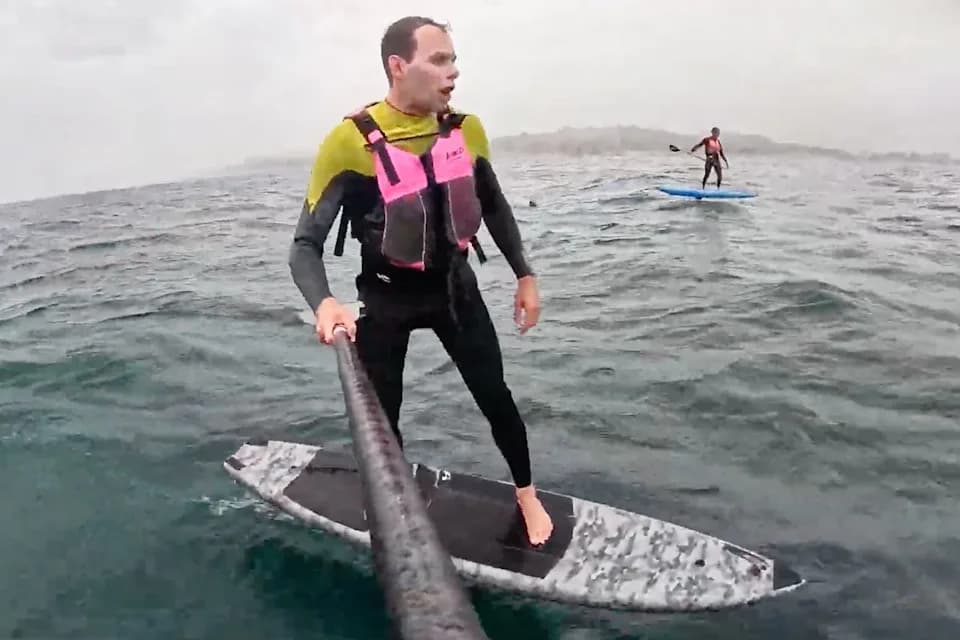
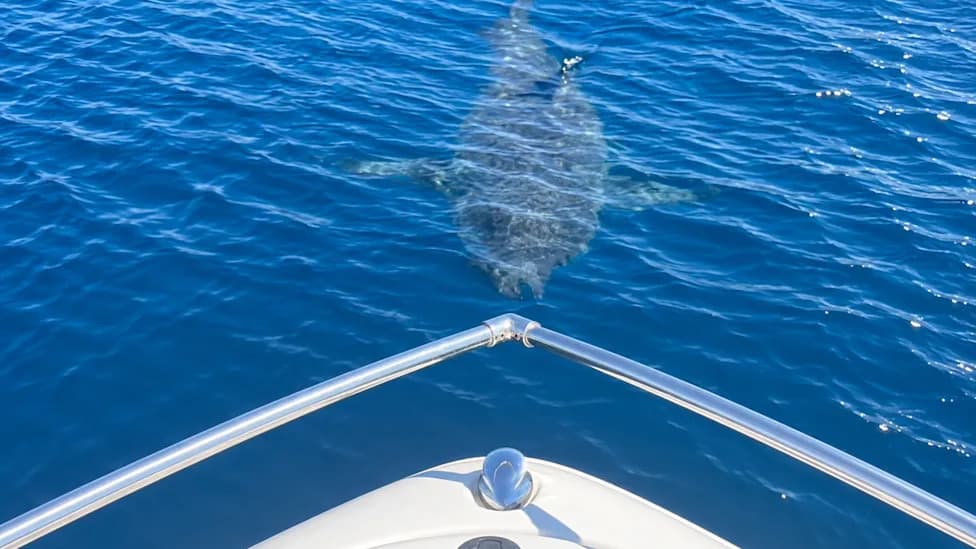
A shark, believed to be a great white, follows hydrofoil surferCredit: Courtesy of Tavis Boise
A California surfer described a tense, 10‑minute encounter with what he and companions believe was a juvenile great white shark while riding a hydrofoil near Santa Barbara.
Ron Takeda says the incident happened on Saturday, April 25, as he rode a hydrofoil — a surfboard fitted with a mast and underwater wing that lets riders travel faster and glide above the water — on a route between UC Santa Barbara and Carpinteria, California.
In video shared on social media, Takeda’s friend can be heard urging him on: "Don't fall" and "Don't stop. Go, go, go!" The clip shows white water and a dark, torpedo‑shaped form trailing Takeda's board.
"I heard splashing white water and gurgling behind me," Takeda wrote on Facebook. "I looked back and saw whitewater trailing my board/foil. I thought I was dragging seaweed or my waist leash... I looked back again and saw a big, girthy, dark torpedo shape following me with trailing whitewater."
Takeda and his companions estimated the animal followed him for about 10 minutes. He reported that the shark was "speedy," at times went under his board, and made audible thrashing sounds both during the recording and for minutes afterward. Ultimately, the shark broke off and Takeda and his friend continued their outing, completing about 12 miles.
Why Sharks Are Showing Up More Often
Marine scientists say Southern California — including waters off Santa Barbara — hosts one of the state's largest aggregations of juvenile white sharks because those animals are attracted to warmer coastal conditions. Neil Nathan, a project scientist at the Benioff Ocean Science Laboratory, told SFGATE that expected El Niño conditions and higher sea surface temperatures this year could increase shark sightings and even push juvenile white sharks to expand their range northward into areas that were historically too cold.
What Officials Say About Shark Encounters
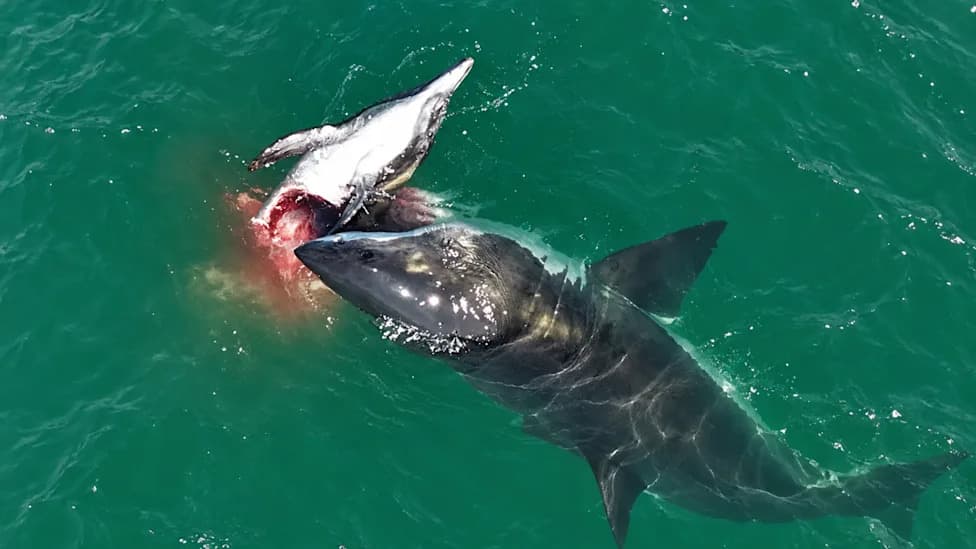
The California Department of Fish and Wildlife (CDFW) describes great white sharks as having "robust, torpedo‑shaped bodies" with conical snouts and lateral ridges called keels on their tail stalks. Their diet includes fish, seals, sea lions, dolphins, rays and smaller sharks.
CDFW and other scientists emphasize that most white shark interactions with people are not predatory. Many incidents are thought to be exploratory investigatory bites or cases of mistaken identity (people resembling seals or sea lions). Officials also note that although more people use the ocean today, shark incidents have not increased proportionally.
Outcome: Takeda was not injured. He described the episode as "memorable" and said he was disappointed it occurred while miles offshore, but he and his friend finished their ride.
Note: The footage discussed in this article was shared on social media by the participant; marine biologists base species identification on appearance and behavior but caution that visual identification at sea can be uncertain.
Help us improve.