
President Trump is reportedly considering major new military strikes on Iran to break a deadlock around the Strait of Hormuz while urging other nations to help reopen the route. Oil prices have jumped above $126 a barrel — a four-year high — and fertilizer prices have doubled since February, prompting analysts to warn of possible food shortages and sustained inflation. The Institute for the Study of War says Iran faces severe economic strain with millions of job losses and a collapsing currency, and the Pentagon reports it has spent about $25 billion so far.
Trump Reportedly Weighs Major Military Strikes on Iran as Oil and Food Prices Surge
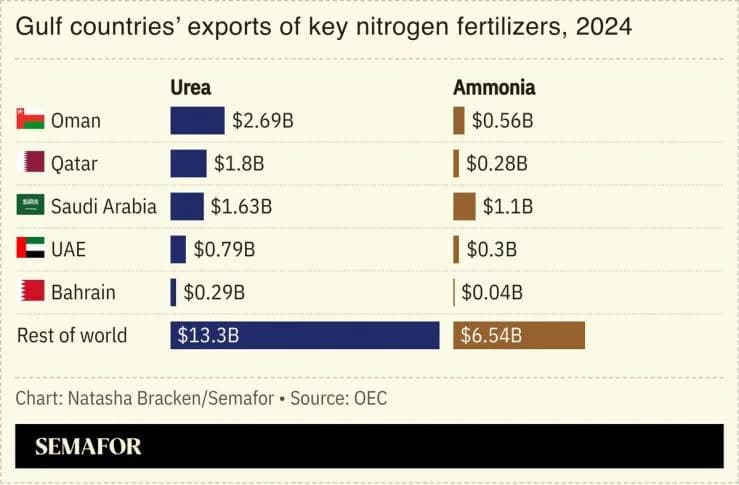
A chart showing Gulf countries’ exports of key nitrogen fertilizers.
President Donald Trump is reportedly weighing major new combat operations in Iran to break an impasse over access through the Strait of Hormuz, while his administration presses other countries to help reopen the strategic waterway.
Economic and Market Impact
Fears that hostilities could resume pushed benchmark oil prices above $126 a barrel — their highest level in four years — and sent fertilizer prices sharply higher. Fertilizer costs have doubled since February, analysts told Semafor, raising the prospect of widespread food-supply pressures and higher consumer inflation in the months ahead.
Human and Fiscal Costs
The Institute for the Study of War reports Iran’s economy is under significant strain, with millions of jobs lost and a collapsing currency. The fiscal and operational costs of the conflict are already substantial: the Pentagon says it has spent about $25 billion so far.
Analysts warn that sustained disruptions to oil and fertilizer supplies could translate into prolonged food shortages and elevated inflation globally.
Officials and observers say the coming days will be critical: decisions by the U.S. administration and international partners could determine whether tensions escalate into renewed large-scale military operations or return to a tense standoff.
Help us improve.





















