Rep. Daniel Webster said he will not seek re-election amid an escalating Republican fight over fast-tracked redistricting in Florida, a dispute intensified by calls from party leaders to redraw maps ahead of the usual schedule. His retirement raises the number of House Republicans leaving their seats to 37 and deepens uncertainty as lawmakers consider plans that could reshape the state's delegation. Recent map-driven losses in other states and broader political and economic headwinds add to GOP concerns heading into the midterms.
Florida Redistricting Fight Forces First GOP Casualty: Rep. Daniel Webster to Retire

After 9 years, Daniel Webster became the 37th House Republican to announce they will not be seeking re-election ahead of midterms. / U.S. HOUSE OF REPRESENTATIVES / via REUTERS
Rep. Daniel Webster announced he will not seek re-election, becoming the first high-profile Republican casualty in a widening intra-party fight over fast-tracked redistricting in Florida. Webster framed the decision as a personal one — saying it is time to "pass the torch" and spend more time with family — but his departure comes as GOP leaders push an aggressive effort to redraw congressional maps ahead of the usual post-census timeline.
Webster's statement:
"It has been an honor and privilege to represent my beloved state in the U.S. House of Representatives. After discussions with my wife, Sandy, I am ready to step aside. The time has come to pass the torch to the next conservative leader and spend more precious time with my wife, children and grandchildren."
While Webster did not explicitly cite redistricting as the reason for his retirement, his exit amplifies uncertainty as Florida lawmakers convene a special legislative session to redraw congressional districts. The proposal advanced by Governor Ron DeSantis would significantly reshape the state's delegation and could expand the Republican advantage in Florida’s U.S. House delegation if enacted.
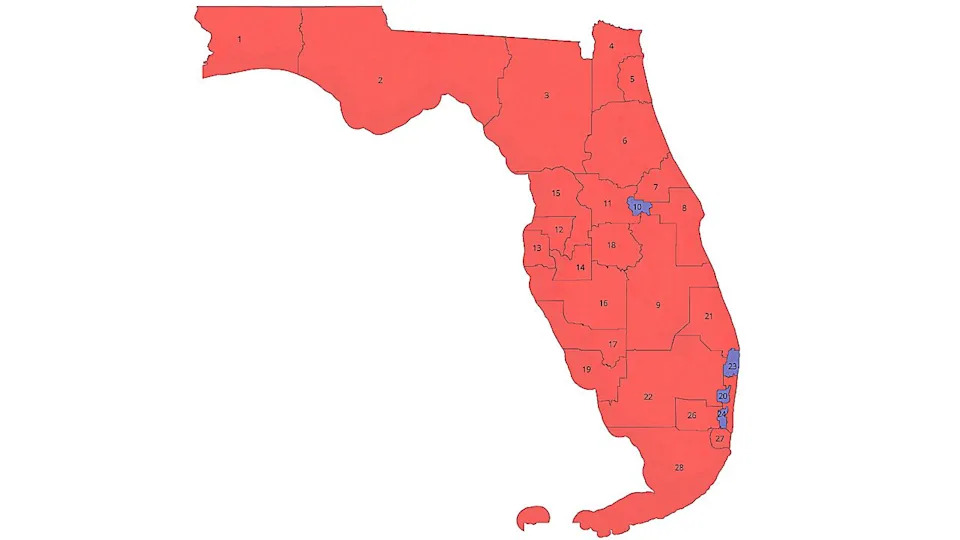
If approved, Florida's proposed congressional map could be implemented before the midterm elections. / Office of Gov. Ron Desantis
Why This Matters
- Mapmaking Impact: Florida’s proposed changes could alter many incumbents’ districts and shift the delegation balance, intensifying primary and general-election contests.
- GOP Retirements Rising: Webster’s retirement brings the number of House Republicans not seeking re-election to 37, exceeding the wave of departures that preceded the 2018 midterms.
- Broader Fallout: Several House members are pursuing other offices — gubernatorial and Senate bids — while others are exiting Congress entirely, increasing turnover and unpredictability heading into the midterms.
Republicans remain sensitive to the costs of redistricting after recent setbacks in other states, including losses tied to new maps in Virginia. The national context adds pressure: public polling shows strained approval for party leaders, economic concerns such as rising prices, and international tensions that could shape voter sentiment going into next year’s midterms.
Outlook
Webster’s decision underscores how intra-party battles over strategy and maps can have immediate political consequences. Even if map changes ultimately favor Republicans on paper, the upheaval — contested primaries, scrambled incumbents and voter reactions to perceived political manipulation — could create risks for the party in competitive districts.
What to watch next: the final shape of Florida’s congressional map, additional retirement announcements, and whether court challenges or political backlash reshape the redistricting effort before the next election cycle.
Help us improve.