
Two months into the conflict, Iran shows both resilience and rupture. Core institutions — the IRGC, judiciary and hardline parliament — remain dominant even as leadership shifts and public life is disrupted. Severe economic damage, a 60-day internet blackout and expanded street security have deepened hardship, while some officials pursue negotiations but reject concessions they view as surrender.
How Iran Has Changed — And How It Hasn't, Two Months Into War
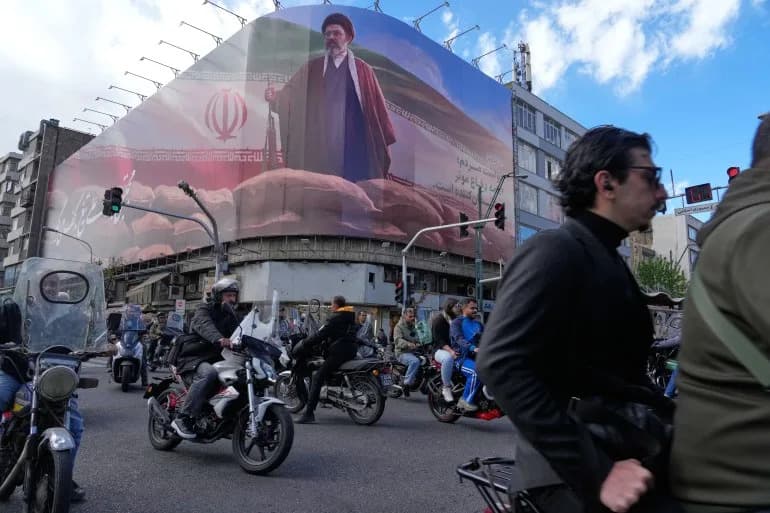
Motorcyclists ride past a billboard that shows a graphic depicting Supreme Leader Mojtaba Khamenei in Tehran, Iran, April 6, 2026 [Vahid Salemi/AP Photo]
Two months after the United States and Israel launched strikes against targets in Iran, the country's political landscape shows a mix of rapid change and deep continuity. Many institutions that underpin the Islamic Republic remain intact even as leadership shifts, economic collapse and heightened security reshape daily life for more than 90 million people.
Leadership and Institutions
Claims from US officials that the conflict has produced “regime change” — including reports that Supreme Leader Ayatollah Ali Khamenei was killed — have been disputed and framed differently inside Iran. A clerical body quickly designated Mojtaba Khamenei as successor, and key state structures continue to function. Military, security, political and judicial authorities have publicly reaffirmed loyalty to the office of the supreme leader and to the theocratic establishment.
Military and Security Forces
The Islamic Revolutionary Guard Corps (IRGC), formed after the 1979 revolution to defend the system, retains primary responsibility for military operations. It also exerts substantial economic influence through control of natural resources and major enterprises. The IRGC and paramilitary Basij units maintain a strong armed presence in cities. Foreign allied militias — notably Iraq’s Popular Mobilisation Forces (PMF/Hashd al-Shaabi) and other regional groups — have appeared in public parades in Tehran and other cities, reinforcing the state’s security posture.
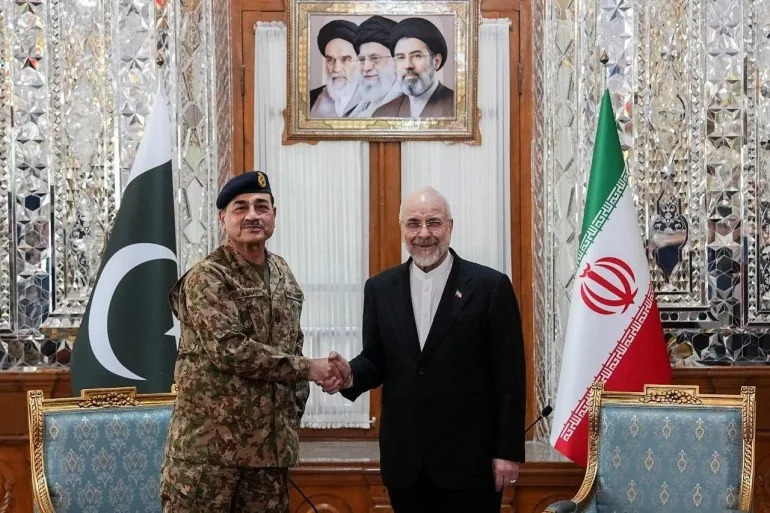
Iranian Parliament Speaker Mohammad Bagher Ghalibaf meets Pakistan military chief Asim Munir, in Tehran, Iran, April 16, 2026 [West Asia News Agency]
Politics, Media and the Judiciary
Parliament and the judiciary remain dominated by hardline factions. The judiciary continues to report frequent arrests and executions of dissidents, and state-controlled media and allied outlets broadcast coordinated messaging, sometimes using AI-generated material. Moderate President Masoud Pezeshkian, elected in 2024 amid low turnout, is largely confined to domestic duties and limited diplomatic outreach while reformist figures remain politically marginalized and publicly denounced by hardliners.
Diplomacy, Negotiations and the Nuclear Question
Some political figures have tentatively pursued negotiations: Mohammad Bagher Ghalibaf led a mediated delegation to Islamabad and has said he wants to convert battlefield gains into a deal, while also insisting on no “surrender.” Iran’s recent proposal to the US would defer discussions about its nuclear programme — although Tehran continues to deny any intent to build nuclear weapons and refuses to ship out enriched material or halt enrichment on Iranian soil.
Strait of Hormuz and Economic Demands
Tehran has shifted public emphasis to the Strait of Hormuz, pushing to reopen maritime traffic on its terms. Officials argue that Iran and Oman — the two littoral states — should manage transit and have proposed charging passage fees to recoup part of roughly $270 billion in damages Iran says it has sustained. Parliament has reportedly drafted legislation to legalize such a system, a move likely to clash with international calls for unconditional reopening to stabilize global markets.
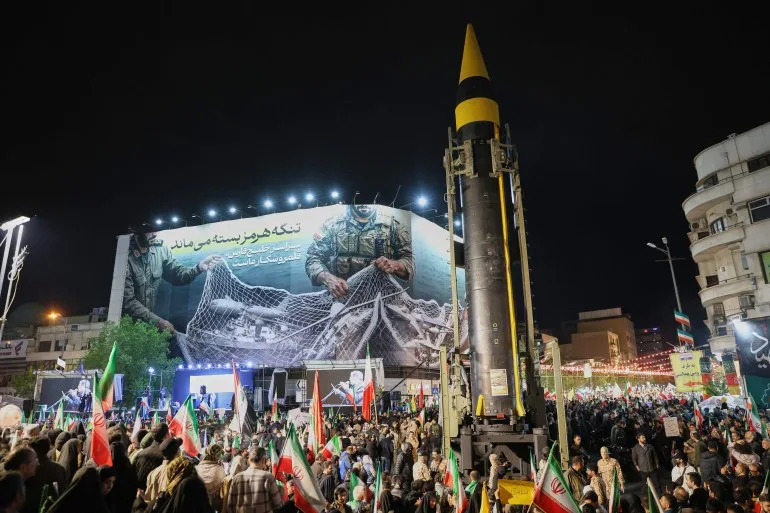
A ballistic missile on display during a pro-government demonstration at a square in Tehran, Iran, April 21, 2026 [Alireza Masoumi/ISNA via AP]
Humanitarian and Economic Impact
Intense bombardment and prolonged sanctions have devastated industry and infrastructure. Inflation is among the highest globally, key production facilities have been heavily damaged, and millions of jobs have been lost or suspended. A near-total, state-imposed internet shutdown has been in effect for 60 days for declared wartime security reasons; authorities say restrictions will ease only after the conflict ends and are introducing a contested tiered internet system.
The government has prioritized securing food and medicine imports, reinstating subsidized currency allocation for essential goods — a policy previously halted because of corruption concerns. Analysts expect living standards to fall further as inflation erodes household incomes.
Domestic Repression and Public Atmosphere
Security measures remain pervasive: armoured vehicles, armed patrols, checkpoints, daytime parades and nightly pro-state motorcades are common sights. The judiciary has warned that dissenters may face asset confiscation in addition to imprisonment. State outlets have broadcast televised “confessions” of people accused of espionage or security-related offences, including attempts to use satellite internet or record military incidents.
Outlook
The conflict’s trajectory remains uncertain. While Iran’s core institutions demonstrate resilience and a willingness to resist concessions they deem unacceptable, some pragmatic actors are exploring negotiation pathways. The economic and humanitarian toll is mounting, and the government faces the twin challenge of maintaining internal control while seeking international relief from sanctions and reconstruction needs.
Help us improve.





















