
Israeli Prime Minister Benjamin Netanyahu warned that Hezbollah's 122mm rockets and drones remain a central threat and called for combined military and technological measures even as a U.S.-brokered ceasefire holds. Lebanese President Michel Aoun supports direct talks with Israel to formally end the state of war, but Hezbollah deputy leader Naim Qassem condemned negotiations as a "grave sin." Israel has carried out strikes in the Bekaa Valley and southern Lebanon targeting Hezbollah infrastructure, while Lebanon reports 2,521 deaths from Israeli attacks since March 2. Diplomacy and military actions continue in parallel, leaving the situation tense and politically divisive in Beirut.
Netanyahu: Hezbollah Rockets And Drones Remain Major Threat As Israel Expands Strikes In Lebanon
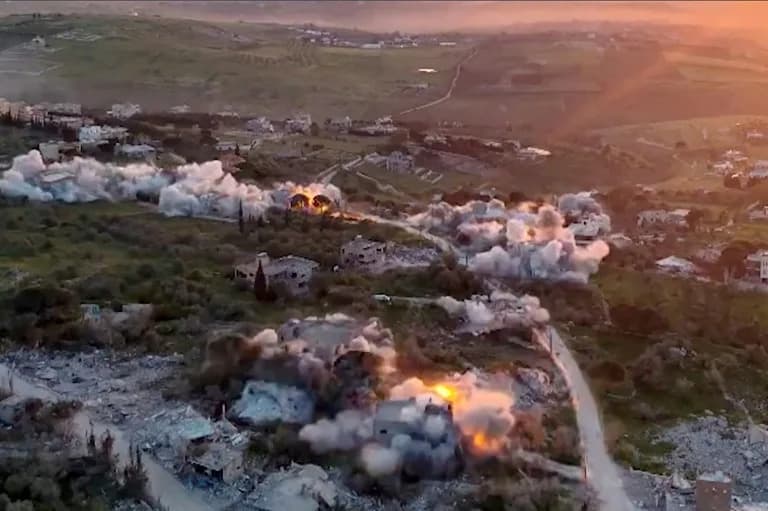
A screen grab image taken from a handout video released by the Israeli army shows footage of what it says is the destruction of Hezbollah infrastructure in Lebanon, where a ceasefire has been in place since mid-April (-)(-/Israel Army/AFP)
Israeli Prime Minister Benjamin Netanyahu said on Monday that Hezbollah's rockets and drones remain a significant security threat that requires a combination of military and technological responses, even as a U.S.-brokered ceasefire is in place. Israel has expanded strikes in southern Lebanon and the Bekaa Valley, saying it is targeting Hezbollah infrastructure.
Diplomacy, Ceasefire And Ongoing Tensions
In recent weeks, the ambassadors of Lebanon and Israel met in Washington for the first such bilateral talks in decades. After the first round of meetings, U.S. President Donald Trump announced a 10-day ceasefire beginning April 17; a subsequent round of talks led to a three-week extension. Under the ceasefire terms, Israel says it reserves the right to act against "planned, imminent or ongoing attacks."
Political Divisions In Lebanon
Lebanese President Michel Aoun urged direct negotiations with Israel as a way to end the state of war, insisting he will not accept a humiliating deal. Aoun defended the talks as necessary to restore peace and has faced fierce criticism from Hezbollah and its allies, who argue the government lacks a national consensus on negotiating with Israel.
"What we are doing is not treason. Rather, treason is committed by those who take their country to war to achieve foreign interests," Aoun said, responding to his critics.
Hezbollah's Response And Warnings From Israel
Hezbollah deputy leader Naim Qassem denounced direct talks as a "grave sin" and rejected negotiations, urging authorities to back down and warning that giving up weapons or land is unacceptable. Israeli Defence Minister Israel Katz warned that Hezbollah's rejection of talks and continued attacks would bring "catastrophic consequences" for Lebanon, saying the group was "playing with fire."
Israeli forces have reported operations inside a self-declared "yellow line" — a strip roughly 10 kilometres (about six miles) deep inside Lebanese territory along the border — from which civilians have been warned to stay away. Hezbollah said its fighters launched several attacks on Israeli forces in the south, including strikes against equipment it said was involved in demolition operations in border towns such as Bint Jbeil.
Casualties And Human Cost
Lebanese authorities reported that Israeli strikes have killed 2,521 people since March 2. Local media also reported Israeli airstrikes and artillery fire across several southern towns and demolition operations in multiple locations.
Netanyahu highlighted two particular threats: 122mm rockets and unmanned drones, calling for "a combination of operational and technological activity" to counter them. Israel's military said its strikes in the eastern Bekaa and southern Lebanon targeted what it described as Hezbollah infrastructure.
As diplomacy continues alongside military actions, Lebanon remains politically divided over negotiations with Israel and the future role of Hezbollah’s armed capabilities. The situation on the ground is fluid, with diplomatic efforts coexistng uneasily with periodic exchanges of fire.
Help us improve.





















