
Dozens of student-built rockets launched in Hazel Green during NASA's 2026 Student Launch, with 32 teams competing including Charger Rocket Works from the University of Alabama in Huntsville. Teams praised favorable weather, disciplined procedures and a strong safety focus, while payload integration across three sub-teams remained a key challenge. A mid-flight failure captured by Fox 54 was highlighted by NASA officials as a valuable learning experience, underscoring that failure drives redesign and real-world engineering growth.
NASA 2026 Student Launch: Dozens Of Rockets Lift Off In Hazel Green, Teams Turn Failure Into Lessons
WZDX
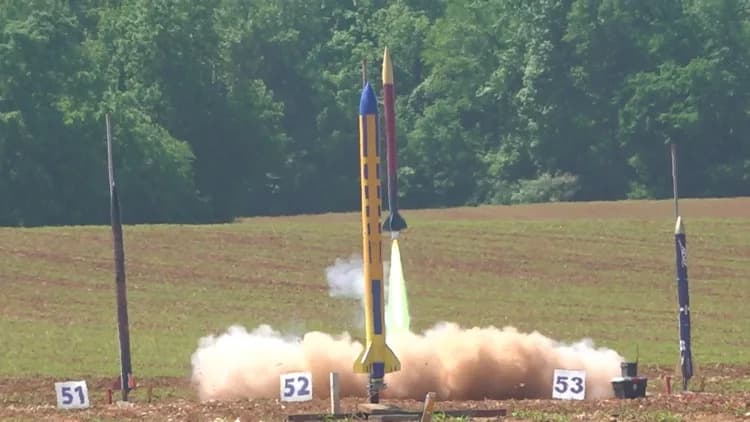
Dozens of student-built rockets lifted off Thursday afternoon in Hazel Green during NASA's 2026 Student Launch competition, where 32 teams put their designs and procedures to the test.
Among the competitors was Charger Rocket Works from the University of Alabama in Huntsville, which launched a vehicle carrying multiple payloads. Team members said favorable weather and disciplined preparation helped streamline final assembly and preflight checks.
Weather, Procedures and Safety
“The weather was great,” said Louis McEvoy, a Charger Rocket Works team member. “The rocket went together faster than we ever have; our procedures were on point, and we're really happy with our safety after putting that together.”
Teamwork and Integration Challenges
Coordination across the team's three primary sub-teams — structure, propulsion and payload — proved one of the biggest challenges. Payload team member Zeke Kuntz emphasized communication and documentation as critical to success.
“Integration is always really challenging,” Kuntz said. “The most important thing is communication between everybody. One of the most important things is making sure we're operating safely and documenting everything.”
Mid-Flight Failure Becomes Teachable Moment
Not every flight went as planned. Local outlet Fox 54 captured footage of a rocket that failed in mid-flight. NASA officials framed the incident as an important part of hands-on learning for the students.
“Just like at NASA, sometimes we have failures,” said Dr. Vemitra Alexander. “However, we pick ourselves up and we do the work all over again. So this is a great learning opportunity for these students.”
Alexander added that a failed flight does not equal a failed team: the students put in hard work, time and creativity, and will return to redesign and retest — replicating real-world engineering cycles.
Hands-On Experience
Teams from around the world gathered at the launch site to demonstrate designs, troubleshoot systems, and gain practical experience in aerospace design, testing and safety procedures. For many students, the event offered a rare opportunity to apply classroom theory to live launches and iterative engineering.
Help us improve.





















