
Jack Schmitt, a field geologist and the first scientist to walk on the moon, argues that a permanent lunar presence offers strategic, scientific and operational benefits. He calls the moon a 4.5‑billion‑year record of the solar system and highlights helium‑3 as a promising, low‑waste energy resource if fusion technologies mature. Schmitt praises Artemis II for giving Mission Control real deep‑space experience, cautions that radiation and propulsion are key challenges for long‑term lunar and Mars missions, and views extraterrestrial life as plausible but unlikely to be visiting Earth.
Jack Schmitt: Why Returning to the Moon Matters — Science, Strategy and the Search for Life
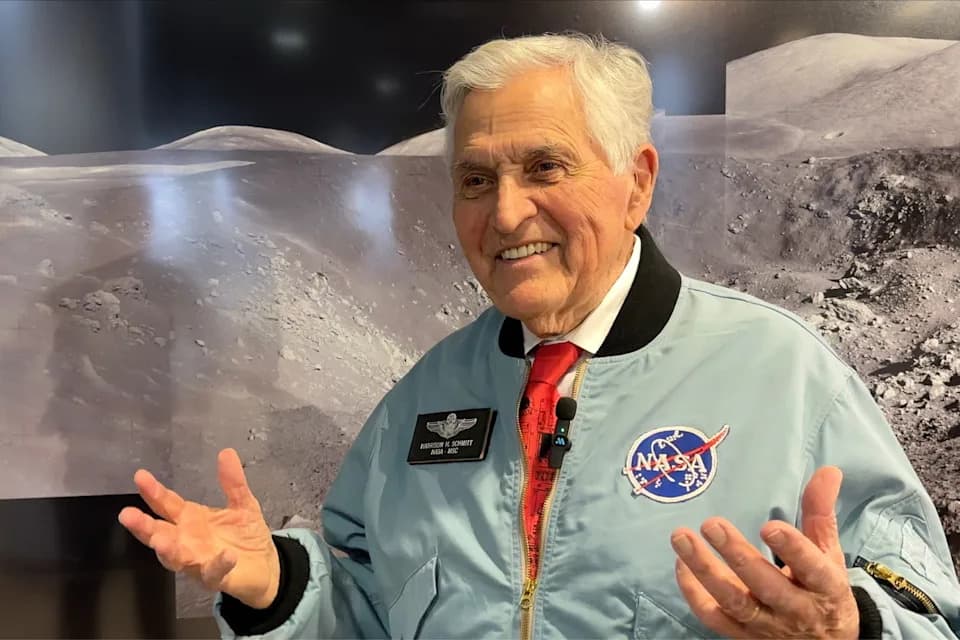
Apollo astronaut Harrison "Jack" Schmitt talks about having to acclimate to gravity after his moon mission in 1972 while being interviewed at the New Mexico Museum of Natural History and Science in Albuquerque, N.M., on April 22, 2026. (AP Photo/Susan Montoya Bryan)(ASSOCIATED PRESS)
In 1972, Apollo astronauts Harrison “Jack” Schmitt and Eugene Cernan stepped onto the lunar surface to collect rock and soil samples, closing a defining chapter in the U.S. space program. Even then, Schmitt — a trained field geologist and the first scientist to walk on the moon — urged future generations to follow their footprints.
Now 90 and one of four living Apollo moonwalkers, Schmitt watched the Artemis II crew’s recent lunar flyby with renewed excitement. In an interview with The Associated Press, the former U.S. senator from New Mexico discussed the scientific value of the moon, the strategic case for a permanent lunar base, the promise of helium‑3, and the broader question of life beyond Earth.
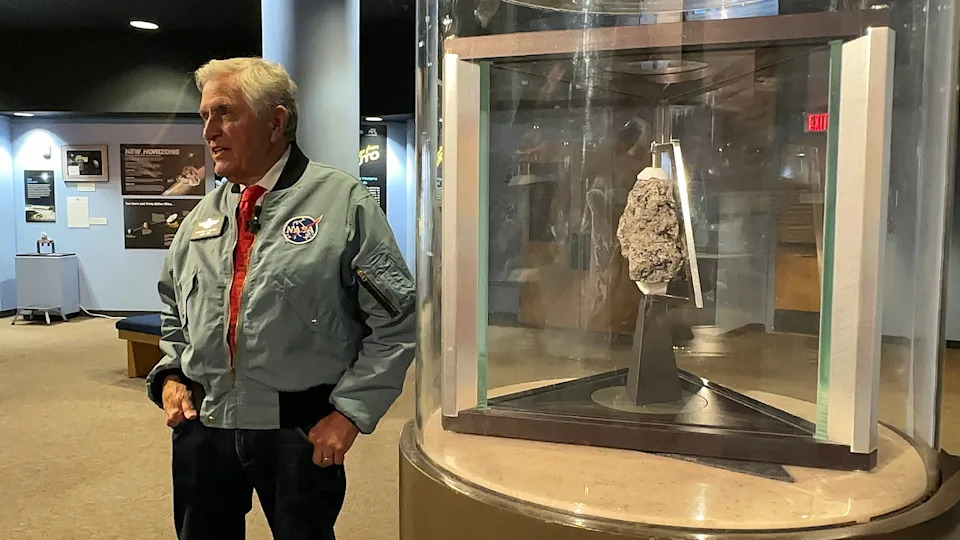
Apollo astronaut Harrison "Jack" Schmitt answers questions about his 1972 trip to the moon while standing near a moon rock on display at the New Mexico Museum of Natural History and Science in Albuquerque, N.M., on April 22, 2026. (AP Photo/Susan Montoya Bryan)(ASSOCIATED PRESS)
Why A Lunar Base?
Geopolitics and practical experience. Schmitt argues that a sustained presence on the moon makes strategic sense: it establishes geopolitical presence in deep space and serves as a stepping-stone to Mars. He emphasizes that repeated missions give new generations the psychological and operational experience required to work reliably far from Earth.
He said Artemis II’s recent mission provided Mission Control and ground teams with real-world experience beyond simulations — a crucial step toward reducing risk in future crewed deep-space operations.
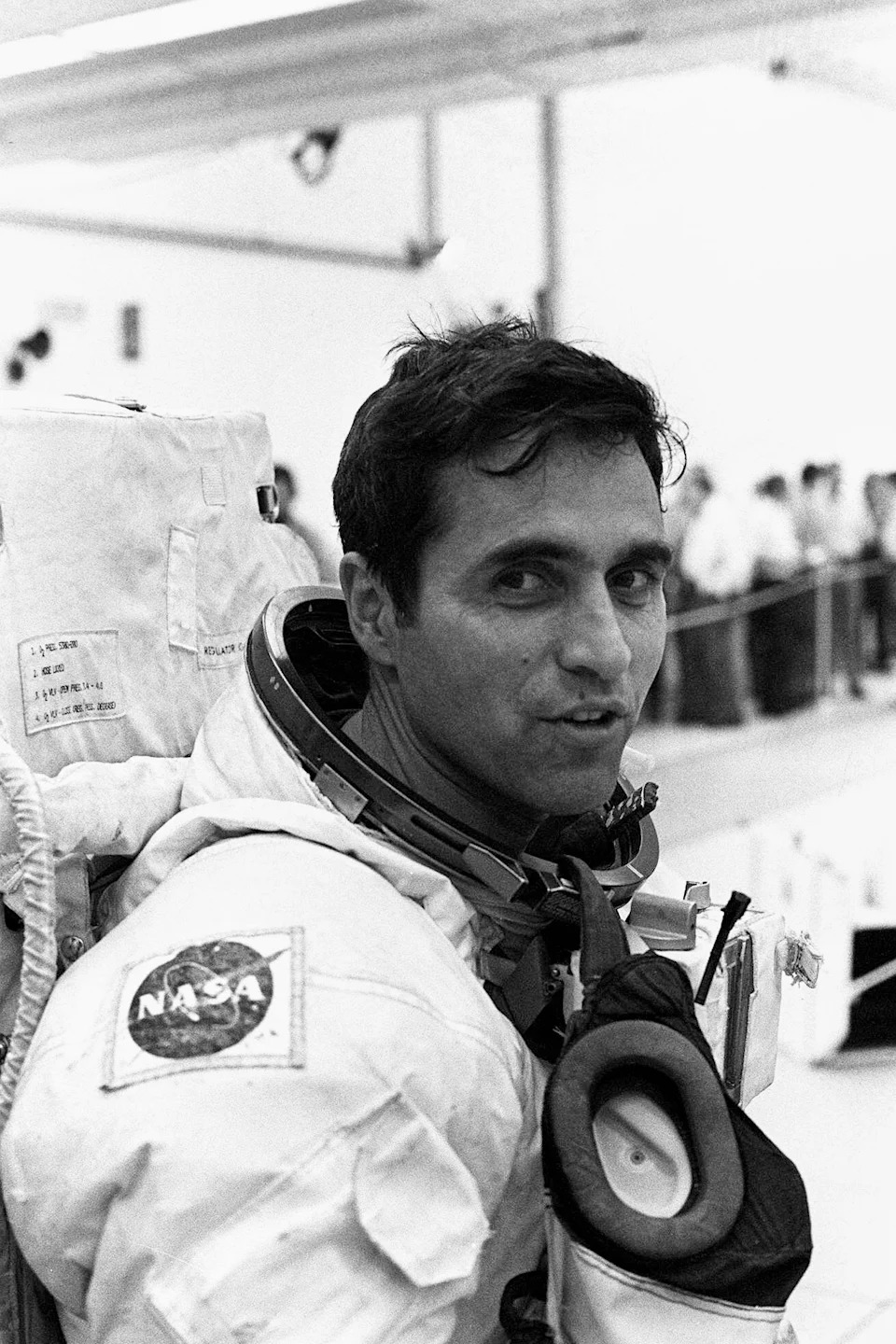
FILE - Apollo 17 astronaut Dr. Harrison Schmitt is seen on Oct. 11, 1972, in Cape Kennedy, Fla. (AP photo/Jim Kerlin, File)(ASSOCIATED PRESS)
Science In The Regolith
The moon as a 4.5‑billion‑year archive. The lunar surface has preserved a long record of the solar system’s history. Schmitt explained that studying the regolith — the layer of debris covering the moon — helps scientists reconstruct the sun’s past activity and the solar system’s evolution.
Schmitt noted that research into lunar materials suggests periods when the sun grew more active, coinciding with major biological expansions on Earth. He linked increased solar activity to ocean warming that likely helped life diversify about half a billion years ago.
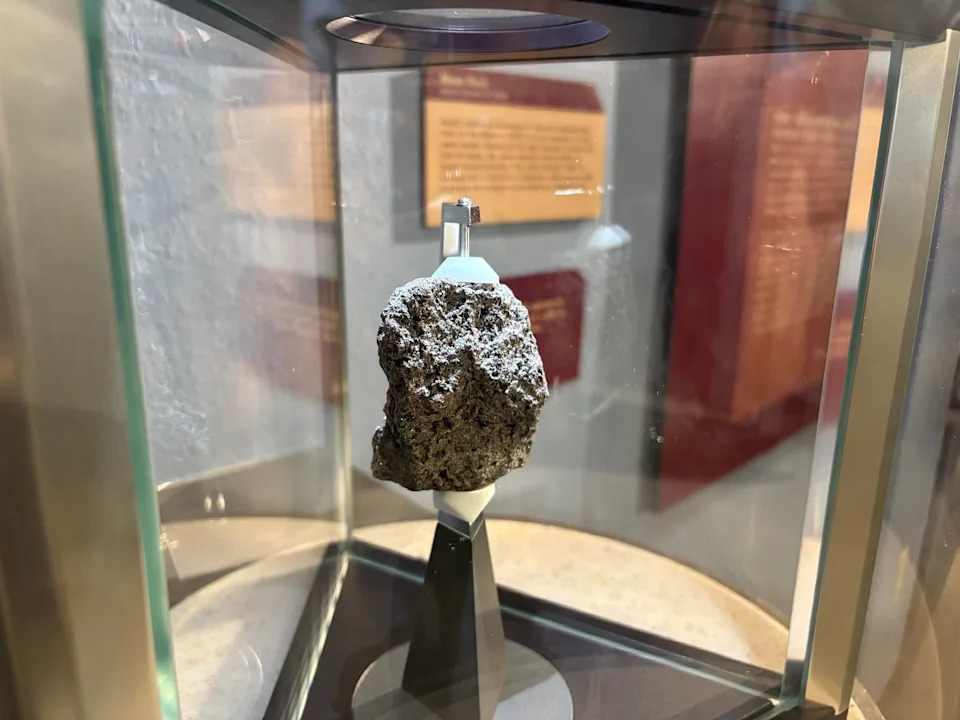
A moon rock collected by Apollo astronaut Harrison "Jack" Schmitt in 1972 is displayed at the New Mexico Museum of Natural History and Science in Albuquerque, N.M., on April 22, 2026. (AP Photo/Susan Montoya Bryan)(ASSOCIATED PRESS)
Helium‑3 And Future Technologies
Schmitt highlighted titanium‑rich lunar basalts, which can concentrate volatiles like hydrogen and rare isotopes such as helium‑3. While helium‑3 is scarce on Earth, the moon may host accessible supplies. He described helium‑3 as a potentially valuable resource for low‑waste fusion energy, and as having possible applications in advanced technologies including quantum computing and medical therapies — though those uses remain largely prospective and dependent on future technical breakthroughs.
He also pointed to international interest — including China’s — in lunar resources and said competition for access is a major driver of renewed lunar activity.
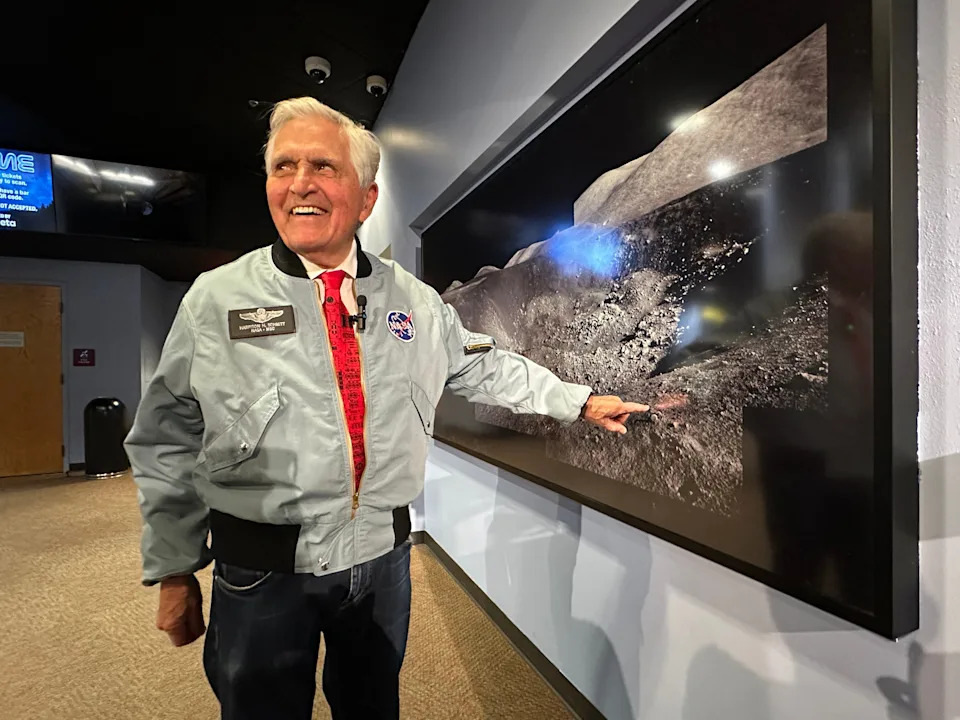
Apollo astronaut Harrison "Jack" Schmitt points to a crater where he collected samples during his 1972 moon mission, while being interviewed at the New Mexico Museum of Natural History and Science in Albuquerque, N.M., on April 22, 2026. (AP Photo/Susan Montoya Bryan)(ASSOCIATED PRESS)
The Apollo Experience: Working On The Moon
Recalling Taurus‑Littrow, Schmitt described working in a valley deeper than the Grand Canyon. One‑sixth Earth gravity made movement easier and falls less severe, but suited operations and floating tools introduced new challenges. He shared a humanizing anecdote about readjusting to Earth gravity after splashdown — a spilled cup that underscored how quickly the brain adapts to different environments.
Habitation, Radiation And Mars
Schmitt said long‑term living on the moon is feasible but noted significant hurdles, especially radiation exposure. He expressed confidence that engineering solutions exist to mitigate those risks. Regarding Mars, he suggested that advanced propulsion — possibly fusion‑based systems — may be needed to shorten transit times and reduce hazards for crewed missions.
Life Beyond Earth
On extraterrestrial life, Schmitt emphasized statistical plausibility given the vast number of sunlike stars, while also recognizing the unique chain of conditions that enabled life on Earth. He remained skeptical of claims that advanced extraterrestrials are visiting Earth, arguing that truly advanced civilizations would likely communicate more clearly if they were here.
“You’ve just got to remember what used to be called supernatural probably should be called unknown physics,” Schmitt said, underscoring how scientific progress reframes mysteries.
Looking Ahead
Schmitt closed by stressing the importance of STEM education — especially mathematics — and praised NASA’s younger workforce and growing collaboration with commercial space companies. He framed the next decades of lunar exploration as a mix of scientific discovery, resource development and geopolitical competition, with major technological advances still to come.
Help us improve.





















