
President Trump extended a ceasefire with Iran,Analysts say U.S. threats have lost credibility
Why Trump’s Latest Retreat on Iran Could Matter More Than a 'TACO Tuesday'
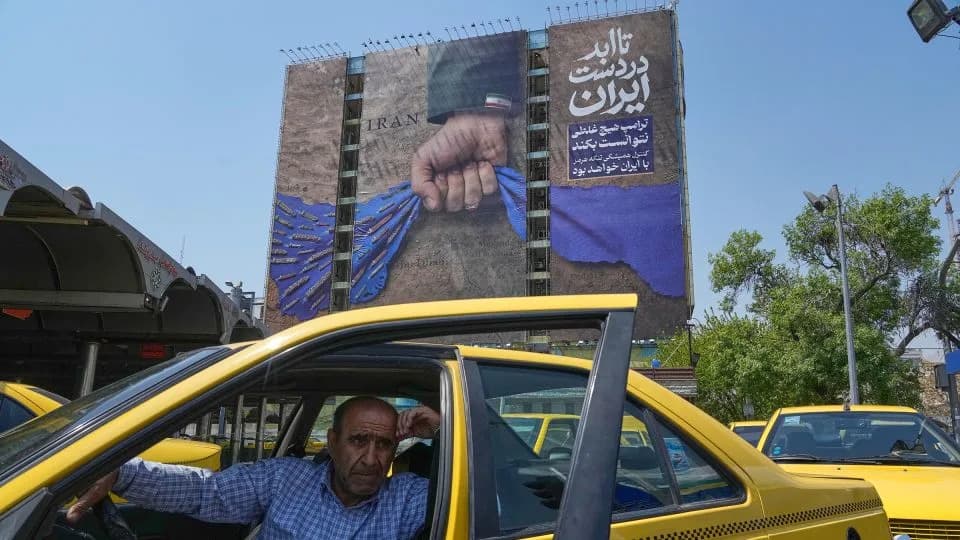
A taxi driver waits for passengers in front of a billboard depicting a military personnel's hand holding the Strait of Hormuz in his fist, in Vanak Square in northern Tehran, Iran, on April 16, 2026. - Vahid Salemi/AP
President Donald Trump has again stepped back from the brink by extending an open-ended ceasefire with Iran — a move critics deride as another “TACO Tuesday” ("Trump Always Chickens Out"). But beyond the taunts, the decision underscores real strategic consequences: it suggests that threats of overwhelming U.S. military force have lost credibility and that Tehran may have strengthened its bargaining position simply by waiting out Washington.
The episode began when Trump wrote on Truth Social that he had paused U.S. strikes at Pakistan’s request to allow Iran to submit a proposal and that the halt would remain in effect until talks concluded. The announcement came the same day Iran declined to attend proposed talks in Islamabad, leaving Vice President J.D. Vance stranded at home.
Officials cited fractured command within Iran — including reports that new Supreme Leader Mojtaba Khamenei may be in hiding and unable to give clear direction — as a reason Tehran did not respond to U.S. proposals. That explanation is plausible, but it also risks serving as a convenient cover for a U.S. climbdown. Questions about Iranian negotiators’ authority long complicate diplomacy with Tehran, and Israel’s strikes that eliminated influential officials only deepened those fractures.
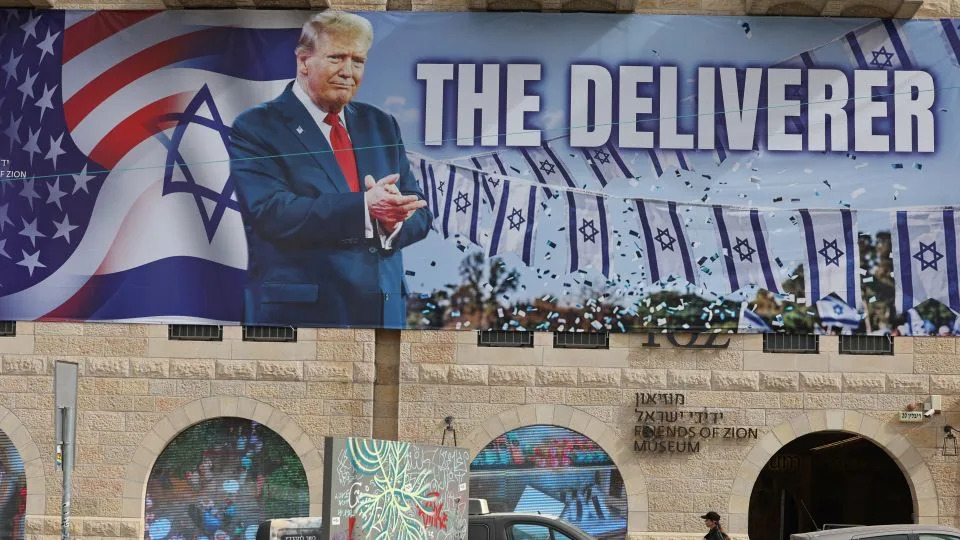
A woman walks past a banner depicting President Donald Trump with the slogan "The Deliverer" in Jerusalem on April 20, 2026. - Ahmad Gharabli/AFP/Getty Images
What This Means Strategically
No amount of presidential spin changes the central fact: a U.S. strategy premised on coercive threats has repeatedly failed to force Iran to capitulate at the negotiating table. In Tehran, that pattern likely erodes the perceived credibility of U.S. escalation threats. Iran’s choice to outwait Washington on attendance at talks projected strength, and the president’s reluctance to widen the conflict suggests Iran’s capacity to strike Gulf targets may remain a deterrent.
“It doesn’t matter what the president will say or the vice president or the secretary of war will say. It has zero influence on the Iranian calculus,” said Danny Citrinowicz, formerly head of the Iran branch of Israeli military intelligence.
For optimists, the indefinite ceasefire extension offers breathing room for diplomacy. If Trump truly intends the pause to last until talks conclude, negotiations could stretch for weeks or months — giving diplomats time to craft trade-offs that preserve face on both sides.
Diplomatic Levers and Risks
One obvious lever is the U.S. blockade of Iranian ports and ships. Analysts are divided: some argue the blockade makes it harder for Tehran to show flexibility without losing face, while others say it creates leverage the U.S. can barter away to secure concrete concessions — for example, assurances to reopen the Strait of Hormuz in exchange for phased relief.
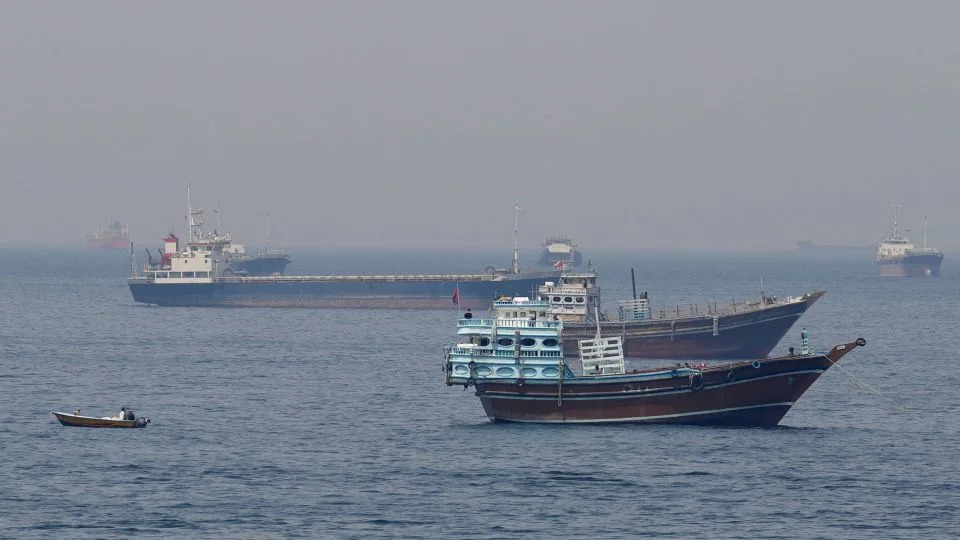
Ships and boats in the Strait of Hormuz off the coast of Musandam, Oman, April 20, 2026. - Reuters
But a ceasefire does not erase deeper problems. The Strait of Hormuz remains effectively threatened, Iran retains stocks of highly enriched uranium that could underpin future nuclear efforts, and Iran’s internal politics now appear tilted toward military hardliners who may be less willing to compromise. The economic pain of tighter sanctions or a blockade could take longer to bite than the administration’s political patience or the global economy can withstand.
There are also tactical arguments that U.S. and Israeli strikes produced operational gains that degraded some Iranian capabilities. Yet the decision to go to war in the first place — combined with weeks of inconsistent strategy and contradictory public statements — risks steering the U.S. toward a broader strategic setback unless the pause in attacks is used to build a credible exit ramp.
Possible Pathways
Practical next steps could include: a negotiated timetable that exchanges phased relaxation of the naval blockade for verifiable reopening of the Strait; an international mediation track that broadens participation beyond Pakistan; and step-by-step security and verification measures to address Iran’s nuclear and missile programs while offering limited sanctions relief.
As Richard Haass, president emeritus of the Council on Foreign Relations, put it: giving Tehran time to propose a path forward may be a smarter starting point than imposing a U.S. package that Tehran would immediately reject on dignity grounds.
Whether such diplomacy succeeds depends on Iranian willingness to trade leverage for relief, the durability of U.S. political will, and the capacity of international partners to present a united, credible offer. For now, the ceasefire pause has shifted leverage modestly toward diplomacy — but it has not resolved the strategic hazards that sparked the crisis.
Help us improve.





















