
Bangladesh's BNP-dominated parliament reviewed 133 Yunus-era ordinances and confirmed 110, while 23 either lapsed or were repealed. Notable reversals affect the NHRC's independence, legal recognition of enforced disappearances, judicial appointment reforms and anti-corruption measures. The government says it will redraft and reintroduce problematic provisions after stakeholder consultations starting May 15, but opposition groups and rights advocates warn the changes risk re-centralising power and weakening accountability.
Is Bangladesh Rolling Back Post-Uprising Reforms? Key Ordinances Repealed or Lapsed
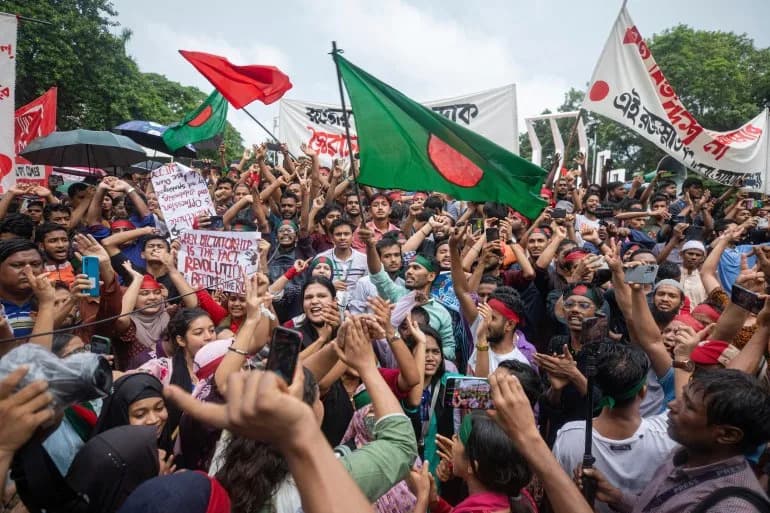
Activists take part in a protest march against Prime Minister Sheikh Hasina and her government in Dhaka, Bangladesh, on August 2, 2024, to demand justice for more than 200 people killed in the previous month’s demonstrations [Rajib Dhar/AP Photo]
Dhaka — In the months since the July 2024 student-led uprising that toppled former prime minister Sheikh Hasina, Bangladesh's newly seated parliament has reviewed a package of 133 ordinances issued by the interim government led by Nobel laureate Muhammad Yunus. While 110 ordinances were approved (some with amendments), at least 23 were either repealed or allowed to lapse, sparking concern that hard-won institutional reforms may be diluted.
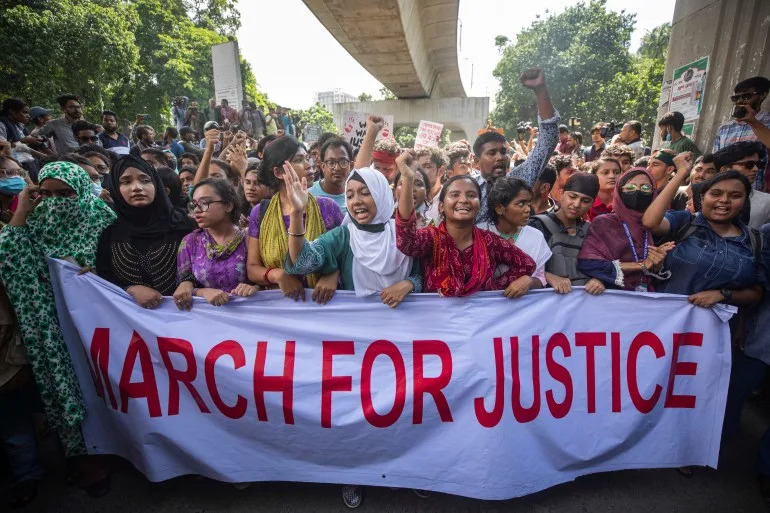
University students shout slogans during a protest to demand justice for the victims killed in the countrywide deadly clashes and ask for campuses to be opened, in Dhaka, Bangladesh, July 31, 2024 [Rajib Dhar/AP Photo]
What Parliament Did
When parliament convened in March 2026 it reviewed the interim government's emergency ordinances, a constitutional requirement. Official figures show 110 were confirmed, seven were formally repealed and 16 lapsed automatically after not being voted on within the required timeframe. The measures that fell away include reforms aimed at strengthening the National Human Rights Commission (NHRC), defining enforced disappearance as a crime, curbing executive influence over judicial appointments, policing reforms and anti-corruption oversight.
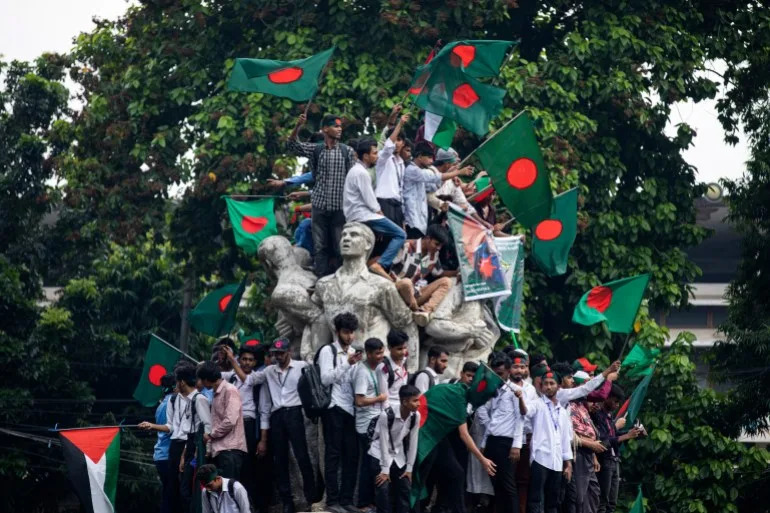
Students and other activists carry Bangladesh’s national flag during a protest march organised by Students Against Discrimination to mark one month since former Prime Minister Sheikh Hasina stepped down after a mass uprising, in Dhaka, Bangladesh, Thursday, September 5, 2024 [Rajib Dhar/AP Photo]
Why Critics Are Worried
Rights groups, opposition parties and many analysts say the repeals and lapses remove central safeguards from the July National Charter — a reform blueprint that won roughly 70 percent support in a nationwide referendum held alongside the February 2026 election. Critics argue the outcome risks re-centralising power, weakening independent oversight and leaving victims of past abuses with fewer avenues for redress.
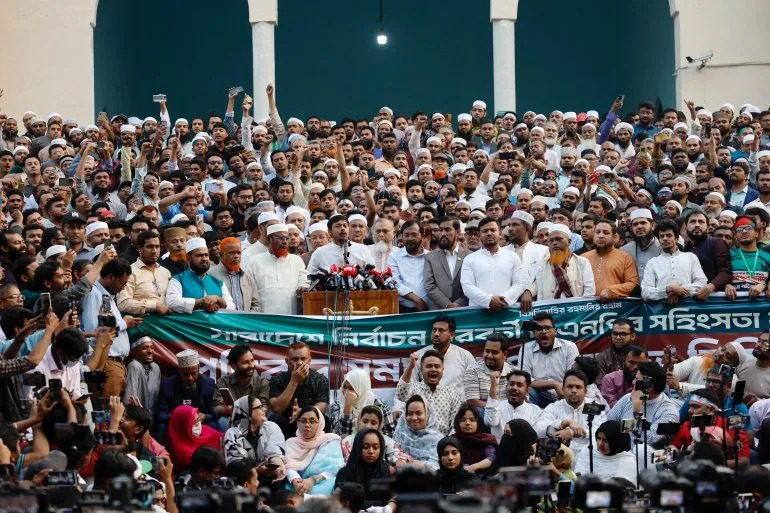
Supporters of Bangladesh’s Jamaat-e-Islami and its allies attend a protest against post-election violence, in Dhaka, Bangladesh, February 16, 2026 [Mohammad Ponir Hossain/Reuters]
NHRC Reversal. A 2025 ordinance that would have given the NHRC clearer authority to investigate allegations against police and security agencies was repealed and the 2009 law reinstated. Under the 2009 statute the commission cannot independently investigate security forces and can only request reports and make recommendations.
Enforced Disappearances. An ordinance that defined enforced disappearance as a distinct criminal offence and provided procedures for investigation and prosecution lapsed. A Commission of Inquiry set up during the Yunus interim government received more than 1,900 complaints and, after verification, confirmed at least 1,569 cases — a figure human rights advocates say underscores the urgency of clear legal remedies.
Judicial And Institutional Reforms
Proposals to establish an independent Supreme Court secretariat and to create a council-based system for appointing judges — both intended to limit executive influence over the judiciary — were not enacted, leaving the existing appointment and administrative arrangements largely unchanged.
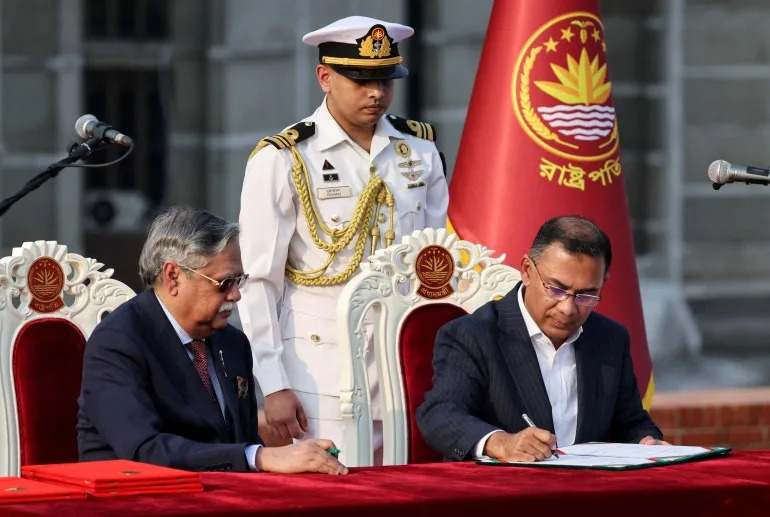
Tarique Rahman signs in as the new prime minister during an oath‑taking ceremony administered by Bangladesh’s President Mohammed Shahabuddin at the South Plaza of the parliament building, following the BNP’s landslide victory in the national polls, in Dhaka, Bangladesh, February 17, 2026 [Mohammad Ponir Hossain/Reuters]
Government Response
The government, led by the Bangladesh Nationalist Party (BNP) majority, says the review is a necessary legislative exercise to correct drafting flaws, avoid overlapping institutions and harmonise legal frameworks. Home Minister Salahuddin Ahmed and other officials have said many ordinances contained ambiguities and will be reintroduced after consultations with stakeholders; the Ministry of Law indicated consultations would start from May 15.
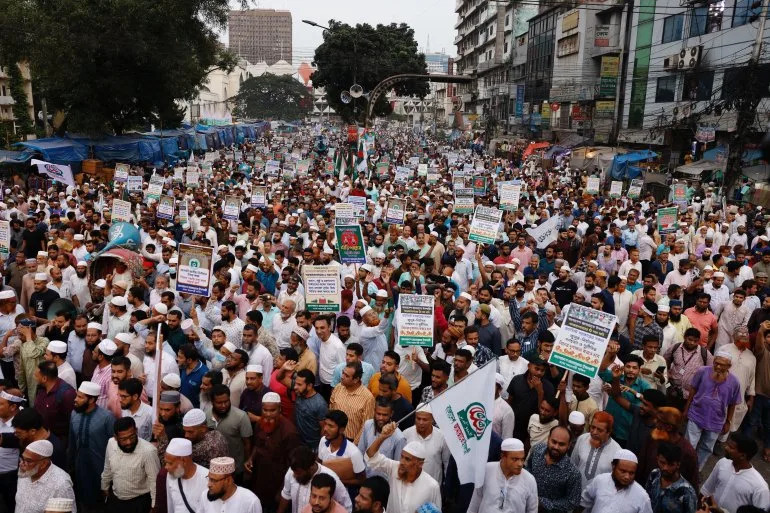
Supporters of Bangladesh Jamaat-e-Islami take part in a protest rally with a five-point demand, including free and fair elections by February 2026, in front of the Baitul Mukarram National Mosque in Dhaka, Bangladesh, September 18, 2025 [Mohammad Ponir Hossain/Reuters]
Voices From Across The Spectrum
Former NHRC commissioner Nabila Idris and five outgoing commissioners publicly disputed the government's claims that the NHRC ordinance was legally flawed, saying the objections mischaracterised the text. Opposition leaders, including figures from parties that backed the July Charter, describe the parliamentary outcome as a rollback of the reform mandate. Analysts and international rights observers warn the gap left by the lapsed laws could reduce accountability for past abuses and undermine deterrence against future ones.
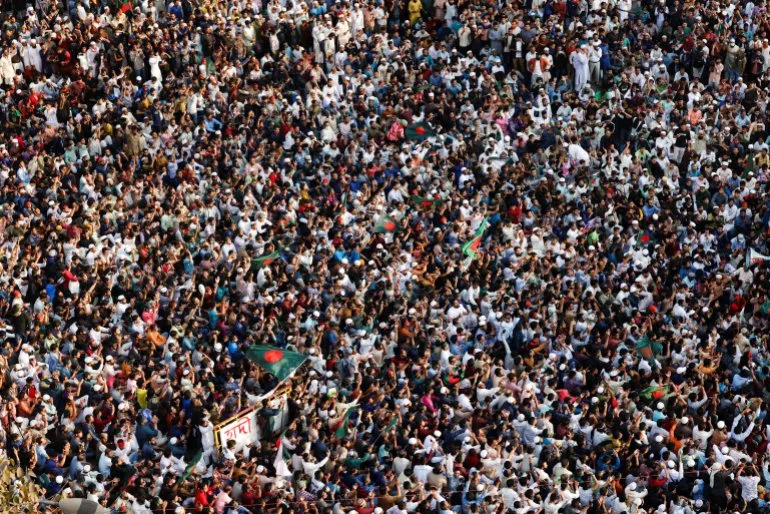
Protesters block the Shahbagh Square, demanding justice for the death of Sharif Osman Hadi, a student leader who had been undergoing treatment in Singapore after being shot in the head, in Dhaka, Bangladesh, December 19, 2025 [Mohammad Ponir Hossain/Reuters]
What Comes Next
The government insists it remains committed to the broad goals of the July National Charter, but says legislation needs refinement before being made permanent. Critics demand timely reintroduction of robust, independent mechanisms for human rights oversight, judicial independence and anti-corruption accountability. As stakeholder consultations begin, the debate over whether Bangladesh will proceed with structural reform or revert to older patterns of centralised power is likely to continue both in parliament and on the streets.
Key Dates & Numbers: 133 ordinances reviewed; 110 approved, 7 repealed, 16 lapsed; July 2024 uprising; February 2026 referendum (~70% endorsement); March 2026 parliamentary review; consultations starting May 15.
Help us improve.





















