
The EU has agreed to broaden Iran sanctions to include those who obstruct navigation in the Strait of Hormuz, diplomats said. The strait has been effectively closed for nearly two months following U.S.-Israeli strikes beginning February 28, disrupting about one-fifth of global oil and LNG supplies. The EEAS will take several weeks to prepare new listings while the European Commission remains responsible for sector-wide measures. The move follows earlier EU designations of the IRGC as a terrorist organisation and sanctions on Iranian officials for human rights abuses.
EU to Expand Iran Sanctions to Target Those Who Block the Strait of Hormuz
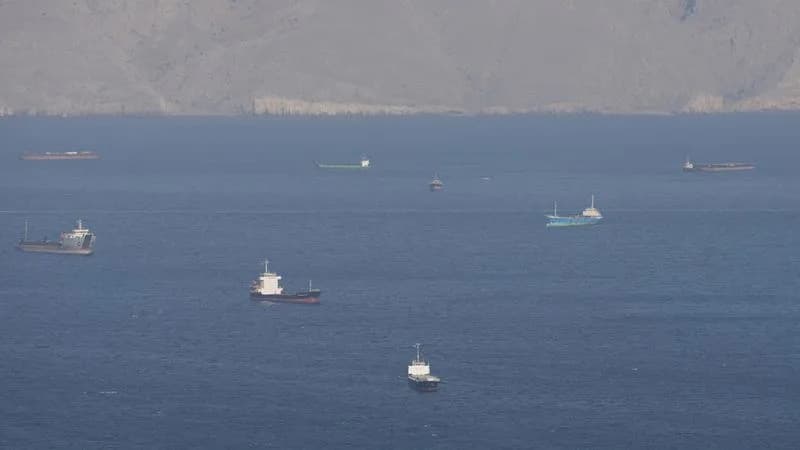
Ships and tankers in the Strait of Hormuz off the coast of Musandam, Oman, April 18, 2026. REUTERS
The European Union has agreed to widen the scope of its Iran sanctions to include individuals and entities deemed responsible for obstructing navigation through the Strait of Hormuz, two EU diplomats said on April 20. The move responds to a disruption that has left the strategic waterway largely closed for nearly two months and rattled global energy and commodity markets.
Decision and Process
EU ambassadors reached a political agreement to alter the criteria of Iran-related listings so that those responsible for blocking the freedom of navigation in the Strait of Hormuz can be added to sanctions lists. One diplomat said the European External Action Service (EEAS) will need several weeks to prepare any new listings; the EEAS drafts the measures while the European Commission implements sector-wide restrictions.
Recent Developments
Officials say Tehran effectively sealed the strait after U.S.-Israeli strikes on Iran began on February 28, a disruption that has cut off roughly one-fifth of the world's oil and liquefied natural gas supplies. More than a dozen tankers transited the strait after Iran briefly announced it was open on Friday, but tensions spiked again when the United States seized an Iranian cargo ship while maintaining a naval blockade of Iranian ports—raising doubts about the durability of any ceasefire.
Background on EU Sanctions
Earlier this year the EU designated Iran's Islamic Revolutionary Guard Corps (IRGC) as a terrorist organisation in January and added Iranian officials to sanctions lists in March over alleged human rights violations. The new measure would expand targeted listings to include actors responsible for obstructing a vital international shipping lane.
"There was a political agreement among ambassadors that we indeed would change the criteria in Iran's sanctions regime so that we could also list persons and entities that are responsible for the obstruction of the freedom of navigation in the Strait of Hormuz," a diplomat said.
Implications
The expansion of sanctions criteria signals the EU's intent to respond to actions that threaten global trade routes and energy supplies. If implemented, the listings could bring travel bans, asset freezes and reputational pressure on designated individuals and entities, while adding a further diplomatic lever to dissuade future blockades.
Reporting by Julia Payne in Brussels and John Irish in Paris; Editing by Kirsten Donovan.
Help us improve.





















