
A meteorite that exploded over Houston and created a fireball and sonic boom produced fragments that struck at least one home. Pieces recovered — including a fragment that pierced a roof in Spring, Texas — were donated to Rice University. Dr. Bidong Zhang and his colleagues are studying the samples under microscopes and have identified minerals such as troilite and iron-nickel metal. The rocks may date to about 4.5 billion years and could hold clues to how the solar system and planets formed.
Houston Meteorite Fragments at Rice University Could Reveal Solar System’s Origins
KHOU
A meteorite that exploded over the Houston region last month — producing a bright fireball and a powerful sonic boom — has yielded fragments that struck at least one home and are now being studied at Rice University. Scientists say the samples may contain clues about the formation of the solar system.
NASA estimated the space rock weighed about a ton when it entered Earth's atmosphere. One fragment punctured the roof of Sherry James' house in the Spring area, leaving the homeowner with an extraordinary keepsake.
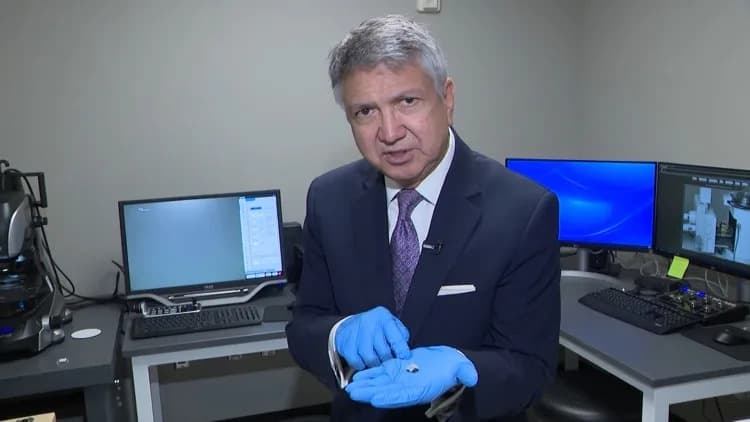
Recovered pieces were donated to Rice University, where Dr. Bidong Zhang and his team are treating the fragments as valuable scientific material. The samples are stored securely and examined under high-powered microscopes to determine their mineral composition and internal structure.
'About 4.5 billion years ago, at least,' Zhang said when asked how old the meteorite material likely is, placing its origin near the birth of the solar system.
'Exactly — they are surviving building blocks of the planets, of everything we have in the first place,' Zhang added, stressing the significance of the find.
Under magnification, researchers can distinguish individual minerals and metal grains in the fragments. Early analyses have identified troilite and iron-nickel metal, along with bright metal inclusions throughout the rock. Those mineral signatures help scientists classify the meteorite and infer the processes that shaped the early solar system.
As KHOU reporter Ron Treviño noted from Rice University, these stones are more than curiosities: they are physical records of the conditions that existed when the planets formed. The team hopes further study will reveal details about the building blocks of Earth and other worlds.
If you have a news tip or additional information about recovered fragments, contact KHOU at [email protected] or call 713-521-4310 and include the best way to reach you.
Help us improve.





















