
On February 1, 2003, Space Shuttle Columbia (STS-107) disintegrated during reentry after foam debris damaged its thermal protection during launch, killing all seven crew members. Mission specialist David M. Brown emailed family a day before landing, describing the beauty of Earth from orbit and the close bonds among the crew. NASA recovered much of the mission data, including footage showing a mysterious reddish glow about 150 km above the ocean near Madagascar. The tragedy prompted safety reviews and scientific study that shaped future human spaceflight.
A Final Message From Orbit: David Brown’s Poignant Reflections Before Columbia’s 2003 Tragedy
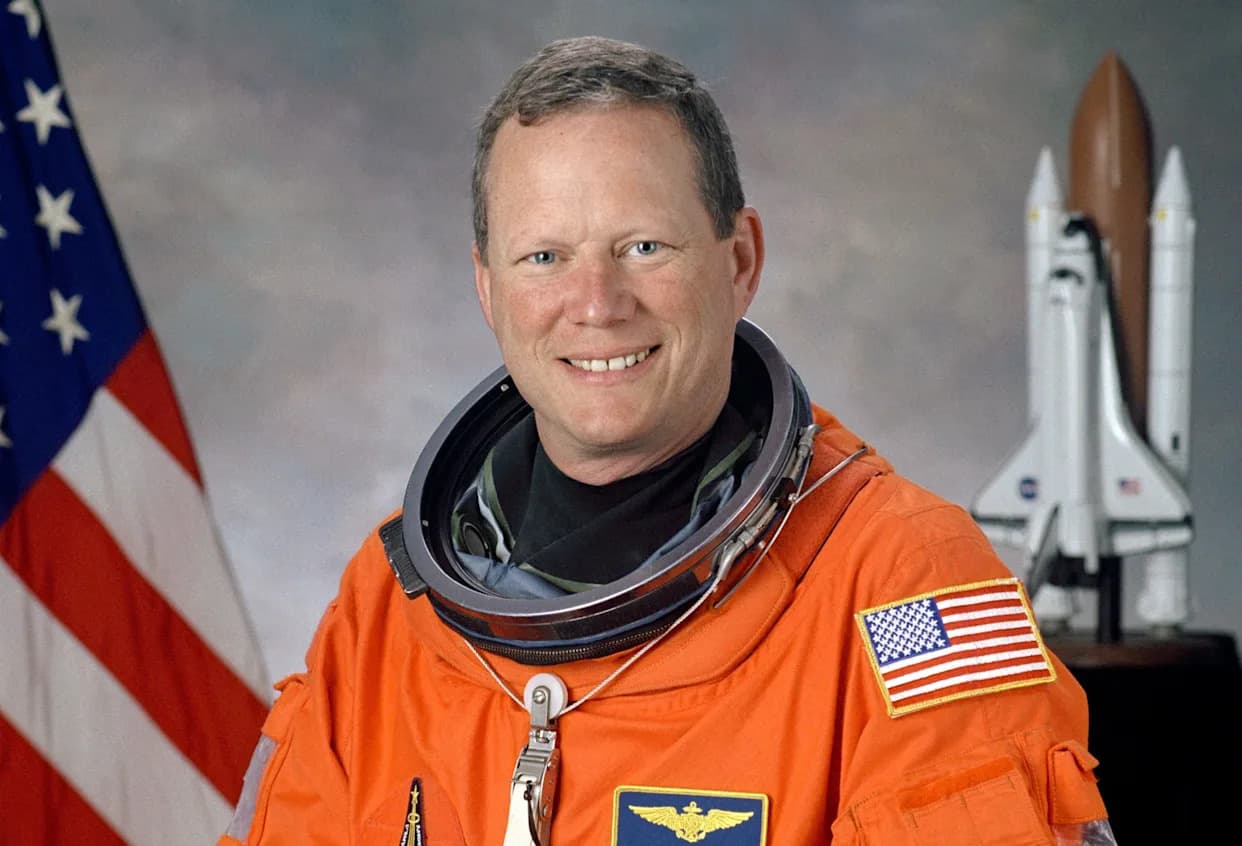
David M. Brown, a mission specialist on the Space Shuttle Columbia.
On February 1, 2003, Space Shuttle Columbia (STS-107) was lost during reentry, a stark reminder of the risks of human spaceflight. The orbiter broke apart with roughly 16 minutes left before scheduled touchdown after damage sustained during launch compromised its thermal protection system. The seven crew members—Commander Rick D. Husband; Pilot William C. “Willie” McCool; and mission specialists David M. Brown, Kalpana Chawla, Michael P. Anderson, Laurel B. Clark, and Ilan Ramon—were all killed.
Unknown to the crew at launch, a piece of insulation foam had struck and damaged heat-shield tiles, creating a vulnerability that proved catastrophic on reentry. In the wake of the disaster, investigators and engineers studied the failure closely and implemented safety lessons that have since influenced human spaceflight design and procedures.
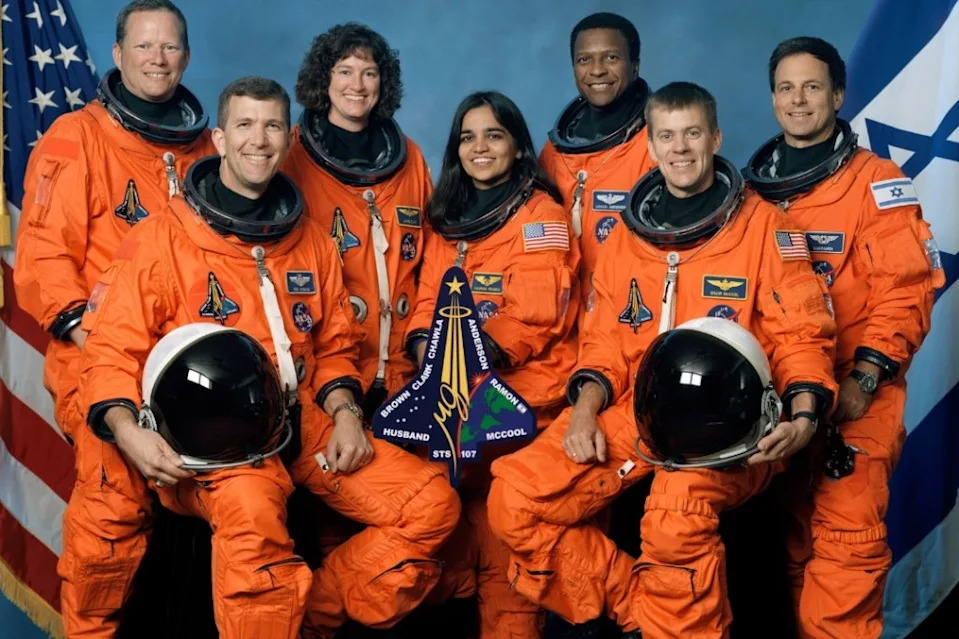
Crew of the STS-107. Photo credit: NASA
One of the most human moments connected to the mission was an email mission specialist David M. Brown sent to family just one day before landing. A relative later shared the message publicly; it captures the wonder of seeing Earth from orbit and the close bonds among crew members:
Friends,
It’s hard to believe but I’m coming up on 16 days in space and we land tomorrow.
I can tell you a few things:
Floating is great—at two weeks it really started to become natural. I move much more slowly as there really isn’t a hurry. If you go too fast then stopping can be quite awkward. At first, we were still handing each other things, but now we pass them with just a little push.
We lose stuff all the time. I’m kind of prone to this on Earth, but it’s much worse here as I can now put things on the walls and ceiling too. It’s hard to remember that you have to look everywhere when you lose something, not just down.
The views of the Earth are really beautiful. If you’ve ever seen a space IMAX movie that’s really what it looks like. What really amazes me is to see large geographic features with my own eyes. Today, I saw all of Northern Libya, the Sinai Peninsula, the whole country of Israel, and then the Red Sea. I wish I’d had more time just to sit and look out the window with a map but our science program kept us very busy in the lab most of the time.
The science has been great and we’ve accomplished a lot. I could write more about it but that would take hours.
My crewmates are like my family—it will be hard to leave them after being so close for 2 1/2 years.
My most moving moment was reading a letter Ilan brought from a Holocaust survivor talking about his seven-year-old daughter who did not survive. I was stunned such a beautiful planet could harbor such bad things. It makes me want to enjoy every bit of the Earth for how great it really is.
I will make one more observation—if I’d been born in space I know I would desire to visit the beautiful Earth more than I’ve ever yearned to visit space. It is a wonderful planet.
—Dave
Though the seven lives were cut tragically short, much of Columbia’s scientific data was recovered and analyzed. Among the returns was video footage that researchers later examined for unexplained upper-atmosphere phenomena. As reported in New Scientist, analysts noted a reddish glow roughly 150 kilometres above the ocean near Madagascar; the feature did not appear to be associated with thunderstorms and prompted further study into high-altitude luminous events.
The Columbia tragedy, like the earlier Challenger (STS-51L) disaster, spurred intense investigation, redesign, and procedural changes. The loss became part of a difficult but vital process of learning and improving safety for future missions. As Isaac Newton wrote, "If I have seen further, it is by standing on the shoulders of giants," a sentiment that captures how scientific progress often follows from hard lessons and collective effort.
Help us improve.





















