
Artemis II’s April 6 "Earth‑set" photograph revived echoes of Apollo 8’s 1968 Earthrise, offering a unifying perspective amid global turmoil. The Orion spacecraft Integrity—commanded by Reid Wiseman with Victor Glover, Christina Koch and Jeremy Hansen aboard—surpassed Apollo 13’s distance record, endured a roughly 40‑minute far‑side blackout, and returned high‑resolution imagery via laser communications. The mission drew massive public interest (10M+ livestream viewers) and carried more than 5.6M names on an SD card inside the Rise mascot, while diverse crews and Mission Control representation amplified its cultural impact.
Artemis II Rekindles Hope: High-Res “Earth‑Set” Echoes Apollo 8’s Iconic Earthrise
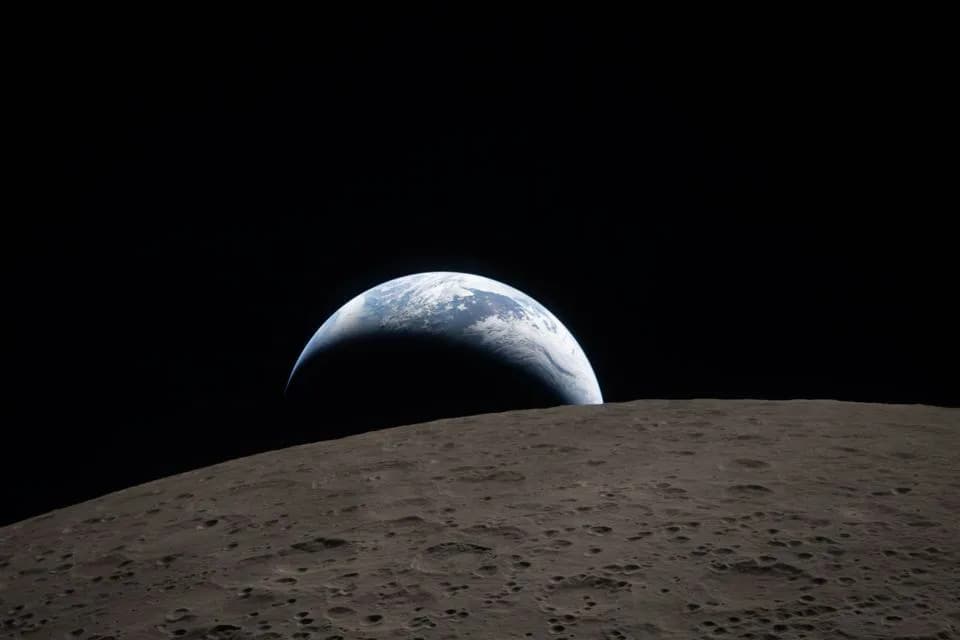
For all humankind: on April 6, the Artemis II crew captured Earth set, a photograph reminiscent of another historic photo captured aboard Apollo 8 nearly 60 years ago.NASA via Getty Images
On April 6, the Artemis II crew aboard the Orion spacecraft Integrity captured an "Earth‑set" image that instantly recalled Apollo 8’s famous 1968 Earthrise—an image that once gave the world a single, unifying perspective during turbulent times.
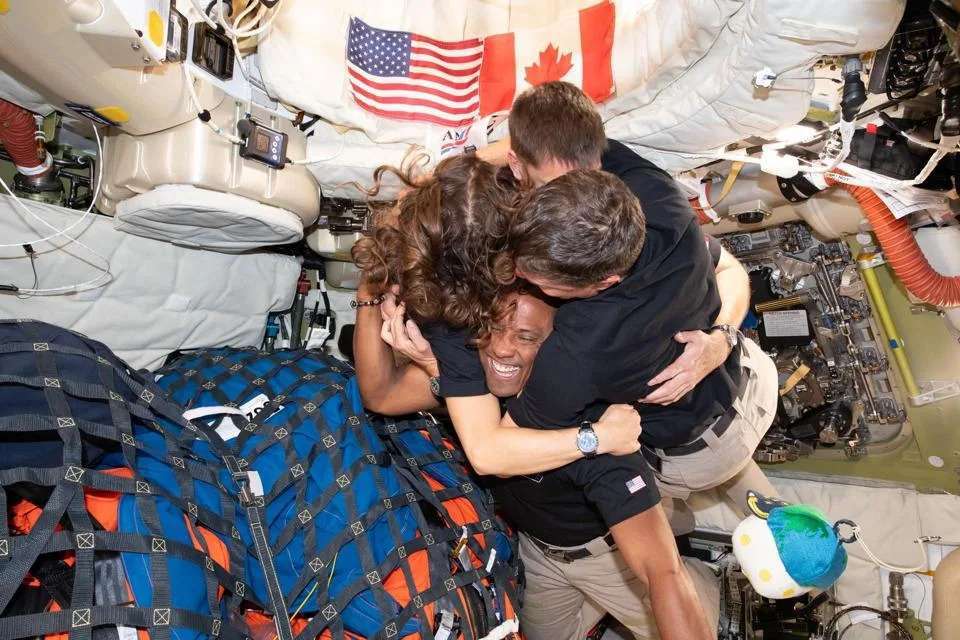
The Artemis II crew – (clockwise from left) Mission Specialist Christina Koch, Mission Specialist Jeremy Hansen, Commander Reid Wiseman, and Pilot Victor Glover – take time out for a group hug inside the Orion spacecraft on their way home.NASA
A Mirror To 1968
Nearly six decades after Apollo 8 became the first crewed mission to orbit the Moon, Artemis II retraced that historic path. Commander Reid Wiseman, pilot Victor Glover and mission specialists Christina Koch and Jeremy Hansen followed in Apollo’s footsteps as they prepared the way for future lunar landings and surpassed Apollo 13’s record for the farthest distance traveled by humans.
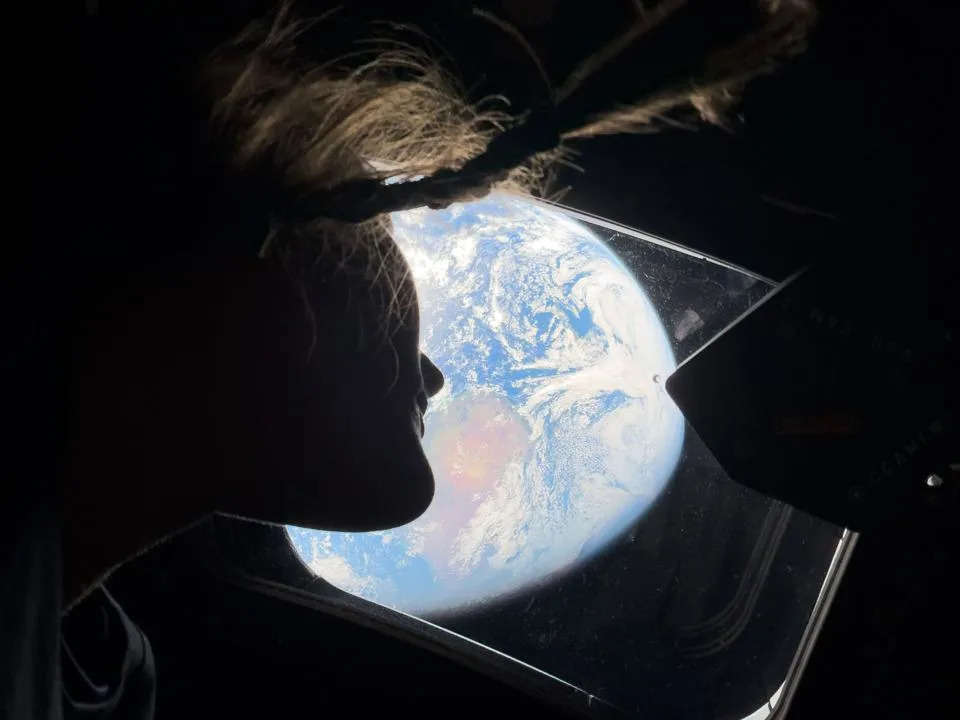
NASA astronaut and Artemis II mission specialist Christina Koch peers out of one of the Orion spacecraft's main cabin windows, looking back at Earth, as the crew travels towards the Moon on April 4, 2026.NASA via Getty Images
Modern Technology, Familiar Wonder
Artemis II’s view was far richer than the grainy black‑and‑white images beamed home in 1968. While the mission still relies on some legacy radio systems, a modern laser‑based communications link enabled NASA to transmit high‑resolution video and images nearly in real time. As the spacecraft coasted toward the Moon, the crew received a recorded greeting from Apollo commander Jim Lovell: "Hello Artemis II. This is Apollo astronaut Jim Lovell. Welcome to my old neighborhood." The message traveled roughly 248,000 miles from Earth to the crew, connecting generations of explorers.
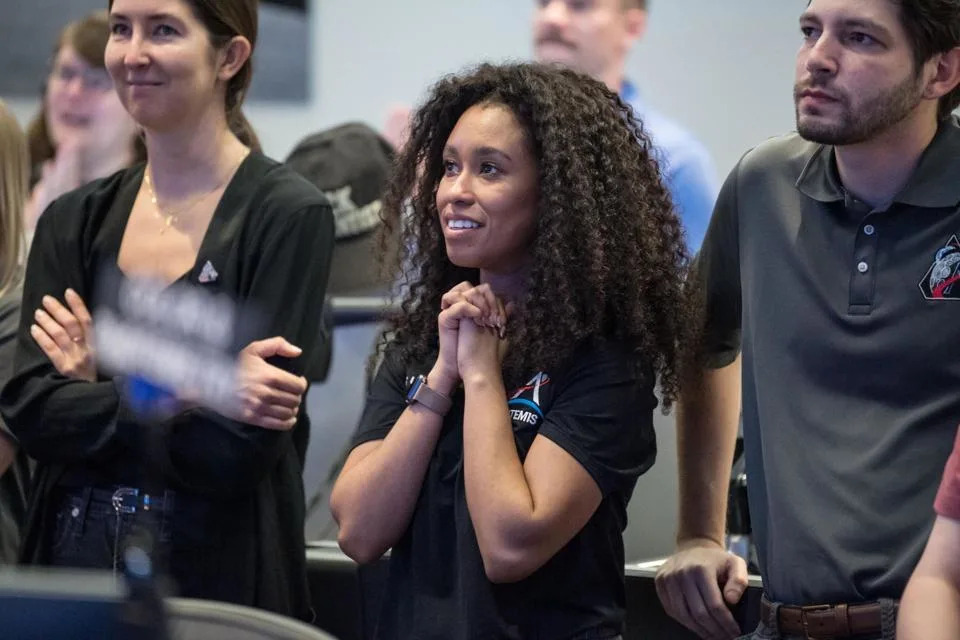
Members of the Artemis lunar science team, from left, Ariel Deutsch, Amber Turner, and Wilfredo Garcia-Lopez, watch the Artemis II launch from the Science Evaluation Room (SER) in Mission Control at Johnson Space Center in Houston. The SER supports lunar science and planetary observations for the Artemis science officer in the mission’s main flight control room.NASA
Moments That Moved Millions
At 6:44 p.m. ET, Integrity crossed the lunar far side and entered a roughly 40‑minute communications blackout. During that time the crew ate maple cookies, recorded meteor impacts, and photographed the lunar surface; the images were later downlinked via laser. Before losing radio contact, the team named two previously unnamed craters—one in honor of Integrity and another in memory of Commander Wiseman’s late wife, Carroll—moments that spread quickly across global newsfeeds.
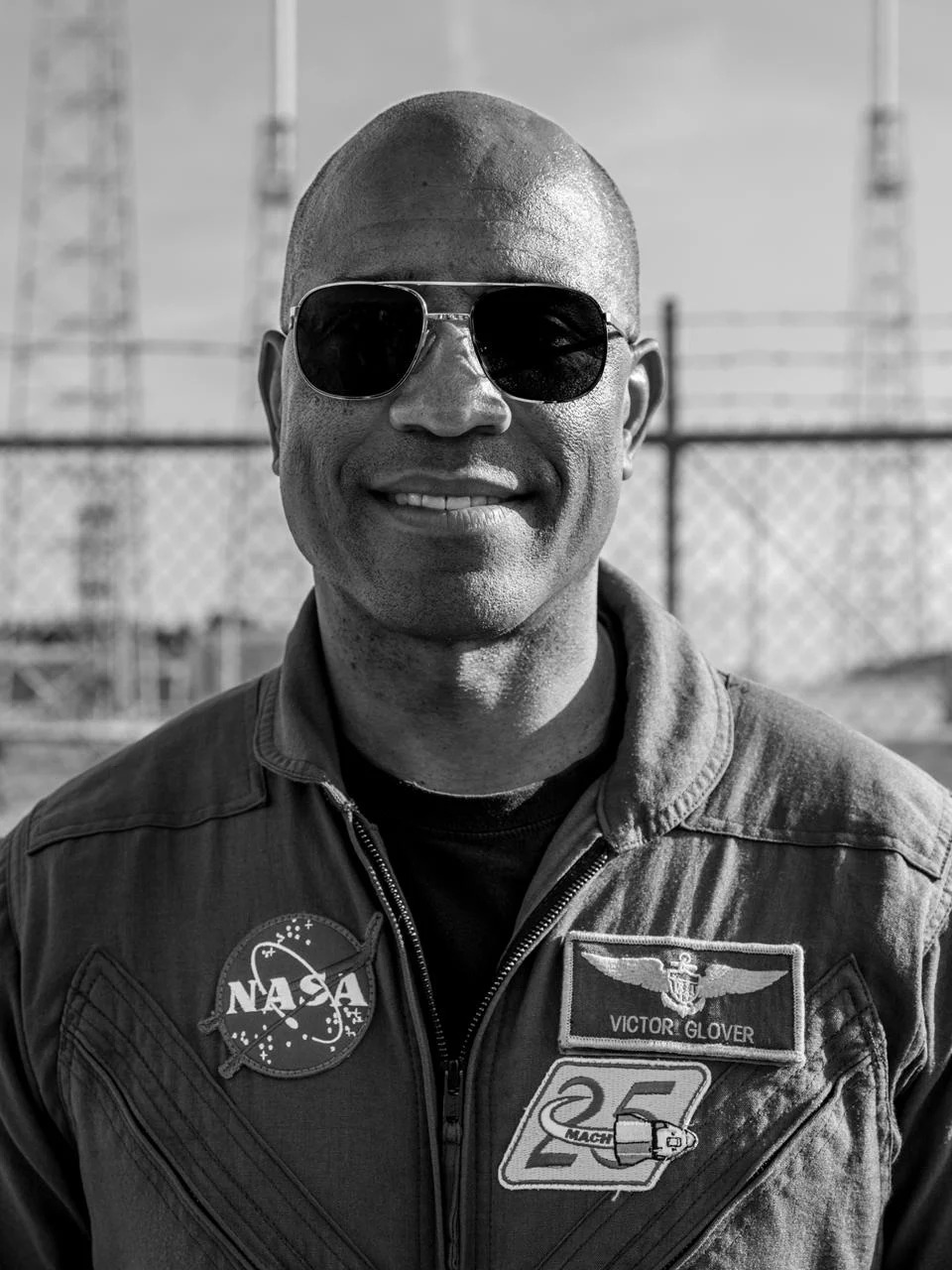
Artemis II astronaut Victor Glover poses for a photo by freelance photographer Kory Savage at Space Launch Complex 41 in 2024.Kory Savage
"You are special," Victor Glover told a live YouTube audience during the mission, urging viewers to appreciate Earth’s fragility and uniqueness.
Public Engagement And Representation
The mission resonated worldwide: NASA’s livestream drew more than 10 million viewers during launch—the most‑watched streaming launch in agency history—and over 5.6 million people from more than 50 countries registered to have their names carried aboard Artemis II on an SD card placed inside Rise, a mascot inspired by Apollo 8’s Earthrise and designed by California third‑grader Lucas Ye.
Images of diverse teams in Mission Control, prominent women science officers, and multicultural engineers helped transform the mission into a broadly inspiring story of inclusion. Canadian astronaut Jeremy Hansen carried a patch honoring First Nations tribes and shared lessons learned from Indigenous leaders, further broadening the mission’s cultural reach.
Nostalgia, Continuity, And A Forward Look
Artemis II bridged past and present: it carries a mission patch that flew on Apollo 8, uses some repurposed hardware from the shuttle era, and invoked nostalgia among Generation X and millennial audiences. At the same time, everyday, relatable moments—crew selfies, smartphone shots, floating mascots and candid exchanges—helped make spaceflight feel more human and accessible than the billionaire‑led, corporate image of the previous decade.
For many viewers, Artemis II’s images provided a striking counterpoint to daily headlines about war, economic uncertainty and political strife, echoing how Apollo 8’s Earthrise offered a moment of perspective in 1968. Whether the mission becomes a quiet stepping stone in a larger return to the Moon or a singular cultural moment, Artemis II reminded millions that space exploration can still unite people across borders.
Originally published on Forbes.com. The article references an anecdote about a communications system partially designed by the author’s grandfather and includes firsthand reporting and quotes from mission participants and observers.
Help us improve.





















