
Cameroon's parliament voted 200 to 18, with four abstentions, to restore the vice presidency — a role that would automatically succeed President Paul Biya (93) if he dies, resigns or becomes incapacitated. The vice president will be appointed and could be dismissed by the president, serve the remainder of the seven-year term, and be barred from initiating constitutional changes or running in the next election. Supporters say the amendment secures institutional continuity; critics say it centralises power and misses a chance to strengthen democratic safeguards amid ongoing conflict.
Cameroon Restores Vice Presidency, Setting Succession Path for 93-Year-Old Biya
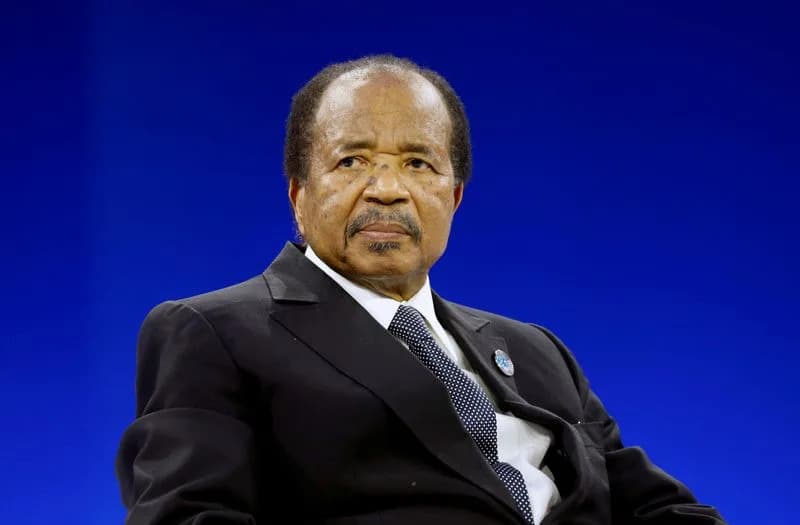
FILE PHOTO: Cameroon President Paul Biya attends the Paris Peace Forum, France, November 12, 2019. REUTERS/Charles Platiau/File Photo
DAKAR, April 4 — Cameroon's parliament on Saturday approved a constitutional amendment to reintroduce the office of vice president, a move the government says will ensure continuity at the top of state but which critics warn will further centralise executive power.
What the Amendment Says
In a joint session of the National Assembly and the Senate — both dominated by the ruling party — lawmakers voted 200 to 18 in favour of the bill, with four abstentions. The text provides that the vice president will automatically assume the presidency if President Paul Biya dies, resigns or becomes incapacitated.
Under the legislation, a copy of which was seen by Reuters, the president will appoint and may dismiss the vice president, who will serve for the remainder of the sitting president’s seven-year term. The interim leader would be barred from proposing constitutional revisions and from contesting the subsequent presidential election.
The government frames the reform as a safeguard for institutional stability in the event of a sudden vacancy at the top. President Biya, 93, has 15 days to promulgate the bill into law.
Opposition Reaction
Opponents, including members of parliament and civil society figures, say the change weakens democratic checks and deepens centralisation of power. Joshua Osih, MP and chairman of the opposition Social Democratic Front, said the amendment missed an opportunity to strengthen national unity and democratic governance in a country weakened by a civil conflict since 2017.
“This text weakens legitimacy, reinforces centralisation, and ignores a major historical grievance,” Osih said, urging instead that the president and vice president be jointly elected to reflect Cameroon’s union of British and French-administered territories.
Context and History
The reintroduction of the vice presidency is the most significant constitutional change in Cameroon since 2008, when presidential term limits were abolished — a decision that sparked nationwide protests and a heavy security response. The vice-presidential post existed until it was abolished in 1972 following a constitutional referendum.
What This Means: The amendment creates a clear legal mechanism for succession, but critics argue its provisions (presidential appointment of the vice president and restrictions on the interim leader) concentrate power in the incumbent presidency and fall short of democratic reforms such as a jointly elected ticket.
(Reporting by Amindeh Blaise Atabong; Editing by Bate Felix and Alison Williams)
Help us improve.





















