
The Blue Ghost lander collected the first private heat-flow data from Mare Crisium in March 2025. LISTER, the lander's drill-based heat probe, reached about 36 inches (≈98 cm) and recorded eight measurements showing heat flow similar to Apollo 15 and 17. The results challenge the idea that the near side alone is anomalously hot and suggest heat-producing elements may be more widely or more shallowly distributed. Scientists say more measurements across diverse sites are needed.
Blue Ghost's First Science Forces Rethink Of Moon's Interior After Mare Crisium Measurements
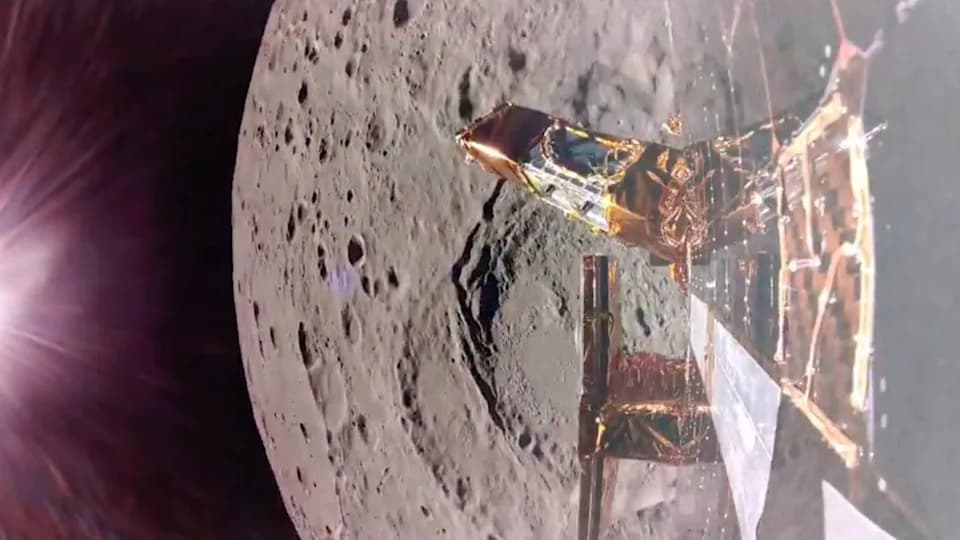
Credit: Firefly Aerospace
The first scientific measurements from a privately operated lunar lander are prompting researchers to reconsider long-held ideas about the Moon's internal heat distribution.
Firefly Aerospace's Blue Ghost touched down in Mare Crisium in March 2025 and remained active for roughly two weeks. Among its ten instruments was LISTER, a drill-based heat probe mounted under the lander that recorded subsurface temperatures at incremental depths. The probe reached about 36 inches (≈98 cm) and collected eight temperature measurements during a 24-hour period.
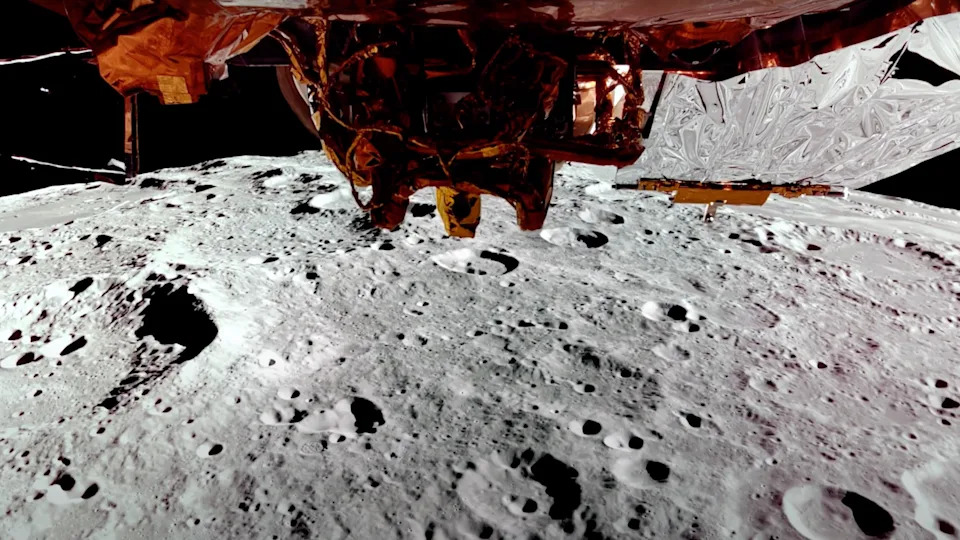
Firefly Aerospace's Blue Ghost lunar lander snapped this shot of the moon from an altitude of about 62 miles (100 kilometers) on Feb. 24, 2025. | Credit: Firefly Aerospace
Those measurements show heat flow at the Mare Crisium site is comparable to the values recorded by NASA's Apollo 15 and Apollo 17 missions more than 50 years ago — a surprising result because Mare Crisium lies well outside the traditional "hot" near-side regions identified from orbital data and Apollo samples.
What the Data Suggest
Researchers say the new readings challenge the simple picture that the Moon's near side is uniquely hotter because it hosts most of the mare volcanism and higher concentrations of heat-producing radioactive elements such as thorium. Instead, the Blue Ghost data imply one of at least two possibilities:
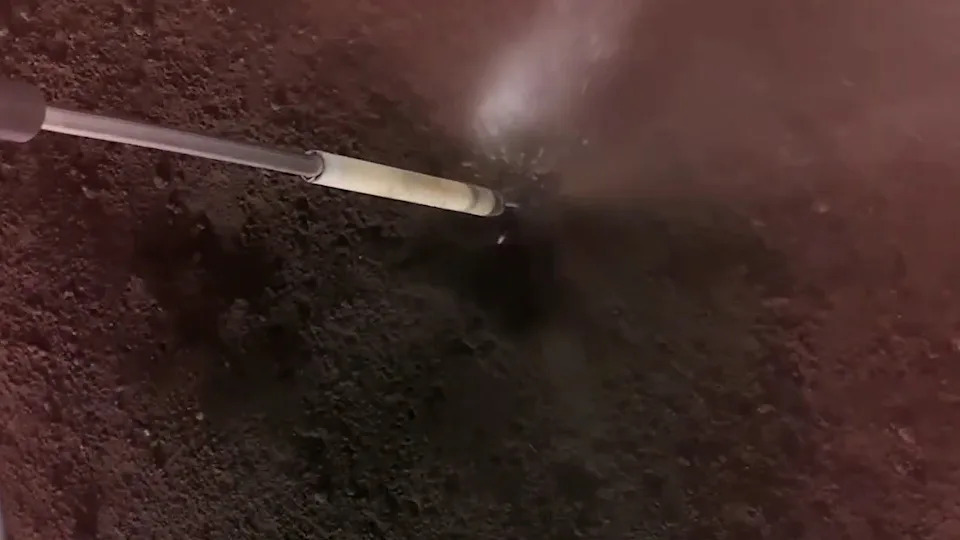
The Lunar Instrumentation for Subsurface Thermal Exploration with Rapidity (LISTER) experiment aboard Firefly Aerospace's Blue Ghost moon lander drills into the lunar surface in March 2025. | Credit: Firefly Aerospace
- Heat-producing elements like thorium may be more broadly distributed beneath the lunar surface than previously thought, or
- Those elements may be concentrated relatively close to the surface — within the crust — so surface volcanism depends as much on local crustal thickness as on deep compositional differences.
"We need to take a second look at how we define the hot region on the Moon," said Seiichi Nagihara, a geophysicist at Texas Tech University and principal investigator for Blue Ghost's heat-flow probe, at the Lunar and Planetary Science Conference in March.
Robert Grimm, principal investigator for Blue Ghost's Lunar Magnetotelluric Sounder (LMS), presented complementary magnetic and electrical field measurements that were used to infer subsurface temperatures and structure. Those results are consistent with the idea that radioactive, heat-producing elements could be relatively shallow, concentrated in the crust rather than deep in the mantle.
Challenges And Next Steps
Before launch, the team had hoped LISTER would penetrate deeper than one meter, into layers less affected by extreme lunar day–night swings, but the probe encountered unexpectedly dense, rocky regolith that limited penetration. Despite the shallower-than-expected depth, the eight measurements provide useful, directly measured heat-flow data from a region far removed from the Apollo landing sites.
Scientists emphasize that one landing and a short measurement campaign cannot settle the debate. "We need more measurements," Nagihara said. A growing fleet of robotic missions — plus renewed human exploration under NASA's Artemis program — should provide additional sites and instruments to map the Moon's internal heat distribution in greater detail.
Why it matters: Understanding where heat-producing elements are located and how heat moves through the Moon's interior informs models of volcanic history, crustal formation, and the thermal evolution of the Earth–Moon system. These insights will also guide future exploration and resource assessments on the lunar surface.
Help us improve.





















