
Trump says Iran has experienced "regime change," but most analysts disagree. They argue that Iran’s theocratic system remains intact while hardline military factions — notably the IRGC — have grown stronger. Experts warn this shift increases the likelihood of harsher domestic repression, continued internet blackouts, and a renewed interest in nuclear deterrence given a stockpile of over 400 kg of highly enriched uranium.
Iran’s ‘New’ Leadership: Same Theocracy, But Harder-Line, Experts Say
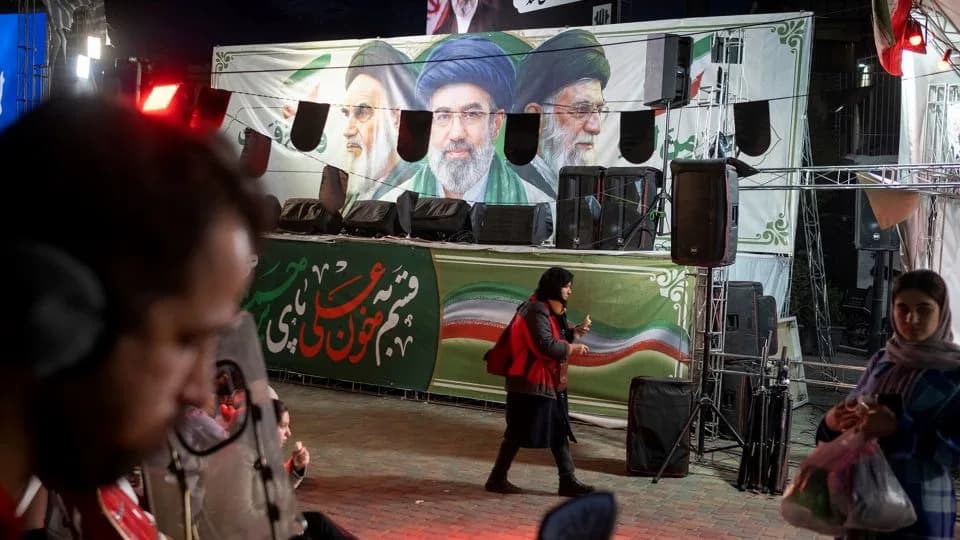
A banner depicting portraits of Iran's late Supreme Leaders Ayatollah Ali Khamenei and Ayatollah Ruhollah Khomeini, with a portrait of Iran's new Supreme Leader, Ayatollah Mojtaba Khamenei, in the middle, hangs at a pro-regime rally on March 18. - Morteza Nikoubazl/NurPhoto/Shutterstock
US President Donald Trump has repeatedly asserted that Iran has undergone "regime change," saying the country’s leadership is now "less radical and much more reasonable." In a recent address he claimed that multiple layers of Iran’s previous leadership had been "decimated" and that the current ruling group represents a fundamental shift.
What Analysts Say
Most political scientists and regional analysts disagree with that characterization. By definition, regime change refers to a systemic transformation in how a country is governed, not merely the replacement of senior officials within an existing system. Since the 1979 revolution Iran has been governed by an authoritarian theocracy — and that structure remains intact.
Hardline Elements Are Stronger
Rather than signaling a move toward moderation, the conflict appears to have empowered hardline military factions within Iran’s complex power structure and heightened anti‑American sentiment. "This regime is more hardline, less prone to compromise and, frankly, more nakedly tied to the IRGC (Islamic Revolutionary Guard Corps)," said Mona Yacoubian, director of the Middle East program at the Center for Strategic and International Studies.
Mona Yacoubian: "We’ve seen the decapitation of the reigning leader in Iran at the time, but that has not translated into dramatic change in terms of who holds the power, or their position vis-à-vis the United States."
Experts note significant blind spots about Iran’s internal dynamics. Even some US officials acknowledge uncertainty about who is actually directing the government. Observers have flagged the absence of public appearances or photographs of the new Supreme Leader, Mojtaba Khamenei, since the war began.
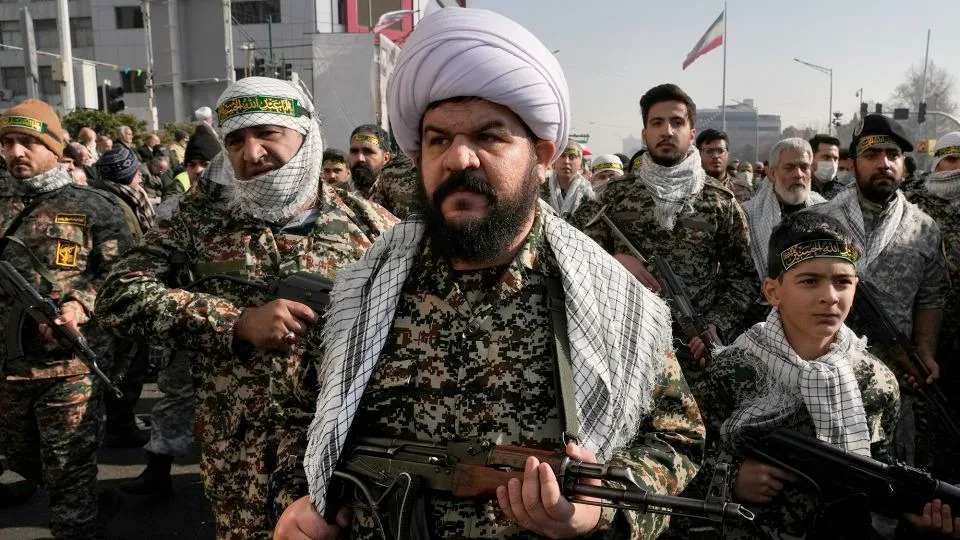
Members of the Iran's Basij paramilitary force march during a military parade held in the capital Tehran on January 10, 2025. - Vahid Salemi/AP
Leadership Ties And Continuity
What is clearer is that Mojtaba Khamenei has close ties to the IRGC — the organization that elevated him — making him likely more beholden to the Revolutionary Guards than his father was. Other senior officials, such as President Masoud Pezeshkian, remain in office, contradicting claims that Iran’s entire leadership has been replaced.
Domestic Repression And Security Measures
Analysts warn the new authorities are likely to intensify repression. "When President Trump says he has changed the regime in Iran, he’s right in one sense — he’s changed it to a much more radicalized regime," said Ali Vaez, Iran Project Director at the International Crisis Group, noting that many newly prominent figures have records of involvement in domestic repression.
There is a recent, brutal record: security forces fired on nationwide protests in January, with reports of thousands killed, and the government has carried out at least nine executions in the last month, some linked to the winter protests. Iran’s paramilitary Basij and other IRGC-controlled forces retain the manpower and resources needed to suppress public dissent, especially in urban areas.
Authorities have also maintained tight control over the flow of information. Internet monitor Netblocks reports a nationwide blackout that has lasted more than a month, limiting independent verification of conditions on the ground.
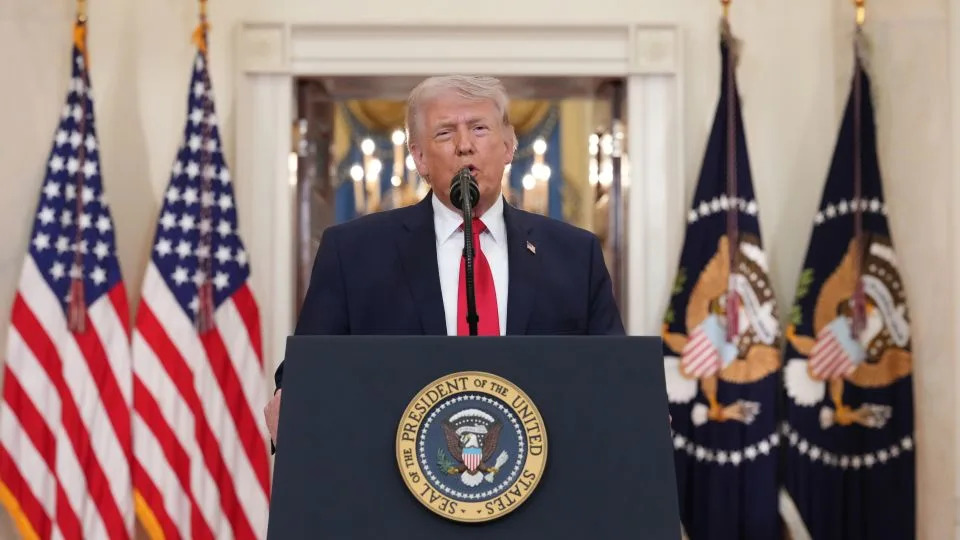
President Donald Trump gives a televised address on the Iran war from the Cross Hall of the White House on Wednesday. - Alex Brandon/Pool/AP
Security Calculus And Nuclear Concerns
Experts say the war may harden Tehran’s interest in a nuclear deterrent. Former Supreme Leader Ayatollah Ali Khamenei issued a fatwa banning nuclear weapons, but analysts argue that declaration effectively ended with him. "For any military, having the ultimate deterrent is a very attractive prospect," Vaez observed, adding that the military now has greater influence and Iran still holds a large stockpile — more than 400 kilograms — of highly enriched uranium.
Some analysts warn the IRGC may look to North Korea as a model: a nuclear-armed state that has avoided direct attacks. "It’s hard to see how the regime could come to any other conclusion than that its best hope for deterrence is the possession of a nuclear weapon," Yacoubian told CNN.
Washington's Messaging
President Trump has reiterated claims that Iran is "right at the doorstep" of a nuclear weapon and that the deaths of prior leaders amount to regime change. Other US officials have been more cautious. "There’s some fractures going on there internally," US Secretary of State Marco Rubio told ABC News, adding that a genuinely more moderate leadership would be welcome but warning that such an outcome is uncertain.
What To Watch
- Whether Mojtaba Khamenei publicly asserts leadership and how closely he aligns with the IRGC;
- Any escalation of domestic repression or further executions tied to protests;
- Changes in Iran’s nuclear material stockpiles or program activity that could signal a shift toward weapons capability;
- Duration and scope of internet blackouts, which affect independent reporting.
Overall, while Iran’s roster of leaders has changed in part, the core institutions of the theocratic state — and the IRGC’s influence — remain. Analysts caution that the result is a government likely to be more hardline and more focused on internal security and deterrence than on reconciliation with the West.
Help us improve.





















