
Key developments: Iranian authorities say US and Israeli strikes have struck medical research centres, vaccine producers, hospitals and relief warehouses across Iran. The Pasteur Institute in Tehran — a major vaccine and diagnostics centre — was reported hit, and WHO has verified over 20 attacks on healthcare in Iran since 1 March. The strikes have damaged hospitals and a pharmaceutical plant, prompting calls from global health bodies for protection of health services under international humanitarian law.
How US and Israeli Strikes Have Hit Iran’s Health System — Vaccines, Hospitals and Relief Supplies Targeted
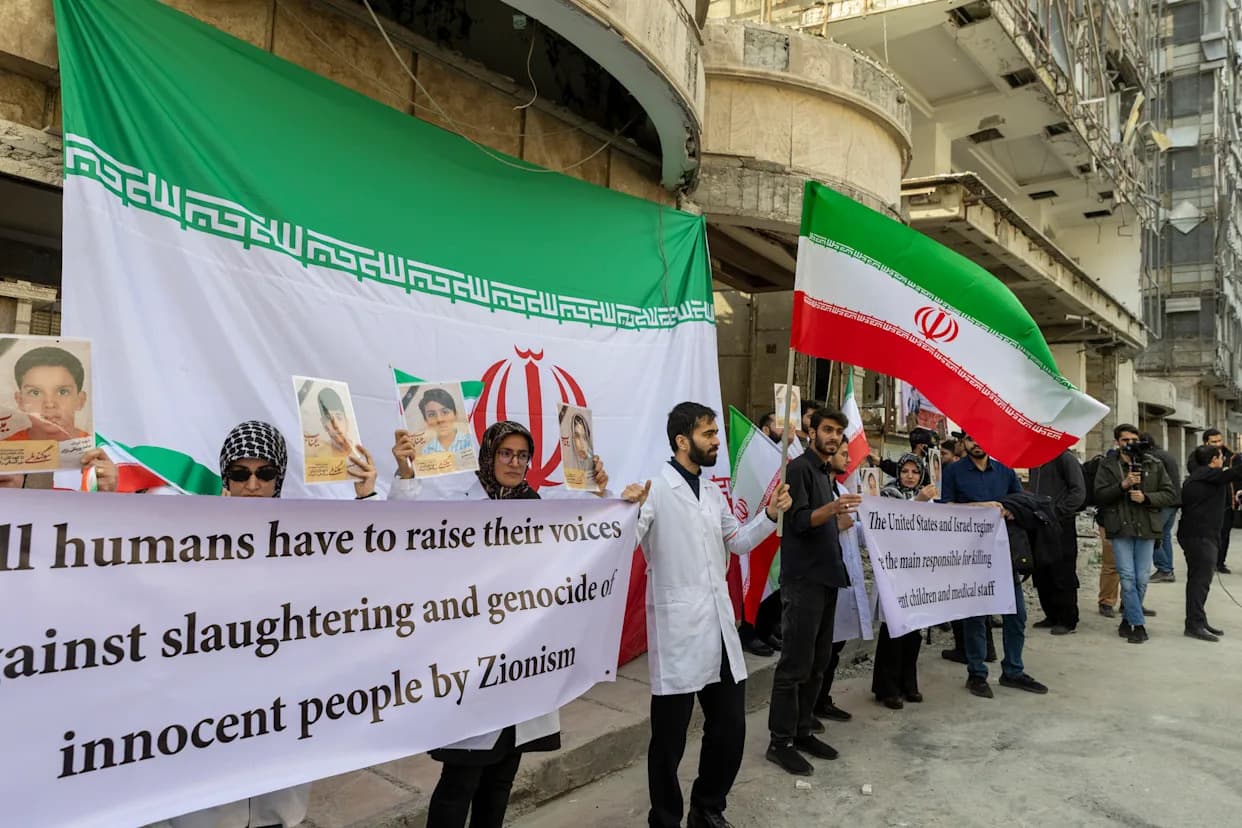
People hold flags and banners at a protest by medical professionals outside Gandhi Hospital, which was damaged in an air strike earlier this month, on March 7 in Tehran [Majid Saeedi/Getty Images]
The United States and Israel have carried out strikes that Iranian authorities say have damaged medical research centres, pharmaceutical facilities, hospitals and relief storage across Iran. The strikes, which Iran says began on 28 February, have raised alarm among international health organisations and prompted calls for verification and protection of healthcare under international law.
What Iranian Officials and WHO Say
Iranian President Masoud Pezeshkian appealed to global health bodies on X, asking why hospitals, pharmaceutical companies and the Pasteur Institute in Tehran — a major vaccine and infectious-disease research centre — would be attacked. He urged the WHO, the Red Cross, Doctors Without Borders (MSF) and physicians worldwide to respond.
The Iranian government states that at least 2,076 people have been killed and 26,500 wounded in Iran since strikes began on 28 February. The WHO Director-General, Tedros Adhanom Ghebreyesus, said on X that since 1 March the WHO has verified over 20 attacks on health care in Iran, resulting in at least nine deaths, including an infectious-disease worker and a member of the Iranian Red Crescent Society.
Reported Incidents
- Pasteur Institute, Tehran — Iranian officials reported the institute was struck. The Pasteur Institute of Iran (established in 1920 in collaboration with Institut Pasteur, Paris) is a key centre for infectious-disease research, vaccine development and advanced diagnostics.
- Pharmaceutical Plant (Tofigh Daru) — On 31 March, Iranian authorities said Israeli–US strikes hit one of Iran’s largest pharmaceutical companies in Tehran, later identified as Tofigh Daru Research and Engineering Company, which produces active pharmaceutical ingredients. No independent casualty figures have been confirmed.
- Hospitals Damaged — A newly constructed hospital in Tehran sustained significant damage on 29 March while about 30 patients were reportedly present. A hospital in Andimeshk (Khuzestan) was damaged on 21 March and forced to evacuate staff and cease services, according to reporting and WHO confirmation. Gandhi Hospital in Tehran was also reported damaged on 2 March after strikes hit a nearby communications tower.
- Red Crescent Relief Warehouse, Bushehr — A drone strike reportedly destroyed two relief containers, two buses and emergency vehicles; local reports said there were no casualties.
Legal and Humanitarian Context
The International Committee of the Red Cross notes that health establishments, patients, medical personnel and ambulances are protected under international humanitarian law and should not be targeted. UN Security Council Resolution 2286 (2016) condemned attacks on healthcare and called on states to respect these protections.
Despite these protections, the WHO’s Surveillance System for Attacks on Health Care recorded a rise in attacks worldwide: in the previous year it verified 1,348 attacks on medical facilities that resulted in 1,981 deaths, with large numbers in Sudan and Myanmar.
Regional Patterns
Similar concerns about damage to health infrastructure have been raised in neighbouring theatres of conflict. Lebanese officials and humanitarian groups report strikes and restrictions that have damaged ambulances and hospitals. In Gaza, Palestinian and international sources have also documented repeated attacks on medical facilities and personnel; attribution and casualty counts have at times been contested by the parties involved.
Why This Matters
Attacks on medical facilities and vaccine producers can severely disrupt emergency and routine health services, hamper disease surveillance and vaccine production, and endanger civilian lives. International agencies have called for independent verification, protection of health workers and safe access for humanitarian assistance.
Sources: Iranian government statements and state media; WHO statements; reporting from IRNA, Fars and Mehr news agencies; public posts on X by Iran’s leadership and WHO Director-General.
Help us improve.





















