
Taiwan's defence ministry says parliamentary delays threaten T$78 billion (about $2.44 billion) in weapons procurement, maintenance and training, amounting to roughly 21% of this year's planned defence spending. The Lai administration has proposed raising defence outlays 22.9% to T$949.5 billion in 2026, reaching 3.32% of GDP — the first time above 3% since 2009. Lawmakers have stalled both the main budget and a separate US$40 billion military proposal, citing concerns about unchecked spending. Officials warn the pause could disrupt programmes including HIMARS, Javelin missiles and F‑16 follow‑on training and say exercises this spring will incorporate lessons from recent international operations.
Taiwan Warns Budget Delay Puts T$78 Billion in Arms, Maintenance and Training at Risk
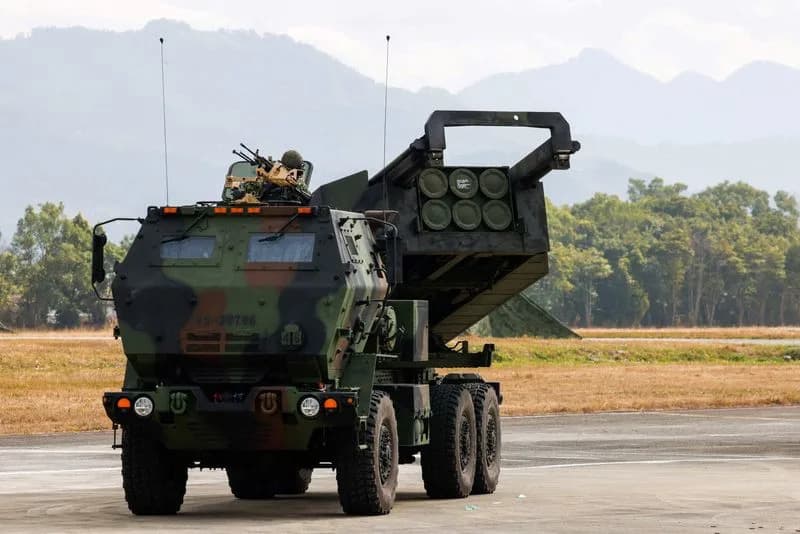
FILE PHOTO: A High Mobility Artillery Rocket System (HIMARS) vehicle is on display during an annual military exercise ahead of Lunar New Year in Taichung, Taiwan, January 27, 2026. REUTERS/Ann Wang/File Photo
TAIPEI, April 2 — Taiwan's defence ministry warned on Thursday that a delay in parliamentary approval of this year's budget threatens T$78 billion (about $2.44 billion) earmarked for weapons procurement, maintenance and follow‑on training.
Funding Holdup Could Disrupt Key Programmes
Yen Ming‑teh, head of the defence ministry's budgeting department, said the impasse means roughly 21% of this year's planned defence spending cannot be executed on the original timetable. That pause would affect purchases and sustainment programmes including the U.S.‑made HIMARS (High Mobility Artillery Rocket System), Javelin missile procurements and replenishment, and follow‑on training for Lockheed Martin F‑16 fighter jets.
"In response to the enemy threat, strengthening national defence capabilities cannot be delayed," Yen said. "Any delay in timing will cause irreversible negative effects."
Budget Plan and Political Standoff
The Lai Ching‑te administration proposed a 22.9% rise in defence spending to T$949.5 billion for 2026, which would lift defence outlays to about 3.32% of gross domestic product — the first time Taiwan has exceeded the 3% threshold since 2009. The government says the increase is needed to deter growing military pressure from China, which asserts sovereignty over the island.
Opposition lawmakers, who control parliament, have delayed passage of the main budget and a separate proposal for an additional US$40 billion in military funding. While the opposition says it supports stronger defence spending in principle, it has resisted what it calls "blank cheque" arrangements and is seeking greater oversight and accountability.
Drills and Lessons Drawn From Recent Conflicts
Taiwan plans to hold the "table top" phase of its annual Han Kuang exercises from April 11–24, with live drills likely scheduled for July. Tung Chi‑hsing, head of the defence ministry's joint operations planning department, said the tabletop exercises will draw on "recent international military operations as important references," citing examples involving the U.S. and Israel and referring to reports of a U.S. operation in Venezuela.
Tung said lessons being incorporated include early warning and rapid response, countering unmanned aerial systems, deploying layered air defences and strengthening anti‑infiltration operations.
Strategic Context
The United States has publicly supported Taiwan's planned defence build‑up, and repeated calls from U.S. officials for allies to boost defence spending have been echoed by Taipei. China has never renounced the use of force to bring Taiwan under its control; Taiwan's democratically elected government rejects Beijing's sovereignty claims and says the island's people should determine their future.
Currency note: $1 = 31.9580 Taiwan dollars.
(Reporting by Ben Blanchard; Editing by Christopher Cushing)
Help us improve.





















