The Knesset approved a 699-billion shekel 2026 budget early Monday, narrowly averting a likely snap election. Lawmakers added roughly 32 billion shekels for defence, pushing the deficit target to about 5% of GDP. The conflict, which has included clashes with Hezbollah in Lebanon, is costing the economy an estimated $1.6 billion per week and raises inflationary and fiscal concerns. Approval removes a key market overhang after months operating on a prorated 2025 budget.
Knesset Passes 699-Billion Shekel 2026 Budget, Averting Immediate Snap Election Amid Ongoing Conflict
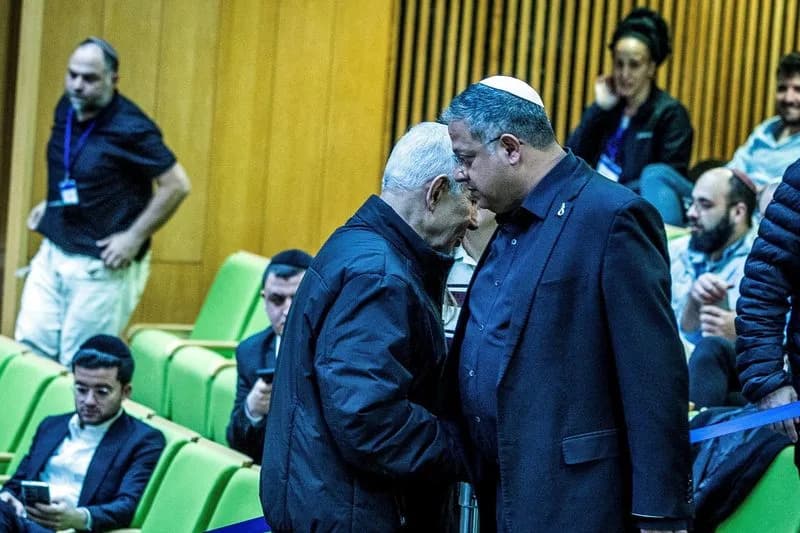
Israeli Prime Minister Benjamin Netanyahu and Israel's far-right National Security Minister Itamar Ben-Gvir shake hands as they attend a session at the Knesset, Israeli parliament, in Jerusalem March 29, 2026 REUTERS/Oren Ben Hakoon
March 30 (Reuters) — The Knesset approved Israel’s 2026 state budget early on Monday, a parliamentary spokesperson said, allowing Prime Minister Benjamin Netanyahu’s government to avoid an immediate snap election amid the ongoing conflict and heightened regional tensions.
The 699-billion shekel package is defence-heavy and was passed roughly a month into the fighting. Lawmakers added about 32 billion shekels for defence spending, which raised the projected budget deficit target to roughly 5% of gross domestic product.
The last-minute passage removes a major overhang for Israel’s financial markets and economy, which had been operating on a prorated 2025 budget since the start of the year. The conflict — which has also included clashes with Hezbollah in Lebanon — is estimated to be costing the economy about $1.6 billion per week.
Had the budget failed, Knesset rules would likely have triggered a snap election within 90 days; opinion polls to date indicated Netanyahu would probably have lost such a vote. The national election is due in late October, although Netanyahu has said it could be held in September.
Economists warn that the larger deficit and increased defence spending heighten the risk of inflationary pressures, complicate a return to more disciplined fiscal policy and make further interest-rate cuts less likely.
Reporting: Steven Scheer; Editing: Edmund Klamann and Jonathan Oatis.
Help us improve.