
Iran's parliament speaker accused the US of plotting a ground invasion as Washington deploys thousands of troops and Israel steps up strikes inside Iran. Power outages and strikes have hit energy and civilian infrastructure, while Iran reports over 2,000 deaths including children. Regional escalation includes missile and drone exchanges, Houthi attacks on shipping, and growing concerns about disruptions to key maritime chokepoints.
Iran Accuses US Of Preparing Ground Invasion As Israel Intensifies Strikes
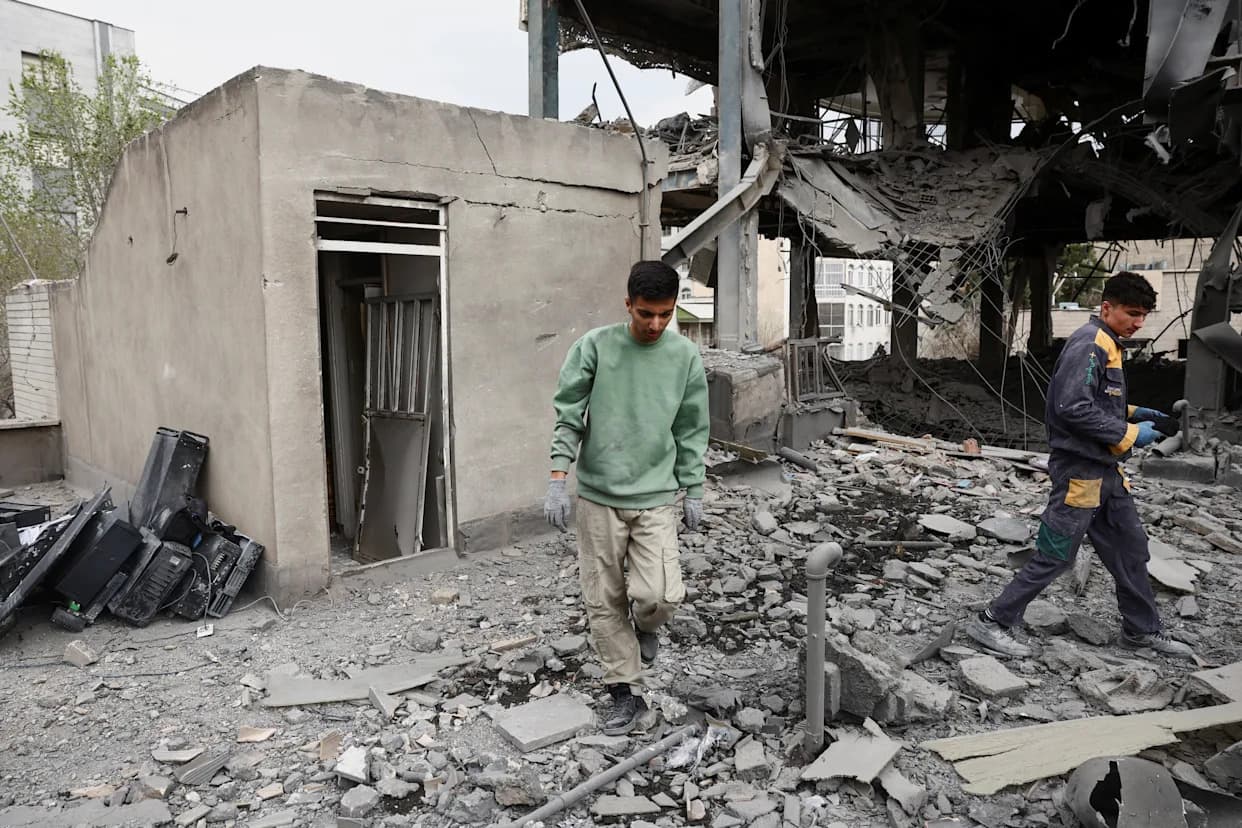
The aftermath of a strike on a Tehran commercial building housing Qatari Al-Araby TV and other businesses, as the US-Israel war on Iran continues, on 29 March, 2026 [Majid Asgaripour/West Asia News Agency via Reuters]
Iran's parliamentary speaker has accused the United States of preparing for a ground invasion as Washington moves thousands of troops into the Middle East and Israel escalates bombardment inside Iran. The claims came amid widespread power outages and a mounting civilian toll from strikes across the country.
Our men are waiting for the arrival of the American soldiers on the ground to set them on fire and punish their regional allies once and for all,Mohammad Bagher Ghalibaf said in a statement carried by the official IRNA news agency.
US Military Movements And Pentagon Planning
US Central Command (CENTCOM) reported that roughly 3,500 service members arrived in the region aboard the USS Tripoli, and media reporting has linked potential deployments to elements of the US Army's 82nd Airborne. The Washington Post has reported the Pentagon is preparing for limited ground operations inside Iran, potentially including raids on Kharg Island and coastal sites near the Strait of Hormuz.
Strikes, Casualties And Targets
Israel said it dropped more than 120 munitions on sites in Tehran used for research, development and weapons production. Iran's Ministry of Health reported 2,076 fatalities since the start of the conflict, including 216 children. Iranian state agencies and local media have attributed many civilian deaths to US‑ and Israeli‑led strikes.
The Mehr news agency reported a US‑Israeli strike on the village of Osmavandan that killed six people and destroyed several homes. Universities have also been struck: an institution in Isfahan reported it was hit for a second time, wounding staff, and Iran's Ministry of Education said roughly 250 students and teachers have died while about 600 educational facilities have been damaged since the conflict began.
Infrastructure Disruption And Energy Facilities
Iran's Ministry of Energy reported power outages in Tehran, the surrounding region and Alborz province after what officials described as attacks on electricity industry facilities. Local outlets later reported that technicians were restoring power using backup substations.
The prospect of strikes on energy infrastructure has been highlighted in reporting that cited threats against power stations and other facilities. Observers warn damage to export terminals or chokepoints could have broader economic consequences.
Regional Escalation And Maritime Risks
Missile and drone exchanges have increased across the region. Israel reported incoming missile salvos from Iran and said it also faced rocket fire from Hezbollah. The United Arab Emirates said it intercepted 16 ballistic missiles and 42 drones, while Saudi Arabia reported downing 10 drones. Sirens sounded across Kuwait and Bahrain.
The Houthi movement in Yemen has also struck at Israeli targets and attacked commercial shipping in the Red Sea, prompting concerns about the Bab al‑Mandeb and the Strait of Hormuz—both critical global shipping chokepoints.
Other Notable Developments
A commercial building housing Qatar's Al‑Araby TV in Tehran was hit, with staff saying there was no apparent military target in the building. Iran announced a five‑point plan demanding compensation and safeguards, including an end to hostilities and asserted control over the Strait of Hormuz.
Regional foreign ministers from Pakistan, Turkey, Egypt and Saudi Arabia met in Islamabad seeking ways to de‑escalate the conflict as Gulf states hosting US forces face heightened risks.
The situation remains fluid, with continuing strikes, troop movements and diplomatic efforts taking place alongside mounting civilian harm and economic concerns over disrupted energy and shipping routes.
Help us improve.





















