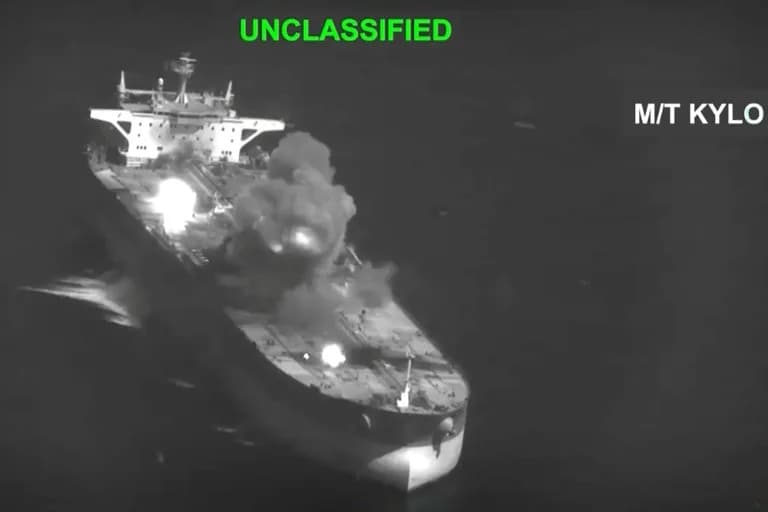
Over the month since operations began on February 28, Iran has reportedly struck US and allied bases across the Gulf, damaging KC-135 tankers, an E-3 AWACS and radar assets while downing multiple MQ-9 drones. Analysts warn such strikes create short-term surveillance and command‑and‑control gaps for US forces. The campaign has disrupted shipping through the Strait of Hormuz, pushed oil prices higher, and strained missile stocks, with US officials planning replenishment and contingency options.
Iran Strikes US AWACS and Tankers Across the Gulf — What Tehran Has Targeted Over the Past Month
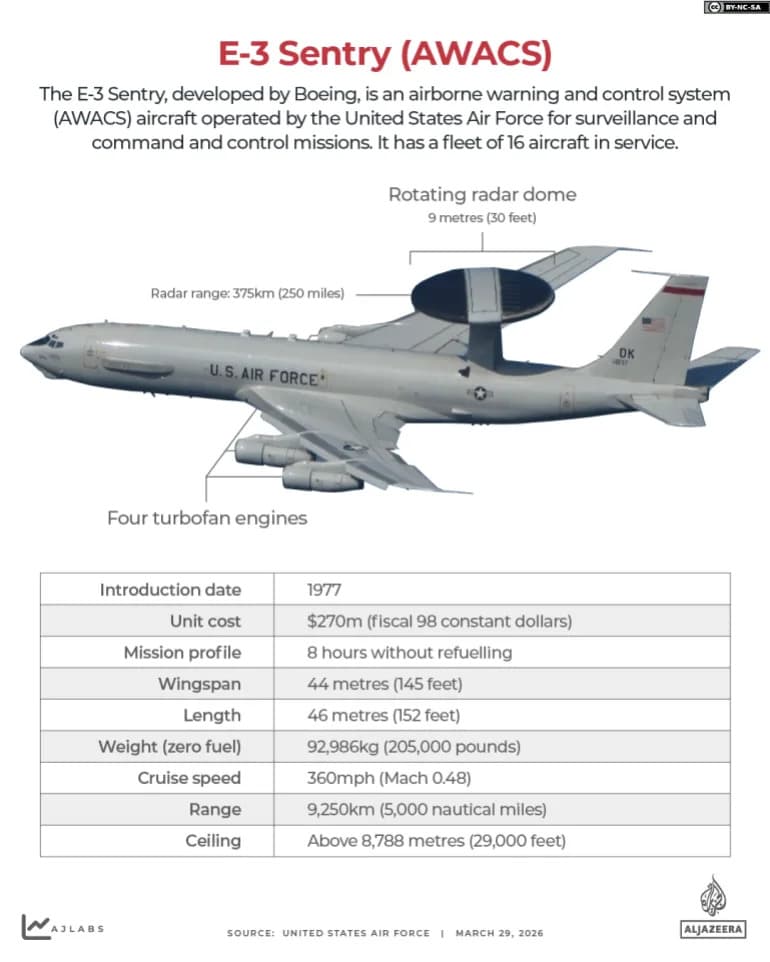
(Al Jazeera)
Since the US and Israel launched a campaign against Iran on February 28, Tehran has responded rapidly with missiles, drones and asymmetric attacks across the Gulf, striking at US assets and allied bases in a widening regional confrontation that threatens global energy routes.
What Happened
Media reports and Iranian statements say that over the past month Iran has carried out strikes that damaged or destroyed radar installations, a Terminal High Altitude Area Defense (THAAD) radar, KC-135 refuelling tankers, an E-3 Sentry airborne warning and control system (AWACS), and multiple MQ-9 Reaper drones at bases across Saudi Arabia, the United Arab Emirates, Bahrain, Jordan, Kuwait and Qatar.
On Friday, The Wall Street Journal reported that a missile and drones struck Prince Sultan Air Base in Saudi Arabia, about 96 km (60 miles) southeast of Riyadh. Air & Space Forces Magazine reported damage to several KC-135 tankers and an E-3 AWACS. The Associated Press, citing unnamed sources, reported at least 15 US service members were wounded, five in serious condition. Neither the US military nor Saudi authorities had publicly confirmed the full extent of the damage at the time of those reports, and independent verification remains limited.
Claims and Verification
Iran’s central military spokesman, Ebrahim Zolfaghari, said a refuelling aircraft was destroyed and three others were put out of service. Iran’s Press TV published satellite images showing wrecked aircraft at Prince Sultan. US and Saudi officials have not publicly corroborated all of these details; some reports remain unverified and should be treated cautiously.
Why the AWACS Matter
The E-3 Sentry (AWACS) is a key airborne surveillance and command platform. Built on a modified Boeing 707/320 airframe and equipped with a large rotating radar dome, it can track aircraft, missiles and drones at ranges in excess of 375 km (250 miles) and provide airborne command-and-control for air operations. The US operates a limited fleet of these aircraft, so damage to even one can produce short-term gaps in airborne surveillance, targeting coordination and deconfliction.
"The loss of an E-3 is incredibly problematic," a former F-16 pilot told Air & Space Forces Magazine, noting its role in fighter direction, aircraft deconfliction and battle-management.
Wider Impact and Tactics
Analysts say Iran is employing asymmetric tactics—proxy attacks, drone swarms, missile saturation and cyber operations—to erode US airpower and complicate coalition operations. Iranian strikes have also constricted traffic through the Strait of Hormuz, a chokepoint for roughly 20 percent of the world’s oil and gas, contributing to oil prices climbing above $100 per barrel.
Reports indicate the US has lost about 12 MQ-9 Reaper drones since the conflict began; those remotely piloted systems are used for intelligence, surveillance and strike missions. A March 22 report by the BBC and the Center for Strategic and International Studies estimated damage to US bases across the Middle East at about $800 million, including hits to radar and satellite communications.
Logistics, Munitions and Next Steps
The Washington Post reported heavy Tomahawk cruise missile usage—an estimate of some 850 fired so far—and warned regional stocks are being depleted. The Pentagon reportedly plans to request a supplemental budget (reported at roughly $200 billion) to replenish damaged systems and munitions.
Officials have also discussed plans for limited ground operations, including potential raids on Kharg Island and coastal facilities near the Strait of Hormuz, though US leaders say planning does not equal a final decision. Kharg Island is a major Iranian crude export terminal, accounting for a large share of Iran’s oil exports.
Human Cost
Since the conflict began roughly a month ago, reports cite at least 13 US service members killed and about 200 wounded. Iranian authorities report at least 1,900 dead and over 18,000 injured inside Iran. Casualty figures from all sides continue to be updated and in some cases remain difficult to independently verify.
What To Watch Next
- Official US and Saudi assessments clarifying damage at Prince Sultan and other bases.
- How rapidly the US can reconstitute airborne surveillance (by redeploying E-3s, fielding E-7 Wedgetails, or using ship-based systems).
- Levels of Tomahawk and interceptor missile stocks and the progress of any supplemental funding requests.
- Whether planning for limited ground raids progresses to execution, and the diplomatic fallout of any escalation.
Note: This article synthesizes media reporting, official statements and expert commentary. Several specific claims remain unverified by independent sources; readers should watch for official confirmations and follow-up reporting.
Help us improve.