
The United Launch Alliance will launch an Atlas V from Cape Canaveral at 3:53 a.m. ET on Sunday, March 29, 2026, carrying Amazon Leo broadband satellites. Massachusetts locations such as Manchester-by-the-Sea and Boston are near the outer edge of the rocket’s visibility corridor and could see the ascent around launch +330 seconds (~5 minutes 30 seconds), weather permitting. Check ULA’s visibility map and local forecasts for the best viewing chances; Florida Today will stream live coverage.
Atlas V Launch: When Massachusetts Might See It — 3:53 a.m. ET on March 29
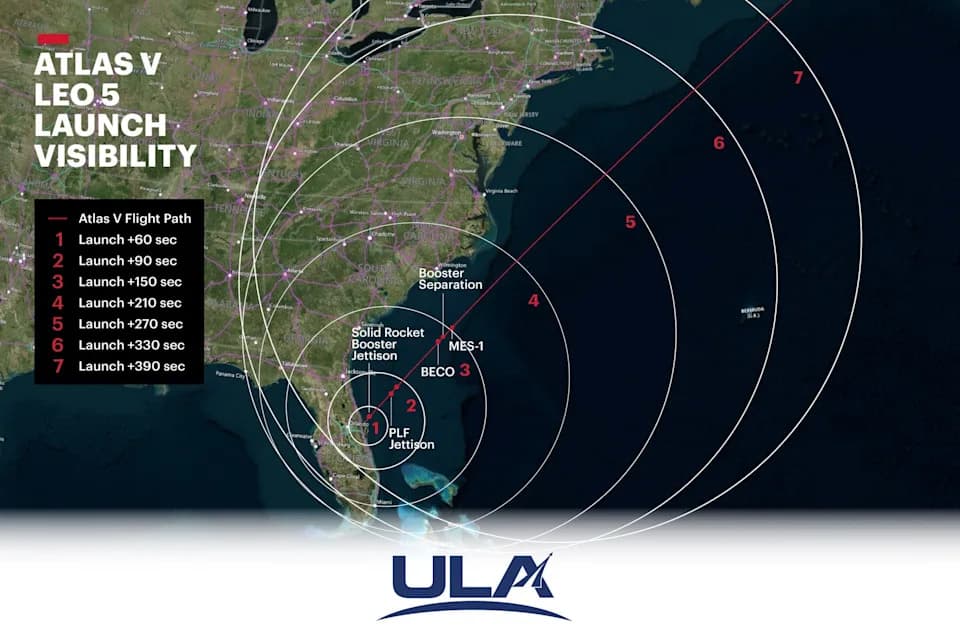
ULA launch of Atlas V, the fifth Amazon Leo constellation mission: Liftoff is planned at 3:53 a.m. EDT Sunday, March 29, 2026, from Cape Canaveral, Florida. The predawn launch will be visible from Florida to New England, if weather conditions in your area permit. This visibility map shows when and where your best chances are to see the rocket as it streaks northeasterly into space.
A 20-story, 1.3 million-pound Atlas V rocket will lift off from Cape Canaveral in the pre-dawn hours of Sunday, March 29, 2026. Early risers across New England — including parts of Massachusetts — may catch a bright, fast-moving sight if skies are clear.
Launch Details
The United Launch Alliance (ULA) is preparing the Atlas V for the fifth Amazon Leo constellation mission. Liftoff is scheduled from Launch Complex 41 at Cape Canaveral Space Force Station at 3:53 a.m. ET, with a 29-minute launch window opening at that time.
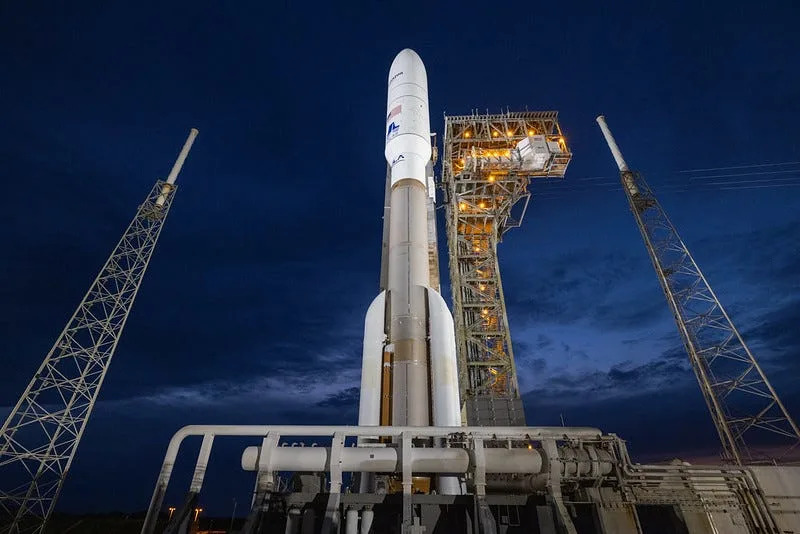
The United Launch Alliance (ULA) Atlas V rocket sits at sunset Tuesday, Sept. 23 on Space Launch Complex 41 (SLC-41) at the Cape Canaveral Space Force Station. The Atlas V will launch the Kuiper 3 mission for Amazon's Project Kuiper broadband satellite constellation.
Why You Might See It From Massachusetts
ULA’s visibility map shows a corridor where the rocket will be visible as it climbs on a northeasterly trajectory. Massachusetts locations such as Manchester-by-the-Sea and Boston lie near the outer edge of that corridor. Observers in those areas could see the vehicle about launch +330 seconds — roughly 5 minutes 30 seconds after liftoff — though exact timing and brightness depend on your exact location and atmospheric conditions.
Rocket And Mission Facts
- The Atlas V is roughly 20 stories tall and weighs about 1.3 million pounds at launch.
- It will fly with five solid rocket boosters to carry the next batch of Amazon Leo broadband satellites (the program formerly known as Project Kuiper) into low-Earth orbit.
- This is the fifth Amazon Leo mission to expand the company’s satellite internet constellation.
Weather And Viewing Tips
Local weather is the biggest factor for visibility. The National Weather Service forecasts partly cloudy skies for Saturday night across much of Massachusetts, trending toward mostly sunny on Sunday. Any lingering clouds could block the view, so clear, dark skies give the best chance to see the rocket streak across the predawn sky.
Before heading outside, check ULA’s launch visibility map for your town and consult local forecasts. If you prefer to watch online, Florida Today will provide a live webcast with updates and live tweets of the launch.
Quick Tip: If your town is on the edge of the visibility corridor, give yourself a wide view of the northeastern horizon and allow a few extra minutes after liftoff for the rocket to climb into view.
Help us improve.





















