
Lawmakers from both parties expressed frustration after classified briefings about the U.S. campaign against Iran, demanding clearer answers as President Trump orders about 2,000 troops from the 82nd Airborne to CENTCOM. The White House says U.S. objectives are nearly met but warned strikes could intensify if Iran does not comply. Senators and representatives pressed officials for clarity on possible ground operations, munitions stockpiles, costs and an exit strategy; defense leaders reported strikes on more than 10,000 targets and degradation of roughly two-thirds of Iran’s naval, missile and drone production capacity.
Lawmakers Demand Answers as Trump Sends 2,000 More Troops Toward Iran
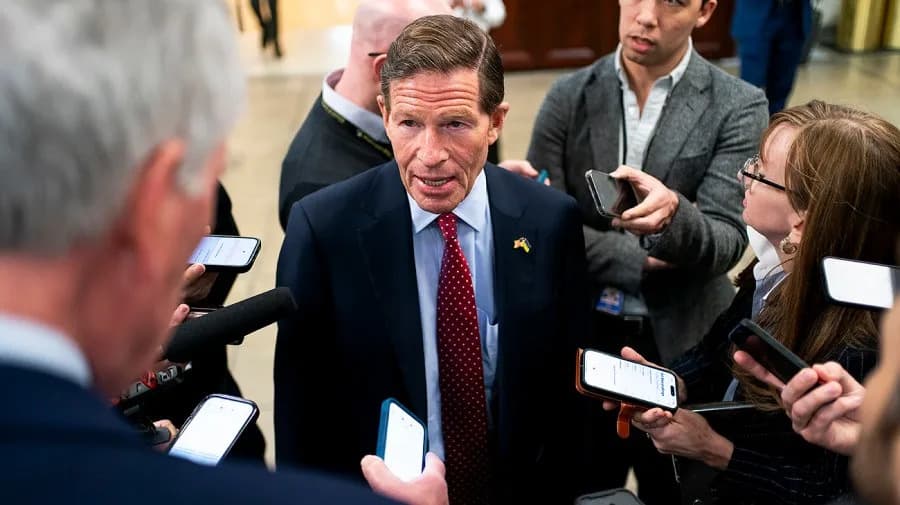
As Trump sends more troops toward Iran, lawmakers want more answers
Members of Congress from both parties voiced frustration Wednesday after separate classified briefings about U.S. military operations against Iran, saying the Pentagon provided too few details as President Trump ordered roughly 2,000 soldiers from the Army’s 82nd Airborne Division to the U.S. Central Command (CENTCOM) area.
White House officials said the campaign is nearing its goals but warned that strikes could increase if Tehran does not comply with U.S. demands. At a White House briefing, press secretary Karoline Leavitt said the administration is "very close to meeting the core objectives of Operation Epic Fury," calling the mission "unabated."
Lawmakers Say Briefings Fell Short
House and Senate Armed Services members separately described the briefings as lacking in substantive detail. Pentagon briefers included Assistant Secretary of Defense for International Security Affairs Daniel Zimmerman; Richard Tilley, principal deputy assistant secretary of defense for special operations and low-intensity conflict; Air Force Maj. Gen. Sean Choquette; and Chris Almont. Despite those sessions, lawmakers repeatedly said they received what amounted to talking points rather than full explanations of strategy, timelines or resource needs.
"We want to know more about what’s going on, what the options are and why they’re being considered. And we’re just not getting enough answers on those questions," Rep. Mike Rogers (R-Ala.), chair of the House Armed Services Committee, told reporters.
Several senators echoed that sentiment. Sen. Tim Kaine (D-Va.) said he did not "feel better informed" about any prospect of ground operations inside Iran. Sen. Richard Blumenthal (D-Conn.) said he was "more fearful than ever" that the U.S. is on a path toward deploying forces into Iran, arguing that many objectives the administration has stated would likely require a physical presence.
Other lawmakers raised questions about munitions stockpiles, the projected financial cost of the campaign and the lack of an apparent off-ramp. Sen. Elizabeth Warren (D-Mass.) said she lacks confidence the administration has a clear exit strategy.
Operational and Funding Details
The Pentagon has ordered about 2,000 troops from the 82nd Airborne — including elements of the division headquarters, some enablers and the 1st Brigade Combat Team — to bolster a U.S. presence that already exceeds 50,000 service members in the region. Officials acknowledged that additional deployments carry a risk of escalating the conflict.
Defense leaders also discussed a supplemental funding request they have been preparing for the White House and Congress. Lawmakers said the Pentagon had floated a figure in the vicinity of $200 billion, though the request had not been formally transmitted to Capitol Hill at the time of the briefings. Speaker Mike Johnson indicated supplemental funding could be folded into a later reconciliation package.
Claims About Damage to Iranian Capabilities
Adm. Brad Cooper, commander of U.S. Central Command, told reporters the military has struck more than 10,000 targets inside Iran and that U.S. forces have degraded roughly two-thirds of Tehran’s naval, missile and drone production capabilities. Lawmakers reacted unevenly to that assessment: some praised progress, while others said goals, timelines and exit strategies remain unclear.
Senators and representatives said they expect follow-up classified briefings and clearer answers as Congress exercises oversight of an expanding U.S. military posture in the Middle East.
Updated at 9:07 p.m. EDT
Copyright 2026 Nexstar Media, Inc. All rights reserved.
Help us improve.





















