Eugene de Kock, the former apartheid police commander nicknamed "Prime Evil," testified at an inquiry into the 1985 murders of the Cradock Four, denying direct involvement but saying police files listed about 6,000 activists as "known terrorists." He told the panel a fellow officer asked him to obtain another firearm and to interfere with ballistics to cover up the killings. Convicted in 1996 and released on parole in 2015, de Kock has since sought forgiveness from some victims. The renewed inquiry follows long-suspected cover-ups and broader efforts by South African authorities to reopen apartheid-era atrocity investigations.
Notorious Apartheid Commander Eugene de Kock Testifies in Cradock Four Inquiry
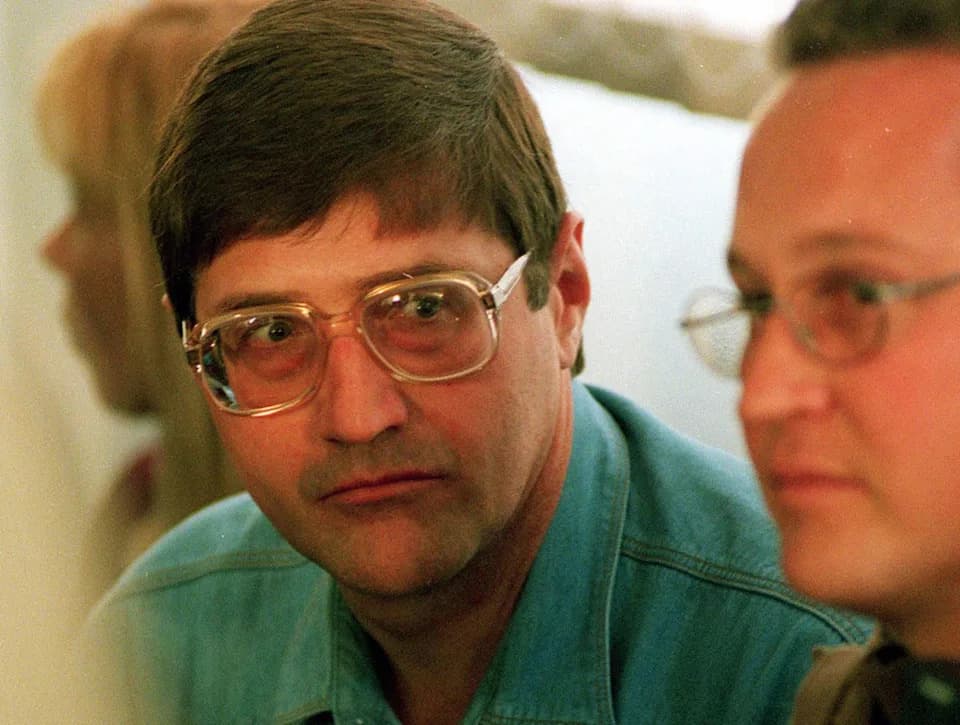
In this Sept. 14, 1998 file photo, Eugene de Kock, the head of a covert police unit that tortured and killed dozens of people, attends an amnesty hearing of the Truth and Reconciliation Commission (TRC) in Pretoria, South Africa. / Credit: Denis Farrell / AP(Denis Farrell / AP)
Eugene de Kock, the former apartheid-era police commander widely known as "Prime Evil," testified on Monday at an inquiry into the 1985 abduction and killing of four anti-apartheid activists known as the Cradock Four. The hearing is part of a renewed effort to investigate human-rights abuses by security forces during South Africa's decades of institutionalised racial segregation.
Key Testimony
De Kock denied any direct role in the Cradock Four killings but told the inquiry that police records at the time contained photographs of roughly 6,000 anti-apartheid activists labelled as "known terrorists," who were to be monitored and, he said, targeted for killing if arrest was not possible. He said the names and images of Matthew Goniwe, Fort Calata, Sicelo Mhlauli and Sparrow Mkonto were not among those files.
During his testimony, de Kock said one police officer implicated in the case asked him to help with a cover-up. "He wanted to know if I could get another firearm," de Kock recounted, adding that he was asked "if we could interfere with the ballistics."
Background And Aftermath
De Kock led a special counterinsurgency police unit during apartheid. In 1996 he was convicted on charges including murder and kidnapping and sentenced to two life terms plus an additional 212 years for his role in abducting, torturing and killing activists. He was released on parole in 2015 and is now 77 years old.
Family members and advocacy groups report that de Kock has sought forgiveness from some victims. In a letter to the family of Bheki Mlangeni, a lawyer killed by a letter bomb, de Kock wrote:
"There is no greater punishment than to have to live with the consequences of the most terrible deed with no-one to forgive you. For me, even my own death can't compare."
De Kock was brought under police guard to court in Gqeberha (formerly Port Elizabeth), near Cradock. The presiding judge ordered that his image not be shown on the official video feed; the Foundation for Human Rights reported that footage of him was blurred.
Inquiry Context
Two earlier apartheid-era inquiries into the Cradock Four (in 1987 and 1993) were widely suspected of being cover-ups. The 1987 probe concluded the men had been killed by unknown perpetrators; the 1993 inquiry blamed unnamed police officers. Families pushed for the current investigation, which began last year.
Six former policemen were identified during the post-apartheid Truth and Reconciliation process and later denied amnesty; they were never prosecuted and have since died. In recent years, South African authorities have reopened other apartheid-era cases, including inquiries into the deaths of Albert Luthuli, Griffiths Mxenge and Steve Biko.
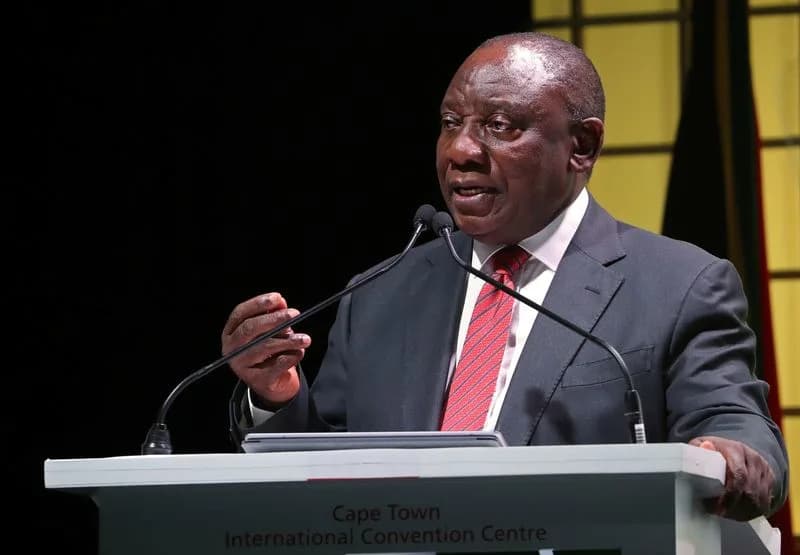
In 2024, President Cyril Ramaphosa ordered a separate inquiry to examine whether post-apartheid governments led by the African National Congress deliberately obstructed investigations and prosecutions of apartheid-era crimes.
Help us improve.